How to Find Reliable House Cleaners: 2026 Guide
August 15, 2026Residential Cleaning Services: What to Expect
August 17, 2026
Table of Contents
- What Are High-Touch Surfaces and Why They Matter
- Cleaning, Sanitizing, and Disinfecting: Understanding the Difference
- Office Disinfection Checklist: Common High-Touch Points to Address
- High-Touch Surface Cleaning Frequency: How Often and Why
- Best EPA-Approved Disinfectants for Offices
- Step-by-Step Deep Cleaning Protocol for High-Touch Surfaces
- Safety Precautions and Personal Protective Equipment
- Conclusion
Last Updated: August 16, 2026
What Are High-Touch Surfaces and Why They Matter
High-touch surfaces are areas in offices that multiple people contact throughout the day: door handles, light switches, conference table edges, keyboards, phones, and elevator buttons. Microorganisms including bacteria and viruses survive on hard surfaces for hours or even days. When employees touch these surfaces and then touch their faces, cross-contamination occurs. A single infected person can contaminate dozens of high-touch points within minutes, creating transmission risk throughout the office.
This is where deep cleaning for office high touch becomes essential. Unlike routine daily cleaning, deep cleaning targets pathogens invisible to the naked eye. At Ultim8 Cleaning Services, we understand that office facilities require a systematic approach to infection control. High-touch surface contamination affects employee health, absenteeism, and productivity. Organizations that prioritize surface hygiene report fewer sick days and higher engagement.
Cleaning, Sanitizing, and Disinfecting: Understanding the Difference
These three terms describe distinct processes with different outcomes.
Cleaning removes visible dirt, dust, and organic matter using soap and water or detergent-based solutions. It reduces microorganisms but does not kill them.
Sanitizing reduces microorganisms to levels considered safe by public health standards, typically removing 99.9% of bacteria. Sanitizers work faster than disinfectants but may not eliminate all viruses or spores.
Disinfecting kills a broader spectrum of pathogens, including bacteria, viruses, and some spores, using EPA-registered chemical agents. Disinfection requires contact time (called dwell time) between the disinfectant and the surface. Most EPA-approved disinfectants require 30 seconds to 10 minutes of contact time to achieve full pathogen elimination.
Deep cleaning for office high touch requires disinfection, not just sanitizing. Many office cleaning protocols fail because they skip dwell time or rush through it. Applying a disinfectant and wiping it off immediately defeats its purpose.
Office Disinfection Checklist: Common High-Touch Points to Address
An effective office disinfection checklist identifies surfaces that dozens of employees touch daily.
Primary high-touch surfaces include door handles (both sides), light switches, elevator buttons, handrails, push plates on doors, keyboard and mouse surfaces, phone handsets, and desk edges. Conference table surfaces, especially edges where people rest their hands, require attention.
Secondary high-touch surfaces include bathroom fixtures: faucet handles, soap dispensers, toilet flush handles, and paper towel dispensers. Break room appliances like refrigerator handles, microwave buttons, and coffee maker handles see frequent contact. Shared equipment such as printers, copiers, and time clocks are often overlooked but represent significant cross-contamination risk.
Workspace-specific surfaces depend on your office layout. Open office environments require cleaning of desk dividers, armrests on shared seating, and communal work surfaces. Private offices need attention to door handles, light switches, and personal desk surfaces. Waiting areas require cleaning of chairs, armrests, and reception desk surfaces.

A comprehensive checklist organized by location, entrance areas, hallways, restrooms, break rooms, conference rooms, open workspaces, and private offices, ensures nothing is missed. Many offices focus on obvious surfaces while neglecting less visible but frequently touched areas like the undersides of armrests or cabinet door edges.
High-Touch Surface Cleaning Frequency: How Often and Why
Cleaning frequency depends on foot traffic, occupancy levels, and current health conditions in your community.
Standard frequency for most offices is daily disinfection of primary high-touch surfaces: door handles, light switches, and shared equipment. Secondary surfaces like bathroom fixtures should be disinfected at minimum once daily, ideally more in heavily used facilities.
During elevated transmission periods, increase frequency to multiple times daily for primary surfaces. Morning disinfection before employees arrive, midday touch-ups, and evening deep disinfection create multiple barriers to cross-contamination.
Post-event cleaning is necessary after meetings or gatherings where many people congregated. High-touch surfaces should be disinfected within one hour of the event ending.
Seasonal patterns show increased illness transmission during winter months (October through March), requiring heightened cleaning frequency. Summer months typically see reduced pathogen transmission, allowing for standard frequency protocols.
Most respiratory viruses survive on hard surfaces for hours to days. Daily disinfection interrupts this cycle, preventing accumulation of viable pathogens. Surfaces disinfected once daily are far less likely to harbor enough pathogens to cause infection than surfaces cleaned weekly.
Best EPA-Approved Disinfectants for Offices
EPA-registered disinfectants have undergone testing to verify they kill specific pathogens within specified contact times.
Quaternary ammonium compounds (quats) work well on hard, non-porous surfaces like door handles, phones, and keyboards. They have relatively short dwell times (30 seconds to 2 minutes) and leave minimal residue. They’re effective against many bacteria and enveloped viruses but may not eliminate all non-enveloped viruses.
Phenolic disinfectants are stronger and effective against a broader spectrum of pathogens, including some non-enveloped viruses and spores. They require longer dwell time (5-10 minutes) and can damage some plastics and rubber surfaces with repeated use.
Hypochlorite solutions (bleach-based) are highly effective broad-spectrum disinfectants but corrosive to many materials. They require careful dilution, proper ventilation, and extended contact time. Bleach is typically reserved for deep cleaning rather than daily maintenance.
Hydrogen peroxide-based disinfectants are effective against many pathogens and break down into water and oxygen, leaving no harmful residue. Contact time ranges from 30 seconds to 3 minutes depending on the formulation.
Alcohol-based disinfectants (70% isopropyl alcohol) are quick-acting (30 seconds or less) and safe for electronics and sensitive surfaces. However, they evaporate quickly and may not provide adequate dwell time on porous surfaces.
Ultim8 Cleaning Services uses high-quality, environmentally safe products selected for both efficacy and surface compatibility. The right disinfectant choice depends on the specific surfaces in your office, the pathogens of concern, and your material preservation priorities.
Step-by-Step Deep Cleaning Protocol for High-Touch Surfaces
A systematic protocol ensures consistent results and verifiable disinfection.
Step 1: Prepare Your Workspace and Gather Supplies
Clear high-touch surfaces of clutter, papers, and personal items. Notify occupants that disinfection is underway so they avoid touching treated surfaces during the dwell time period.
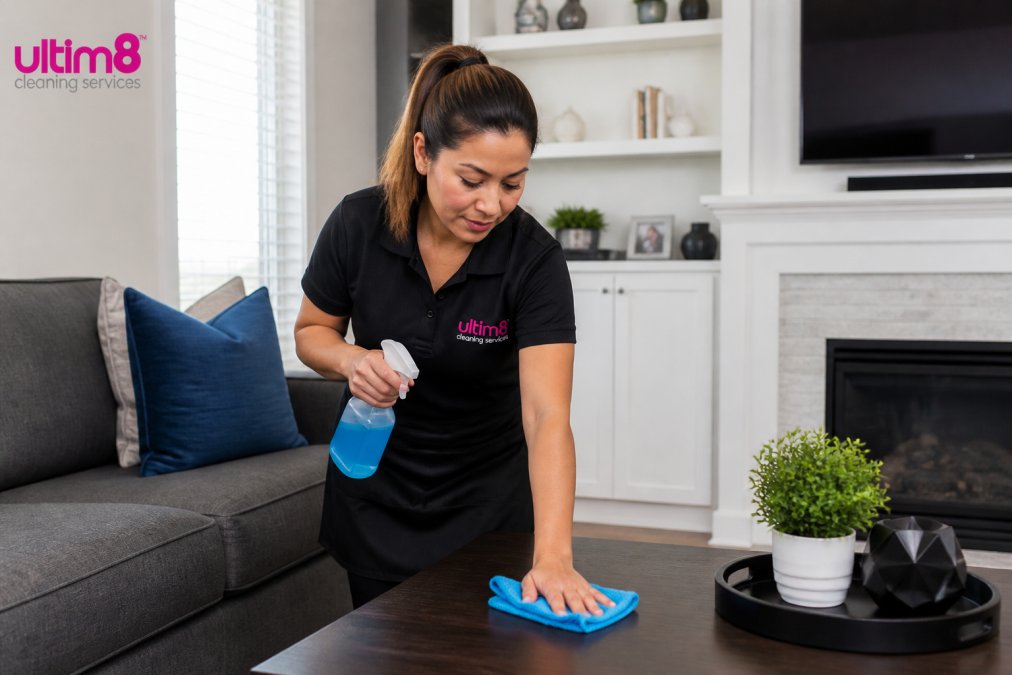
Gather all supplies before starting: EPA-registered disinfectant appropriate for your surfaces, clean microfiber cloths or disposable wipes, spray bottles or trigger dispensers, and personal protective equipment. Microfiber cloths are superior to paper towels because they capture microorganisms more effectively.
Personal protective equipment should include nitrile gloves, eye protection if using spray disinfectants, and respiratory protection if working in poorly ventilated spaces. Check the disinfectant’s safety data sheet for specific PPE requirements.
Ensure adequate ventilation throughout the workspace. Open windows if weather permits. Use mechanical ventilation or portable air purifiers if available.
Step 2: Apply Disinfectant and Observe Dwell Time
Apply disinfectant generously to the surface using a spray bottle or trigger dispenser. The surface should be visibly wet. For small items like phone handsets or keyboard keys, spray onto a cloth first, then wipe the item.
Check the disinfectant label for dwell time requirements. This is the contact time the chemical needs to remain on the surface to kill pathogens. Do not wipe the surface before dwell time expires. Set a timer if necessary to ensure dwell time compliance.
Different disinfectants have different dwell times against different pathogens. Use the longest dwell time required for the pathogens you’re targeting.
Step 3: Wipe and Verify Surface Cleanliness
After dwell time expires, wipe the surface thoroughly with a clean cloth or disposable wipe. Use firm, deliberate wiping motions to remove the disinfectant and any loosened pathogens. Change cloths or wipes frequently to prevent cross-contamination.
After wiping, the surface should be visibly dry and free of disinfectant residue. If residue remains, wipe again with a clean, damp cloth, then dry with a fresh cloth.
Verify surface cleanliness visually. The surface should appear clean with no visible dirt, dust, or residue. Document completion by checking off the surface on your office disinfection checklist.
Safety Precautions and Personal Protective Equipment
Disinfectants are chemical agents designed to kill pathogens. They pose risks to cleaning staff if not handled properly.
Personal protective equipment requirements depend on the specific disinfectant. Always consult the product’s safety data sheet before use. Minimum PPE typically includes nitrile gloves to prevent skin contact. Eye protection is essential when using spray disinfectants. Respiratory protection is necessary when using disinfectants with volatile organic compounds or in poorly ventilated spaces.
Ensure proper ventilation throughout the workspace. Disinfectant fumes can accumulate in enclosed spaces, causing respiratory irritation. Open windows, use mechanical ventilation, or deploy portable air purifiers to maintain air quality.
Never mix disinfectants. Combining certain chemicals creates toxic gases. For example, mixing bleach with ammonia-based cleaners produces chlorine gas. Use one disinfectant at a time and rinse surfaces thoroughly if switching products.
Train cleaning staff on proper disinfectant handling, dwell time requirements, and PPE use. Ultim8 Cleaning Services ensures our team receives thorough training on disinfection protocols and safety requirements.
Store disinfectants safely in cool, dry locations away from direct sunlight. Keep products in original containers with labels intact. Dispose of contaminated materials properly by placing them in sealed bags for disposal.
Maintaining a truly disinfected office requires a systematic approach: identifying high-touch surfaces, selecting appropriate EPA-approved disinfectants, understanding dwell time science, and training staff on proper protocols. If managing this internally feels overwhelming, professional deep cleaning services handle the technical details so you don’t have to. Ultim8 Cleaning Services brings trained expertise, quality disinfectants, and detailed checklists to every office we serve. Our team knows which surfaces matter most, how long disinfectants must remain in contact with surfaces, and how to verify that deep cleaning for office high touch actually works. With convenient online booking and flexible scheduling, getting your office properly disinfected takes minutes to arrange. BOOK NOW and protect your workplace with professional-grade disinfection protocols that your employees will notice and appreciate.
Frequently Asked Questions
What is the difference between cleaning, sanitizing, and disinfecting?
Cleaning removes visible dirt and debris from surfaces. Sanitizing reduces microorganisms to safe levels, typically killing 99.9% of bacteria. Disinfecting kills pathogens and viruses, including more resistant microorganisms. For office high-touch surfaces, disinfection is the most effective approach to prevent cross-contamination and reduce infection control risks in shared workspaces.
How often should high-touch surfaces be deep cleaned in an office?
High-touch surface cleaning frequency depends on foot traffic and occupancy. Most offices benefit from daily disinfection of door handles, light switches, and desks. Conference tables and shared equipment should be cleaned between uses. During illness outbreaks or in high-traffic areas, multiple cleaning cycles per day may be necessary. A professional cleaning schedule ensures consistent infection control and maintains workplace wellness standards.
What EPA-approved disinfectants work best for office surfaces?
EPA-registered disinfectants effective for offices include quaternary ammonium compounds, bleach-based solutions (diluted properly), and alcohol-based germicides with at least 70% alcohol content. The best choice depends on surface compatibility and dwell time requirements. Always verify the EPA registration number on the product label and follow contact time instructions carefully. Professional cleaning services use products validated for workplace safety and effectiveness.
What supplies do I need for deep cleaning high-touch surfaces?
Essential supplies include EPA-approved disinfectant, microfiber cloths or disposable wipes, personal protective equipment (gloves, eye protection), spray bottles, and a timer for monitoring dwell time. Microfiber cloths are preferred because they trap microorganisms more effectively than cotton. For material-specific surfaces like electronics, use disinfectants rated safe for those materials. Proper equipment ensures thorough disinfection while protecting cleaning staff from exposure to pathogens and harsh chemicals.
This article was written using GrandRanker