Move Out Cleaning Checklist for Renters: 2026 Guide
September 5, 2026
Cleaning Tips for Busy Working Professionals in 2026
September 7, 2026
Table of Contents
- What to Expect From Professional Cleaners: The First Visit
- Standard Cleaning vs Deep Cleaning Checklist: Which Do You Need?
- How to Prepare for House Cleaners: A Simple Room-by-Room Checklist
- House Cleaning Service Etiquette: Questions to Ask Before You Book
- What Do Professional Cleaners Not Clean? Setting Realistic Boundaries
- How to Handle the Walk-Through and Address Any Missed Spots
- Frequently Asked Questions
Last Updated: September 6, 2026
What to Expect From Professional Cleaners: The First Visit
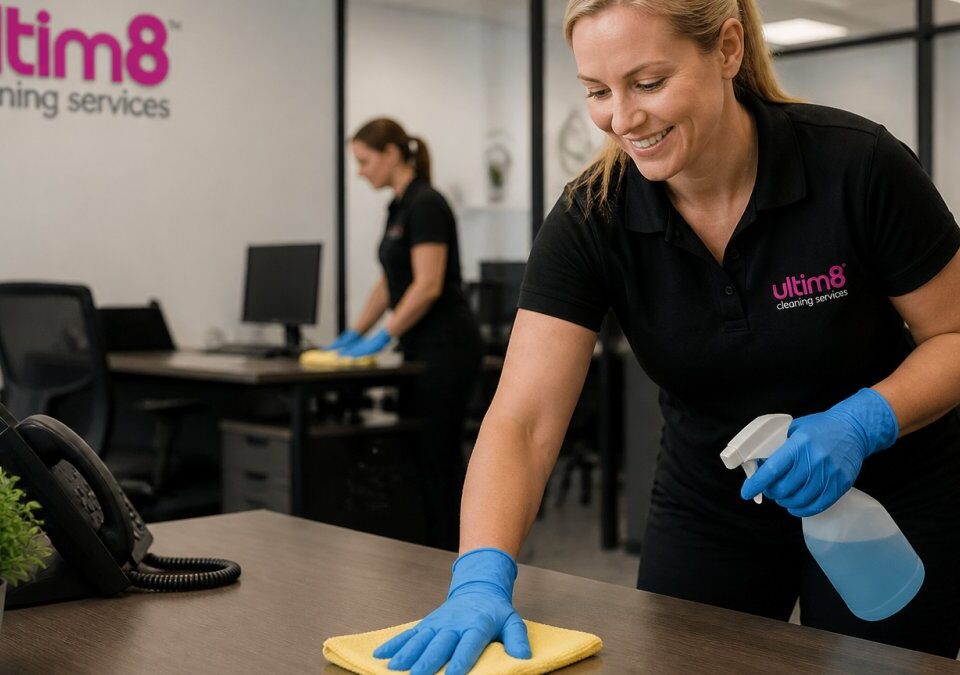
Your first cleaning appointment is less mysterious than you think. Knowing what to expect from professional cleaners comes down to a simple formula: they handle the dirt, grime, and clutter you lack time to tackle, working through a detailed checklist covering everything from baseboards to high-touch surfaces. Our teams are trained to follow structured checklists so nothing gets missed.
The visit typically begins with a quick walk-through so the team can confirm priorities and note any specific problem areas. From there, the crew works room by room, starting with the spaces that need the most time to air out or dry. Most standard visits last between two and four hours depending on the square footage and condition of the home (the American Dental Association). You do not need to be present for the entire clean, though many clients stay for the first fifteen minutes to answer questions and hand over access instructions.
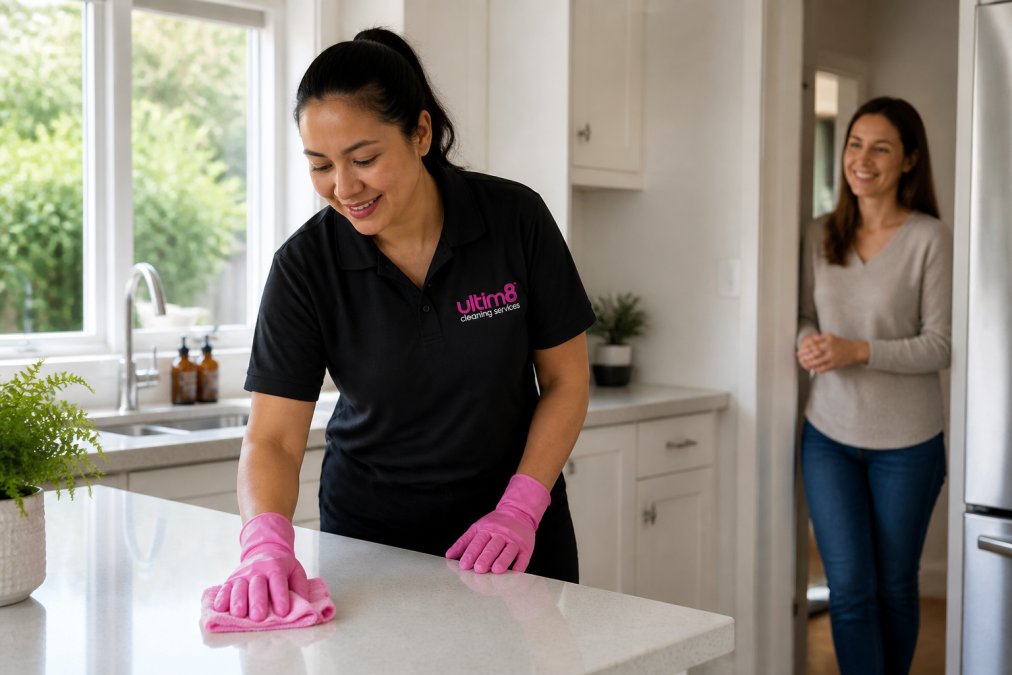
Book your first visit for a day when you can be home for the initial walk-through. That fifteen-minute conversation prevents more misunderstandings than any checklist you could leave behind.
Standard Cleaning vs Deep Cleaning Checklist: Which Do You Need?
The distinction between standard and deep cleaning is the most important decision when booking. A standard cleaning maintains a home already in decent shape, while a deep cleaning resets a space neglected for weeks or months. Choosing wrong leaves you overpaying or disappointed.
What a Standard Cleaning Includes
Standard cleaning focuses on the surfaces and areas that collect everyday dust and grime. Expect vacuuming and mopping of all floors, dusting of accessible surfaces, wiping down countertops, cleaning sinks and fixtures, sanitizing toilets, tubs, and showers, taking out trash, and tidying rooms by putting items back in their general place. Towel folding and bed making are usually included when linens are left accessible.
What a Deep Cleaning Covers
Deep cleaning goes beyond the surface to address the buildup that standard visits miss. This includes scrubbing grout, cleaning inside ovens and refrigerators, wiping down baseboards and door frames, dusting ceiling fans and light fixtures, cleaning window tracks and blinds, and tackling soap scum in bathrooms. Deep cleaning also targets allergen reduction by removing dust mites from areas that routine dusting does not reach (aaaai.org).
| Cleaning Type | Best For | Frequency | Key Focus Areas |
|---|---|---|---|
| Standard Cleaning | Routine maintenance | Weekly or biweekly | Floors, counters, bathrooms, dusting |
| Deep Cleaning | Neglected spaces, move-in/out | Every 1-3 months | Grout, appliances, baseboards, fixtures |
How to Prepare for House Cleaners: A Simple Room-by-Room Checklist
Preparation is about removing obstacles, not pre-cleaning. Professional cleaners expect your home to be accessible, not spotless. Declutter floors and horizontal surfaces so the team can reach areas needing attention. The real anxiety isn’t clutter, it’s handing over access. Here’s how to prepare both your space and peace of mind.
Room-by-Room Preparation
Kitchen: Clear counters of small appliances you don’t want moved, consolidate dirty dishes into the sink or dishwasher (cleaners wipe exteriors but don’t wash dishes), and remove food debris from the stovetop. Wipe up any sticky spills so the team doesn’t have to guess whether that residue is old coffee or something worse.
Bathrooms: Remove personal items like toothbrushes, makeup bags, and medications from countertops. Leave out a clean towel for the team to dry their hands. If you have a glass shower door with hard water stains, mention it during the walk-through, standard glass cleaner won’t touch mineral buildup.
Bedrooms: Pick up clothing from the floor. If you want sheets changed, strip the bed and leave fresh linens folded at the foot. Clear nightstands of electronics and chargers so surfaces can be wiped without the risk of knocking something fragile.
Living Areas: Corral remote controls, books, and mail into a basket or drawer. Move pet bowls and toys to a designated spot. If you have area rugs, note whether they need a specialized vacuum attachment, some services charge extra for delicate rugs.
The Security and Access Protocol
The question keeping more clients up at night than dust bunnies: “Is it safe to give a stranger my key?” Here’s how reputable services handle this.
Most established cleaning companies conduct background checks on every employee before they enter client homes (issa.com). Ask directly whether this screening includes a national criminal database check and whether it covers subcontractors if the company uses them. A legitimate service will not hesitate to confirm this in writing.
For access, you have several options beyond handing over a physical key:
- Smart locks with temporary codes: Set a code that works only during your scheduled cleaning window. Revoke it after the visit.
- Garage codes: Many clients prefer this because it avoids key duplication risk. Confirm the company doesn’t share codes between clients.
- Lockboxes: Some services offer secure lockboxes mounted near the entry. Ask if they provide one or if you need to supply your own.
Establish a clear exit protocol: does the team lock the door behind them, set the alarm, and text you when they leave? Most professional services will send a completion notification, but confirm this expectation upfront rather than assuming it.
Pet Management During Cleaning
Pets add complexity most guides ignore. Your cleaner removes fur, not manages animals. Decide before the visit whether pets will be crated, confined, or supervised. Inform the company in advance so they match you with a team comfortable around animals.
For pet hair specifically, set realistic expectations: a standard vacuum picks up surface fur, but embedded hair in carpets or upholstery may require a deep-cleaning add-on with a powered brush attachment. If you have a heavy-shedding breed, mention it when booking so the team allocates extra time for vacuuming passes.
Create a “cleaner access kit”, a small basket near the entry with your preferred supplies, a note about pets, and a printed list of any fragile items or no-go zones. This eliminates the need for a lengthy conversation every visit and ensures consistency.
What NOT to Do
Do not pre-clean. That defeats the purpose of hiring help. Do not leave out valuables, jewelry, or sensitive documents, even with background checks, you’re removing temptation. Do not expect the team to move heavy furniture or navigate rooms that are impassable. If a room is so cluttered that surfaces aren’t reachable, the cleaner will skip it and you’ll still pay for the visit. That’s not a failure of service; it’s a failure of preparation.
If you have a home security camera, tell the cleaning company. Most professionals are comfortable with visible cameras, but hidden ones can create legal complications in some states. Transparency protects everyone.
House Cleaning Service Etiquette: Questions to Ask Before You Book
Good communication prevents most disappointments. Etiquette starts with asking the right questions before committing to a recurring schedule. Confirm what’s included in the quoted price, whether supplies are provided, your responsibilities between visits, and policies for locked doors, alarms, and team consistency.
Security, Access, and Pets
Security is a legitimate concern when handing over keys. Reputable companies conduct background checks; ask for confirmation this screening happens. Discuss access methods, key, garage code, or smart lock, and establish a protocol for securing the home when the visit ends. For pets, inform the company in advance so they can match you appropriately and plan around feeding or outdoor breaks.
Never assume a company runs background checks just because they advertise them. Ask directly whether every employee is screened before entering client homes, and confirm the policy covers subcontractors if they use any.
What Do Professional Cleaners Not Clean? Setting Realistic Boundaries
Professional cleaners are thorough but not a replacement for organizing services, hazardous waste disposal, or pest control. Understanding what they don’t clean prevents awkward moments and disappointment. Most services won’t handle animal waste, biohazards, or excessive clutter preventing surface access.
Standard Exclusions You Should Know
Interior windows are often excluded from standard packages, as are inside cabinets, pantries, and drawers unless specifically requested. Chandeliers and delicate items that require specialized handling may also be off-limits. The same applies to laundry, dishwashing, and cleaning up after pets; these are typically outside the scope of a standard visit.
Here’s the breakdown most companies use to define what’s “standard” versus what’s an “add-on”:
| Category | Standard Inclusion | Add-On or Extra |
|---|---|---|
| Windows | Interior sills and tracks (wipe) | Full glass washing, exterior windows |
| Cabinets | Exterior fronts | Inside shelves, drawers, pantry organization |
| Appliances | Exterior wipe-down | Inside oven, refrigerator, microwave interior |
| Floors | Vacuum and mop | Carpet shampooing, grout scrubbing, hardwood refinishing |
| Fixtures | Dusting accessible surfaces | Ceiling fans, high light fixtures, blinds (often extra) |
| Walls | Spot cleaning | Full wall washing, baseboard deep scrub |
The Add-On Pricing Reality
Most professional services price add-ons individually rather than bundling them. The key is to ask for a written quote that itemizes these extras before the visit, not after, when the team has already finished and you’re handed a surprise invoice.
What Happens If Something Gets Damaged or Broken?
This is the question no one asks until it’s too late. Here’s the framework every reputable company should have:
- Report damage immediately. Most services require notification within 24-48 hours of the visit. Photograph the item and send it to the company’s office.
- Understand the liability policy. Established companies carry general liability insurance that covers accidental damage to client property. Ask for proof of insurance before booking, not after an incident.
- Know the replacement process. Some companies will repair the item, others will replace it with an equivalent, and a few will offer a monetary settlement. Clarify which applies before you need it.
- Document pre-existing damage. If you have fragile or valuable items, note their condition before the visit and mention it during the walk-through. This protects both you and the cleaner from disputes.
The Clutter Boundary
Professional cleaners are not organizers. If rooms have piles of unsorted items or floors aren’t visible, the team cleans around what they can reach, and you’ll be disappointed. Most companies reserve the right to refuse service in rooms presenting safety hazards or inaccessible surfaces. Book an organizing service first, then schedule the deep clean.
Biohazards and Safety Exclusions
Services will not handle human or animal waste, blood, mold remediation, or pest infestations. These require specialized professionals with appropriate training and protective equipment. If a cleaner encounters these conditions, they will stop work and may charge a cancellation fee. Disclose any such conditions when booking so the company can advise you on the right specialist.
The boundary between “standard” and “extra” is not universal, it varies by company. The only way to avoid surprises is to ask for a written scope of work before your first visit. A professional service will provide one without hesitation. If they can’t, that’s a red flag.
How to Handle the Walk-Through and Address Any Missed Spots
A walk-through at the end of the first visit sets the tone for your entire relationship with a cleaning service. This is your opportunity to review the work, ask questions, and point out any areas that did not meet your expectations. Do the walk-through while the team is still present so issues can be corrected immediately rather than during a follow-up visit.
When you find a missed spot, describe it specifically and without apology. Cleaners want to do a good job, and most companies have a satisfaction guarantee that covers re-cleaning within a set window. If you are unhappy with a particular area, request that it be addressed before the team leaves. For recurring clients, mention any changing priorities so the checklist can be adjusted for future visits. This feedback loop is how a good cleaning relationship improves over time.
The walk-through is not about policing the crew; it is about calibrating expectations. A specific, respectful request at the end of a visit gets resolved in minutes. The same request made days later requires a separate trip and creates friction for everyone.
Frequently Asked Questions
Are you supposed to leave the house when cleaners come?
You don’t have to leave, but most clients prefer to. If you work from home, let your cleaner know which room you’ll be in so they can work around your schedule. Many professional cleaners are comfortable working while you’re present as long as they have clear access to the areas you’ve booked. If you do leave, ensure someone is available for the initial walk-through and that your cleaner knows how to lock up afterward.
What is the difference between a standard clean and a deep clean?
A standard cleaning covers routine maintenance: surface dusting, vacuuming, mopping, wiping counters, and sanitizing bathrooms and kitchens. A deep cleaning tackles the buildup a standard clean misses, such as scrubbing grout, cleaning inside the oven, wiping baseboards, and detailed work on high-touch surfaces. If you’re booking your first visit, many services recommend a deep clean to reset the home before switching to a recurring standard cleaning.
How should I prepare my home before a professional cleaner arrives?
Focus on decluttering, not cleaning. Pick up clothes, toys, and dishes so surfaces are accessible. Secure valuables and any sensitive documents. If you have pets, decide whether they’ll be crated or kept in a separate room. Clear countertops of small appliances if you want them wiped underneath. Leave out any specific cleaning products you prefer the team to use, and note any areas that need extra attention.
What items do professional house cleaners typically not clean?
Most standard cleaning agreements exclude biohazards, animal waste, heavy mold, and hoarding-level clutter for safety reasons. Professional cleaners also typically don’t wash dishes, do laundry, or take out trash that contains biohazards, though these may be available as add-ons. Interior windows, inside appliances like ovens and refrigerators, and interior cabinets are often excluded from standard packages but can be added for an additional fee. Always review your service agreement to confirm what’s included.
What happens if the cleaners miss something or I’m not happy with the results?
Reputable cleaning services stand behind their work. If you notice a missed spot, contact the office within 24 hours of your cleaning. Most companies will send a cleaner back to address the issue at no charge. During the final walk-through, point out any concerns directly to the team lead so they can fix it on the spot. Clear communication protects your satisfaction and helps the service improve.
How do I know my cleaner is actually background-checked?
Ask directly before booking. A professional service should confirm that all team members are insured and have passed background checks, and they should be willing to explain their vetting process. If a service hesitates to answer or can’t provide proof of insurance, that’s a red flag worth taking seriously.
Hiring a cleaning service should give you back your time, not add another task to your list. The key is choosing a team that communicates clearly, shows up on schedule, and stands behind its work. Ultim8 Cleaning Services combines insured and background-checked cleaners with high-quality, environmentally safe products and instant online booking, so your first visit is as smooth as every one after it. Get started with Ultim8 Cleaning Services and book your first clean today.