Is Professional Deep Cleaning Worth It for Small Homes?
October 19, 2026
Table of Contents
- Why a Daily Cleaning Routine for Busy Households Beats Marathon Cleaning
- Your Weekly House Cleaning Checklist: Room-by-Room Tasks That Prevent Buildup
- How Often to Schedule Professional House Cleaning for Your Household
- Cleaning Tasks Between Professional House Cleanings: What to Handle Yourself
- Safe Product Use and Surface-Specific Cleaning
- Tailoring Your Routine by Household Size, Schedule, and Mobility Needs
- What to Handle Yourself vs. Leave to Professional Cleaners
- Frequently Asked Questions
Last Updated: October 19, 2026
Why a Daily Cleaning Routine for Busy Households Beats Marathon Cleaning
The secret to a clean home isn’t a weekend spent scrubbing. It’s a short daily reset that stops mess from piling up.
Marathon cleaning fails for a simple reason. Mess builds faster than you can clear it. A daily cleaning routine for busy households flips that math.

The 10-to-15-Minute Daily Reset
A daily reset is a short pass through your home that returns it to baseline. Do it at the same time each day, usually right after dinner. The whole loop takes 10 to 15 minutes:
- Load the dishwasher and wipe kitchen counters.
- Clear the sink and put away dry dishes.
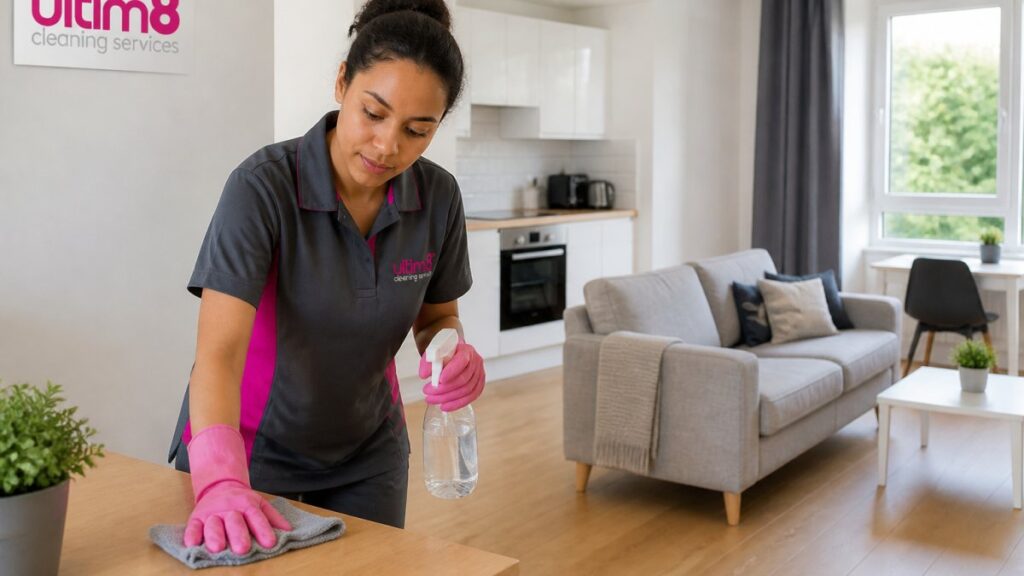
- Wipe bathroom sinks and mirrors with a microfiber cloth.
- Pick up clutter from floors and put items away.
- Sweep the kitchen floor or run a robot vacuum.
- Make the bed and straighten pillows.
That’s it. Small tasks, done daily, prevent buildup far better than one long session.
Set a timer for 15 minutes. When it rings, stop, even if a few things remain. The routine only sticks if it feels easy, and a done-but-imperfect reset beats a skipped perfect one every time.
Kitchen and Bathroom Quick Wins
Kitchens and bathrooms create the most visible mess, so they get first attention. In the kitchen, wipe kitchen surfaces after every meal and clear counters before bed. A shower squeegee takes 30 seconds after each shower and keeps glass clear for weeks.
Keep cleaning supplies where you use them. A caddy under each sink means no hunting for a cloth when a spill happens.
Your Weekly House Cleaning Checklist: Room-by-Room Tasks That Prevent Buildup
A weekly house cleaning checklist covers what the daily reset misses. Daily habits handle surfaces. Weekly cleaning handles depth: dusting, mopping, and the spots you walk past without noticing. The most useful version of this checklist is not a flat list of chores, it is a cadence with time estimates, so you can see exactly what fits into a 45-to-60-minute block and what belongs on a monthly rotation instead.
The Three-Tier Cadence: Daily, Weekly, Monthly
Most busy households get better results from three tiers than from one long weekend session. The daily reset (10-15 minutes) keeps surfaces clear. The weekly block (45-60 minutes) handles depth. The monthly block (60-90 minutes) catches what weekly cleaning skips. Here is a realistic split with time estimates:
| Task | Tier | Time | Frequency |
|---|---|---|---|
| Load dishwasher, wipe counters | Daily | 5 min | Daily |
| Wipe bathroom sinks and mirrors | Daily | 3 min | Daily |
| Pick up clutter and put items away | Daily | 5 min | Daily |
| Sweep kitchen floor or run robot vacuum | Daily | 3 min | Daily |
| Vacuum floors and rugs | Weekly | 15 min | Weekly |
| Mop hard floors | Weekly | 10 min | Weekly |
| Dust high-touch surfaces | Weekly | 5 min | Twice weekly |
| Scrub shower and toilet | Weekly | 10 min | Weekly |
| Change bed linens | Weekly | 10 min | Weekly |
| Wipe appliance fronts and handles | Monthly | 10 min | Monthly |
| Dust baseboards and blinds | Monthly | 20 min | Monthly |
| Clean inside microwave and fridge shelves | Monthly | 15 min | Monthly |
| Wash pet beds and blankets | Monthly | 15 min | Monthly |
That table is the backbone of the routine. The daily tier protects the weekly tier, and the weekly tier protects the monthly tier. Skip the daily reset for a week and the weekly block doubles in length. Skip the weekly block for a month and the monthly block turns into a deep clean.
High-Traffic Areas and High-Touch Surfaces
High-traffic areas are where dirt enters and settles: entryways, hallways, kitchens, and bathrooms. High-touch surfaces are the spots hands land on daily: door handles, light switches, remote controls, and faucets.
Wipe high-touch surfaces twice a week with a microfiber cloth. Use color-coded cloths so the bathroom cloth never touches kitchen counters. Sweep or vacuum entryways on the same day each week. A quick tidy of the mudroom or entry keeps tracked-in dirt from spreading through the house.
Floors, Clutter, and the 80/20 Rule
The 80/20 rule applies to housework: a small set of tasks delivers most of the visible result. Floors and clutter top that list.
A simple progress tracker makes the cadence stick.
Time-box the weekly block. Set a 60-minute timer and work top-down in each room: clutter first, then floors, then surfaces. When the timer rings, stop. A finished 45-minute block beats an abandoned two-hour one every week.
How Often to Schedule Professional House Cleaning for Your Household
Most busy households do best with professional house cleaning every two weeks, with a deeper cleaning visit monthly or quarterly. Weekly service suits large families, pet owners, and anyone with mobility limits. Monthly service works for small households that keep up with daily habits.
Ask yourself three questions:
- How many people and pets live here?
- How much time can you realistically give to cleaning each week?
- Do guests or clients visit often?
If you work long hours or travel, biweekly service removes the weekly checklist burden entirely. Ultim8 Cleaning Services offers flexible scheduling and instant online booking, so you can set a recurring visit and adjust it when life changes.
Cleaning Tasks Between Professional House Cleanings: What to Handle Yourself
Between professional house cleanings, your job is maintenance, not deep cleaning. The goal is to arrive at each visit with surfaces clear and floors passable, so the team spends its time on extraction and detail work instead of clearing clutter. That distinction is the difference between a visit that resets your home and one that merely catches up.
A Decision Rule for Every Task
Use a simple three-question test before you add a task to your own list:
- Does it take under 15 minutes? If yes, it is yours. Wiping counters, loading the dishwasher, sweeping, making beds, taking out trash, and putting items away all fit here.
- Does it need equipment you do not own? Carpet shampooers, extractors, and ladder work belong to the pros. So do appliance interiors and grout scrubbing.
- Does it recur weekly or faster? Recurring surface tasks are maintenance; one-off deep tasks are visit work. If a task shows up on your list every week, it belongs in your routine, not on the cleaning visit.
A practical split looks like this:
- You handle: wiping counters, loading the dishwasher, sweeping, making beds, taking out trash, putting items away, wiping high-touch surfaces, and spot-cleaning spills.
- The pros handle: deep scrubbing, appliance interiors, baseboards, blinds, floor care, and any task that needs ladders or specialty products.
Protecting the Value of Each Visit
The biggest mistake households make is saving every task for the cleaning visit. If dishes and clutter pile up for two weeks, the team spends its time clearing surfaces instead of detailing them, and you get less value from the visit. A useful habit is a 10-minute pre-visit pass the night before: clear counters, load the dishwasher, and put away clutter. That small effort redirects an hour of professional time toward deep work.
Don’t save every task for the cleaning visit. If dishes and clutter pile up for two weeks, the team spends its time clearing surfaces instead of detailing them, and you get less value from the visit.
Pet Hair, Odors, and Tracked-In Dirt
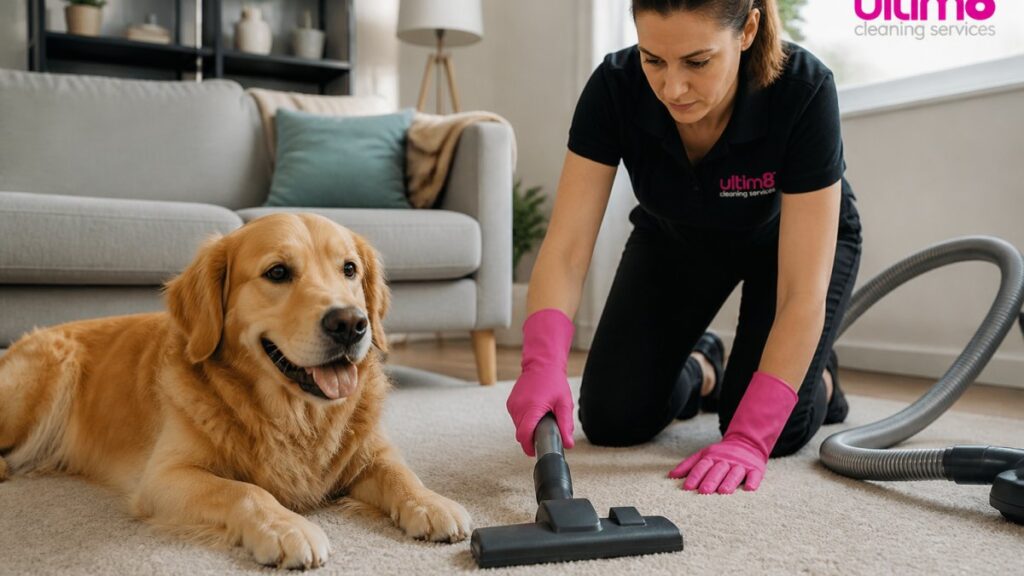
Pets add three recurring problems: hair, odor, and tracked-in dirt. Vacuum high-traffic areas twice a week, not once. Wash pet beds and blankets weekly. Keep a mat at every entry door and shake it out daily. For odors, air out rooms for ten minutes a day and empty trash cans before they smell. Baking soda on carpets before vacuuming helps lift pet odors. A robot vacuum running daily keeps hair from collecting in corners, and it is one of the few maintenance tasks that pays for itself in reduced visit time.
When to Escalate to a Professional Visit
Some signals mean maintenance is no longer enough: visible buildup in grout lines, dull floors that mopping no longer revives, odors that return within a day of cleaning, or a weekly block that consistently runs past 90 minutes. At that point, a deeper professional visit or a more frequent schedule is the better use of time than adding more to your own routine.
Safe Product Use and Surface-Specific Cleaning
Match the product to the surface, and read the label every time. The EPA’s guidance on safe cleaning product use explains why mixing cleaners can create dangerous fumes. Never combine bleach with ammonia or vinegar.
Simple rules that prevent damage:
- Use microfiber cloths on stainless steel and glass.
- Skip abrasive powders on granite and marble.
- Use a dedicated bathroom cleaner on tubs and tile, not on wood.
- Keep all products out of reach of children and pets.
- Ventilate while cleaning, even with mild products.
Our team uses high-quality, environmentally safe cleaning products, and you can ask for the same approach in your own routine. Poison Control’s household cleaning safety tips are worth bookmarking for accidental exposure questions.
Tailoring Your Routine by Household Size, Schedule, and Mobility Needs
No single routine fits every home. Adjust the schedule to your household, not the other way around.
- Small household, two adults: one daily reset and one weekly checklist hour.
- Family with young kids: split tasks by room, assign age-appropriate jobs, and add a second quick tidy before bed.
- Pet owners: vacuum twice weekly and add daily robot vacuum runs.
- Remote workers: do the reset at lunch so evenings stay free.
- Mobility limits: sit for tasks like folding and wiping, use a rolling cart for supplies, and book professional cleaning more often.
A consistent schedule matters more than a perfect one. Pick times you can keep, then protect them.
What to Handle Yourself vs. Leave to Professional Cleaners
Handle daily upkeep yourself. Bring in professionals for the tasks that need equipment, time, or reach. As a general rule, if a task takes under 15 minutes, do it yourself. If it takes an hour or needs ladders, extractors, or specialty products, book it.
That division protects your time and keeps your home healthier. It also means the professional cleaning visit goes toward deep work, not surface tidying.
The most reliable clean-home system is simple: a 10-to-15-minute daily reset, a weekly checklist, and a recurring professional cleaning visit. Each layer covers what the others miss.
Keeping a clean home between visits comes down to consistency, and consistency is hard when work, family, and pets compete for your time. Ultim8 Cleaning Services removes that burden with insured and background-checked cleaners, environmentally safe products, trained teams working through detailed checklists, and instant online booking that fits your schedule.
Frequently Asked Questions
What should I clean every day between professional visits?
Focus on a 10-to-15-minute daily reset: wipe kitchen counters and high-touch surfaces, load the dishwasher, sweep or vacuum high-traffic floors, and do a quick bathroom wipe-down. These small tasks prevent buildup so your home stays presentable without marathon cleaning sessions. Keep microfiber cloths and a spray bottle handy in each room to make the routine effortless.
How often should I schedule professional house cleaning?
Most busy households benefit from professional cleaning every two to four weeks, depending on household size, pets, and activity level. Homes with young children or shedding pets may need weekly or biweekly visits, while smaller households can stretch to monthly. Pair professional visits with a consistent daily and weekly routine to keep your home guest-ready in between.
What is the 5-5-5 rule for cleaning?
The 5-5-5 rule is a simple time-management approach: spend 5 minutes tidying one room, 5 minutes on another, and 5 minutes on a third. It breaks cleaning into short, focused bursts that fit busy schedules. Use it during weeknights or before guests arrive to reset high-traffic areas without feeling overwhelmed.
How can I keep my kitchen and bathroom clean between visits?
In the kitchen, wipe counters after every meal, load the dishwasher nightly, and clear clutter from high-use surfaces. In the bathroom, use a shower squeegee after each use, wipe the sink and faucet daily, and keep a microfiber cloth nearby for quick touch-ups. These small habits prevent soap scum and grime from building up before your next professional cleaning.