
How to Choose the Right Professional Cleaning Service
November 5, 2026
Last Updated: November 5, 2026
Quick Summary
To prepare for move-in cleaners, clear all counters and floors, empty the sink and trash bins, and confirm utilities, smoke detectors, and ventilation are working before the crew arrives. This clearing work is the homeowner’s job, while scrubbing, disinfecting, and washing surfaces belong to the move-in cleaners.
- Clear counters, empty the sink, and remove small items so cleaners can reach every surface.
- Confirm water, power, and gas are on and test smoke and carbon monoxide detectors.
- Open windows and run bathroom fans for at least 15 minutes before cleaning starts.
- Send a written handoff brief the day before covering scope, access, supplies, and off-limits rooms.
- Book move-in cleaning at least one to two weeks ahead, especially during peak moving season.
Table of Contents
- Why Preparation Makes or Breaks a Move-In Clean
- Your Move-In Cleaning Checklist: What to Clear Before They Arrive
- The Deep Cleaning New House Checklist: What the Pros Handle
- How to Prepare for a House Cleaner: Safety and Access Checks
- Get Your Printable Move-In Cleaning Checklist Ready
- Coordinating Cleaners With Movers, Landlords, and Previous Occupants
- Book Your Move-In Clean With Ultim8 Cleaning Services
- Frequently Asked Questions
Why Preparation Makes or Breaks a Move-In Clean
A visit from move-in cleaners only works as well as the access they get. If counters are buried under boxes and the sink is full of dishes, the crew spends its time clearing instead of cleaning.
We can only clean what we can reach. According to Apartment Therapy’s guidance on preparing for cleaners, that split is the single biggest factor in how efficient a cleaning visit turns out.
Here is the short version: clear the surfaces, empty the sink, and get the utilities on. Then let the crew handle the scrubbing.
Your Move-In Cleaning Checklist: What to Clear Before They Arrive
Your move-in cleaning checklist should focus on access, not scrubbing. Clear counters, empty the sink, and remove small items so cleaners can reach every surface. Deep cleaning itself stays with the professionals.
That distinction saves you hours. You are not pre-cleaning. You are making the job possible.
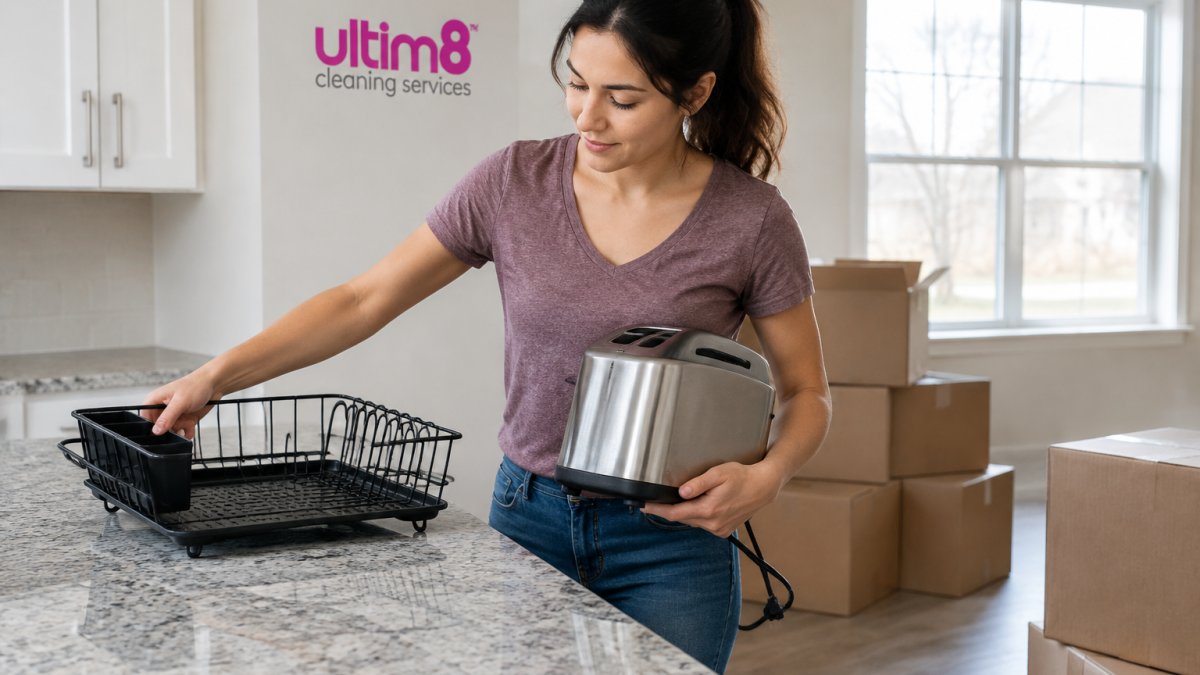
Kitchen: Counters, Sink, and Appliances
Clear all countertops first. Remove small appliances, dish racks, and containers so the whole surface is exposed. CottageCare’s preparation guide recommends this step because covered counters never get fully cleaned.
Then empty the kitchen sink. Dirty dishes block the scrub-down of the basin and the garbage disposal area. Wipe out crumbs from cabinets and shelves so debris does not spread during washing.
Empty the dishwasher and run a cycle only if the previous occupants left standing water or debris; otherwise leave it to the crew.
- Clear counters of appliances and containers
- Empty the sink of all dishes
- Remove items from cabinet tops and shelves
- Pull small items away from the stove
- Pull the refrigerator forward if it rolls and the water line allows
- Empty the dishwasher and trash bin
Bathrooms, Floors, and High Surfaces
In bathrooms, clear the tub, shower, and vanity of bottles, mats, and toiletries. Cleaners need open access to fixtures, tile, and silicone caulk lines.
On floors, pick up loose items so vacuuming and mopping run without stops. Clear shelves and vent covers so dusting reaches high surfaces and return grates. Roll up area rugs if they are staying; cleaners can vacuum both sides and the floor beneath.
- Remove bottles and mats from tub and shower
- Clear vanity tops and toilet surrounds
- Pick up items from floors and closets
- Clear shelves, vent covers, and return grates
- Roll up area rugs that are staying
Match the Product to the Surface Before You Clear
Most move-in cleaning damage happens before the crew arrives, when a well-meaning helper sprays the wrong product on a finish. Before you clear a room, note what the surfaces are made of so you can flag them for the cleaners and avoid pre-treating anything yourself.
- Stone counters (granite, marble, quartz): acidic cleaners etch the surface. Do not spray vinegar, lemon, or generic bathroom cleaner on them; leave them dry and let the crew use a pH-neutral product.
- Sealed wood cabinets and floors: standing water and oil-based polishes can dull or lift the finish. Wipe only with a barely damp cloth, and do not oil anything before the clean.
- Stainless steel appliances: abrasive pads scratch the grain. Wipe with the grain using a soft cloth, and skip the steel wool.
- Glass stovetops: do not scrape with a razor before the crew inspects for chips; a chip plus a blade can crack the panel.
- Laminate and vinyl flooring: too much water seeps into seams and swells the core. Damp-mop only, and never flood the floor.
Watch out: mixing bleach and ammonia-based products in the same bucket creates a toxic gas. If you pre-clean anything, use one product line and rinse the bucket before switching.
What to Leave for the Cleaners
Set aside a small staging area, a single counter or a labeled bin, for anything the crew should not move: keys, mail, medications, pet bowls, and fragile items. A clear staging spot prevents the crew from guessing what is trash and what is yours, and it keeps small valuables from disappearing into a trash bag.
The Deep Cleaning New House Checklist: What the Pros Handle
The deep cleaning new house checklist covers the work you should not do yourself. That includes scrubbing appliances inside and out, disinfecting high-touch surfaces, and washing baseboards, vents, and HVAC filters.
A move-in clean goes further than a routine tidy.
If you want the full scope spelled out, our guide on what is included in a deep house cleaning walks through each task.
How to Prepare for a House Cleaner: Safety and Access Checks
Learning how to prepare for a house cleaner starts with safety and access. Confirm the utilities are on, test smoke and carbon monoxide detectors, and open windows for ventilation before the crew arrives.
Maid in America’s move-in cleaning list puts this safety-first order ahead of any cleaning task. It matters most in an empty or recently repossessed home where power and water may be shut off.
Safety Triage for an Empty or Long-Vacant Home
Walk the unit before the crew does and check for hazards a routine clean would not surface:
- Utilities: confirm water, power, and gas are on and that the water heater is lit. A dead outlet or dry tap wastes the appointment.
- Ventilation: open windows and run bathroom fans for at least 15 minutes before anyone starts. Stale, musty air in a closed unit can hide mold or pest problems.
- Pests: look for droppings, gnaw marks, and live insects in cabinets and along baseboards. If you find an active infestation, schedule pest control before the clean, cleaners should not be asked to work around rodents or roaches.
- Mold: visible mold larger than a small patch on caulk or grout is a remediation job, not a cleaning job. Flag it so the crew can quote separately or decline.
- Unknown chemicals: do not mix or dispose of unlabeled bottles left behind. Seal them in a box and hand them to the landlord or a household hazardous waste site.
- Damaged utilities: a cracked outlet, exposed wiring, or a leaking supply line is a repair call before a cleaning call.
Watch out: if the home has been closed up for weeks, do not run the HVAC before changing the filter, a loaded filter pushes dust and allergens through every room the crew is about to clean.
The Pre-Arrival Handoff Brief
A short written brief sent the day before the visit prevents almost every on-site surprise. Include:
- Scope: which rooms are being cleaned and which are off-limits (a locked closet, a room mid-repair).
- Access: who unlocks the door, the parking spot, the Wi-Fi name if the crew uses a scheduling app, and whether a key will be left or someone will be on site.
- Supplies: whether the crew brings products or uses yours, and where they are stored.
- Fragile and specialty surfaces: stone counters, sealed wood, stainless steel, and any antique or delicate finish that needs a specific product.
- Special requests: pet hair in vents, hard-water film on glass, or a specific room that needs extra attention.
- Pets and people: whether pets will be secured and whether anyone will be home during the visit.
Also settle three access questions in writing:
- Who unlocks the door, and will someone be on site?
- Where can the crew park and unload supplies?
- Which rooms are off-limits, and are pets secured?
Get these answered before the visit. A locked door or a dead outlet wastes the whole appointment, and a missing handoff brief is the most common reason a move-in clean runs long.
Get Your Printable Move-In Cleaning Checklist Ready
A printable move-in cleaning checklist keeps the handoff simple. Print one page, split it into “we clear” and “they clean,” and check items off as you go.
Use this summary as your working copy:
| Task | Who Handles It | When |
|---|---|---|
| Clear counters and sink | Homeowner | Day before |
| Remove items from floors | Homeowner | Day before |
| Confirm utilities and detectors | Homeowner | Day before |
| Scrub appliances and cabinets | Cleaners | Visit day |
| Disinfect high-touch surfaces | Cleaners | Visit day |
| Wash floors and baseboards | Cleaners | Visit day |
For a fuller walkthrough of the clearing steps, see our article on how to prepare home for professional cleaners.
Coordinating Cleaners With Movers, Landlords, and Previous Occupants
Timing is where most move-in cleans go wrong. Book your cleaning for after the previous occupants are out and before your furniture arrives. That window lets cleaners reach floors, baseboards, and closets without moving anything twice.
Industry experts recommend booking move-in cleaning at least one to two weeks ahead, according to Affordable Maids’ scheduling guidance. Demand peaks in the final week of each month and through the summer moving season, so early booking protects your slot.
Coordinate with three parties:
- Movers: Schedule the clean for the day before delivery, not the same morning.
- Landlord: Confirm the handover time and whether keys are released before the clean.
- Previous occupants: Make sure the unit is fully empty and utilities stay on.
If you are weighing a one-time deep clean against regular service, our guide on what a move-in cleaning service includes explains the difference.
Book Your Move-In Clean With Ultim8 Cleaning Services
You have cleared the counters and checked the detectors. The last step is booking a crew that works from a checklist and shows up when promised.
Ultim8 Cleaning Services sends insured, background-checked cleaners who use environmentally safe products. Our teams work through detailed checklists. Online booking makes scheduling simple.
Want to see pricing before you commit? Our 2026 residential cleaning cost guide breaks down what drives the price. When you are ready, book your move-in clean and start your new home spotless.
Frequently Asked Questions
What should I do before move-in cleaners arrive?
Clear clutter rather than deep clean. Empty counters, sinks, and floors so move-in cleaners can reach every surface without moving your belongings. Confirm utilities are on, test smoke and carbon monoxide detectors, and open windows for ventilation. Also remove valuables and pets, and share any access codes or parking notes in advance so the team can start on time.
Should the home be empty before move-in cleaning?
An empty home produces the best results because cleaners can reach baseboards, inside cabinets, and behind appliances without working around furniture. If you cannot fully empty the space, keep boxes in one area and clear a path to each room. Tell the cleaning company what will still be inside so they can plan around it. Booking ahead can help secure a slot before your furniture arrives.
What supplies should I leave for move-in cleaners?
Ask what the team brings so you do not duplicate. Leave a few practical items: trash bags, a working vacuum if requested, paper towels, and access to water and power. If you have a preferred product for a specific surface, such as silicone caulk around a tub, set it out with a short note. Ultim8 Cleaning Services uses environmentally safe products.
How long does a move-in deep cleaning take?
Time depends on square footage, condition, and how much is still in the home. Larger homes or those with heavy dust, construction residue, or neglected appliances generally take longer. Clearing counters, emptying the sink, and removing clutter shortens the job and keeps the focus on deep work like scrubbing tubs, wiping cabinets, and dusting vent covers and return grates. Ask for a time estimate when you book so you can plan the move around it.
Your new home deserves a clean start, not a weekend of scrubbing. Ultim8 Cleaning Services brings insured, background-checked cleaners, environmentally safe products, and checklist-driven detail to every room. Get started with Ultim8 Cleaning Services and move into a spotless home.