
Benefits of Hiring Cleaners for End of Lease
November 22, 2026
The Best Time to Schedule a Deep Cleaning for Your Home
November 23, 2026
Last Updated: November 20, 2026
Quick Summary
Pet hair removal deep cleaning works room by room, top to bottom, dry before wet: vacuum and rake carpets, brush upholstery, then wipe baseboards, sills and vents, wash bedding and covers, and finish with a final vacuum once everything is dry. This sequence lifts loose fur first so you are not recontaminating clean surfaces.
- Vacuum slowly in overlapping passes, then use a carpet rake or rubber squeegee before any wet cleaning.
- Skip the rubber glove on leather and faux leather because it can leave a mark.
- Work top to bottom in each room so loose hair falls toward the floor last.
- Run a quick pass every few days and the full checklist once a month.
- Keep pets out of the room until surfaces are dry and follow label drying times.
Table of Contents
- Why Pet Hair Needs a Checklist, Not Just a Vacuum
- Best Tools for Removing Pet Hair From Every Surface
- Pet Hair Removal From Carpet and Rugs
- How to Remove Pet Hair From Furniture and Upholstery
- Floors, Baseboards, and the Spots Everyone Forgets
- The Deep Cleaning Checklist for Pet Owners, Room by Room
- A Repeatable Schedule That Keeps Hair From Piling Up
- Booking a Deep Clean That Actually Targets Pet Hair
- Frequently Asked Questions
Why Pet Hair Needs a Checklist, Not Just a Vacuum
Pet hair removal is the process of lifting loose fur, dander, and the grit trapped in it from every surface in a home, not just the floor you can see.
Most people vacuum a path through the living room and call it done. Then they wonder why the couch still looks gray and why dust gathers along the wall.
The American Cleaning Institute runs a national spring cleaning survey each year, and the pattern it tracks is familiar to anyone with a shedding dog or cat: cleaning happens in bursts when the mess gets noticeable.
Best Tools for Removing Pet Hair From Every Surface
The best tools for removing pet hair are a vacuum with a brushroll and a crevice attachment, a rubber squeegee or rubber glove, a reusable roller, and a carpet rake.
Start with what your vacuum already has. A brushroll agitates carpet fibers and lifts embedded hair, while the crevice attachment pulls it from seams and corners. After that, the low-tech tools do the work vacuums can’t.
- Rubber squeegee: drag it across carpet and upholstery to pull hair into a pile
- Rubber gloves: wipe down furniture and stairs with a damp gloved hand
- Reusable roller: a quick pass over clothing, cushions, and car seats
- Carpet rake: reaches down into pile where a vacuum head skims the top
A Good Housekeeping roundup of pet hair removal tools named the ChomChom Roller as its best overall pick and the Evercare Extreme as its best value option, which tells you the reusable roller format earns its place in a cleaning kit. Reusable rollers are handy for quick passes, while textured carpet may need a more deliberate approach to lift trapped fur, as Tracy’s Kitty Care explains.
Surface-Specific Methods and What to Avoid
Hardwood and laminate: use a microfiber mop or a vacuum with the brushroll off and a hard-floor attachment.
Tile and stone: vacuum first, then damp-mop with a pH-neutral cleaner.
Carpet and rugs: a powered brushroll and a carpet rake are the core tools.
Upholstery and delicate fabrics: a damp rubber glove, a reusable roller, and the upholstery tool are safest.
Tools by Hair Type and Household
Short, stiff hair from a lab or beagle releases easily with suction and a rubber squeegee. Long, fine hair from a golden retriever or a Maine coon wraps around brushrolls and needs a rake or a rubber glove first.
Households with multiple pets or wall-to-wall carpet need a vacuum with strong suction and a powered brushroll. Homes with mostly hard floors can get by with a squeegee, a microfiber mop, and a handheld vacuum for corners.
Pet-Safe Product and Handling Precautions
Whatever tool you use, keep pets out of the treated area until surfaces are dry. Ventilation matters as much as the product itself: open a window or run a fan when using sprays or powders, and follow the label’s drying time before letting pets back on carpets or furniture. Store tools and cleaning solutions where pets cannot reach them, and rinse rubber gloves and squeegees after use so residue does not transfer to fabrics.
Pet Hair Removal From Carpet and Rugs
Pet hair removal from carpet starts dry. Vacuum slowly in overlapping passes, then use a carpet rake or rubber squeegee to pull up what the vacuum left behind before you consider any wet cleaning.
The mistake most people make is reaching for shampoo first. Wet hair mats into the pile and becomes harder to lift. Work in this order instead:
- Vacuum with the brushroll on, two slow passes in each direction
- Run a carpet rake or squeegee across the pile to gather embedded hair
- Vacuum the gathered pile with the crevice tool
- Only then spot clean or shampoo if the rug needs it
Watch out: over-wetting a rug traps hair and odor in the backing, and a rug that stays damp grows a musty smell that no vacuum will fix.
How to Remove Pet Hair From Furniture and Upholstery
To remove pet hair from furniture, vacuum the cushions and seams first, then wipe the fabric with a damp rubber glove or a reusable roller.
Pull removable cushion covers and vacuum both sides. Run the crevice tool along the seams where hair and crumbs collect.
For fabric and upholstery that needs more than a surface pass, our guide on removing pet dander from fabric upholstery goes deeper into lifting the dander that settles into the weave.
Leather and faux leather are easier: a damp microfiber cloth lifts hair in one wipe.
Floors, Baseboards, and the Spots Everyone Forgets
The spots everyone forgets are the ones you never see: the top of the baseboard, the gap under the fridge, the inside of a closet, the tops of door frames.
Work top to bottom in each room so loose hair falls toward the floor where you can catch it last. A vacuum wand with a brush attachment handles baseboards, window sills, and the tops of cabinets.
Don’t skip these:
- Under and behind furniture you rarely move
- Stair risers and the space between balusters
- Inside closets and on shoe shelves
- Pet crates, beds, and the floor beneath them
- Car seats and floor mats if pets ride along
The Deep Cleaning Checklist for Pet Owners, Room by Room
The deep cleaning checklist for pet owners works room by room, top to bottom, dry before wet. Print it, work through one room at a time, and check off each line before moving on.
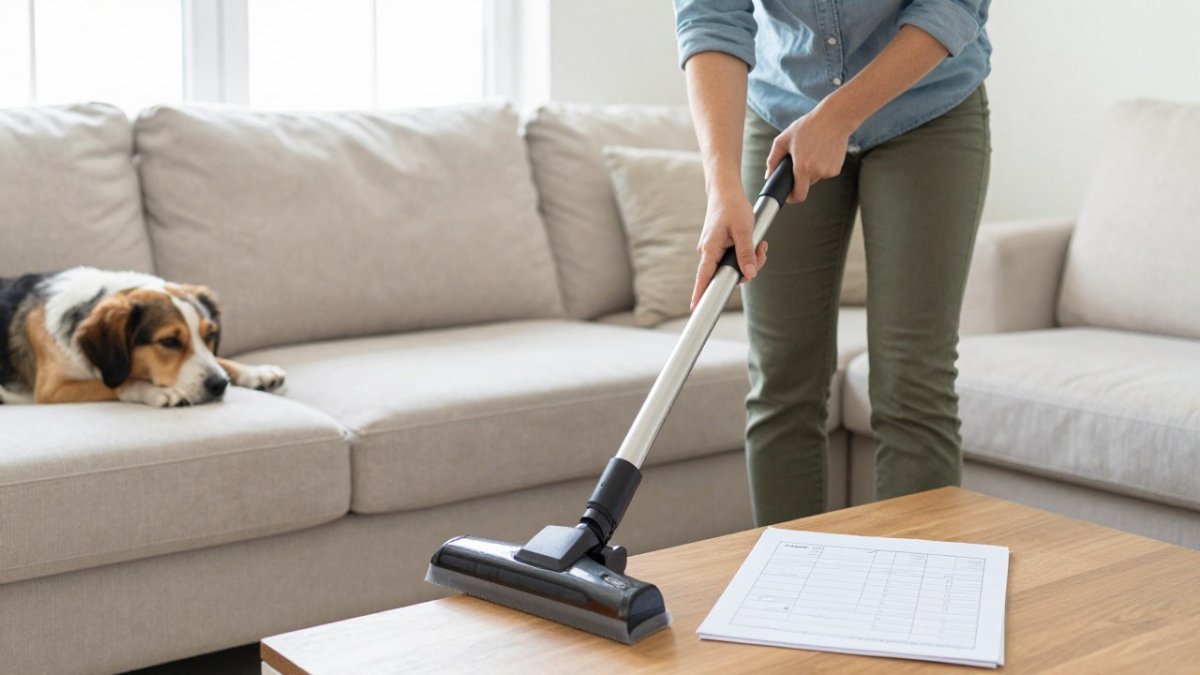
The Workflow That Prevents Rework
- Dry removal: vacuum and rake carpets, brush upholstery, and sweep hard floors to lift loose fur and the grit trapped in it.
- Detail pass: wipe baseboards, sills, vents, and the tops of frames so hair falls toward the floor.
- Wash: launder pet bedding and washable covers, and spot clean fabrics as needed.
- Final vacuum: go over floors and rugs once more after everything is dry to catch hair that settled during cleaning.
Bedrooms and Living Areas
- Strip bedding and wash it hot, including pet blankets on the bed
- Vacuum the mattress top and seams with the upholstery tool
- Dust ceiling corners, fan blades, and the tops of door frames
- Wipe baseboards and window sills with a damp microfiber cloth
- Vacuum carpet or rugs slowly, then rake the pile
- Vacuum under the bed and behind the nightstands
Kitchen, Bathroom, and Laundry
- Wipe cabinet tops and the top of the fridge, where hair drifts
- Vacuum the floor edges and under the toe kick before mopping
- Wipe pet bowls and the mat beneath them
- Clean the bathroom floor corners and behind the toilet
- Vacuum the laundry room floor and behind the machines
- Empty the dryer lint trap and wipe the lint screen housing
Overlooked Locations Most Checklists Miss
- Vacuum supply and return vents, and wipe the grilles
- Vacuum stair treads, risers, and the space between balusters
- Wipe the tops of door frames and picture frames
- Vacuum under area rugs and along tack strips
- Clean inside closets and on shoe shelves
- Vacuum car seats and floor mats if pets ride along
- Wipe down pet crates and the floor beneath them
Pet-Safe Precautions During the Deep Clean
Keep pets out of the room you are working in until surfaces are dry. Ventilate when using sprays or powders, follow label drying times before letting pets back on carpets or furniture, and store products out of reach. Watch out: a rug that stays damp can grow a musty odor that no vacuum will fix, so run a fan and let rugs dry fully before the final vacuum.
A Repeatable Schedule That Keeps Hair From Piling Up
A workable schedule is a quick pass every few days and a full checklist once a month, with heavier grooming during shedding season.
- Daily: sweep or vacuum high-traffic floors, wipe pet bowls, quick roller over the couch
- Weekly: vacuum all floors and rugs, wash pet bedding, wipe baseboards in main rooms
- Monthly: run the full room-by-room checklist, including forgotten spots
- Seasonally: deep clean carpets, wash curtains, and clear under heavy furniture
If you have a dog, our guide on how often to clean a house with dogs breaks the timing down further. For a general baseline on whole-home deep cleans, see how often to deep clean your house.
Here is the cadence the article recommends for keeping pet hair from building up between deep cleans.
| Frequency | What to do |
|---|---|
| Daily | Sweep or vacuum high-traffic floors, wipe pet bowls, roller the couch |
| Weekly | Vacuum all floors and rugs, wash pet bedding, wipe baseboards |
| Monthly | Run the full room-by-room checklist, including forgotten spots |
| Seasonally | Deep clean carpets, wash curtains, clear under heavy furniture |
Booking a Deep Clean That Actually Targets Pet Hair
A professional deep clean helps most when hair has built up in places a home routine can’t reach. When you book, ask what the crew does about pet hair specifically, and confirm which surfaces they treat.
Before you book, know what the service covers. Our article on what is included in a deep house cleaning walks through the standard scope, and our guide on how to prepare your home for professional deep cleaning covers what to do before the team arrives.
At Ultim8 Cleaning Services, our insured and background-checked cleaners work through detailed checklists. We use high-quality, environmentally safe products, and you can book online.
Pet hair will keep coming back, and the checklist is what keeps it from winning.
Frequently Asked Questions
What should I include on a deep cleaning list for my cleaners?
List the surfaces where hair collects: carpets and rugs, upholstered furniture, pet beds and blankets, baseboards, corners, and vents. Note your pet’s shedding habits and any rooms that need extra attention. Add instructions for pet-safe products and ask them to lift furniture edges and use a brushroll vacuum attachment. A written list with room-by-room tasks gives cleaners a clear standard and makes it easier to check the work afterward.
What is the best way to remove pet hair from my house?
Work from top to bottom: vacuum ceilings and vents first, then furniture, then floors, so loose hair does not land on clean surfaces. Use a rubber squeegee or glove on upholstery to lift embedded hair, a carpet rake or brushroll vacuum on rugs, and a lint roller for quick touch-ups. Finish with a damp wipe on baseboards and hard floors. This order, repeated on a schedule, keeps pet hair removal manageable instead of overwhelming.
How do you deep clean a house from pet dander?
Pet dander is fine and sticky, so vacuuming alone is not enough. Use a vacuum with a HEPA filter, wash pet beds and blankets in hot water, and wipe hard surfaces with a damp cloth rather than a dry one. Steam cleaning carpets helps loosen dander trapped in fibers. Change HVAC filters on schedule and keep pets out of freshly cleaned rooms while surfaces dry.
How often should you deep clean a home with pets?
Most pet households benefit from a full deep clean every one to three months, with weekly vacuuming and furniture touch-ups in between. Heavy shedders or homes with multiple pets may need monthly deep cleans. Seasonal shedding periods, often spring and fall, are good times to schedule extra sessions. A repeatable schedule prevents embedded hair from building up in carpets and upholstery.