
How Often Should You Clean a House With Dogs?
November 18, 2026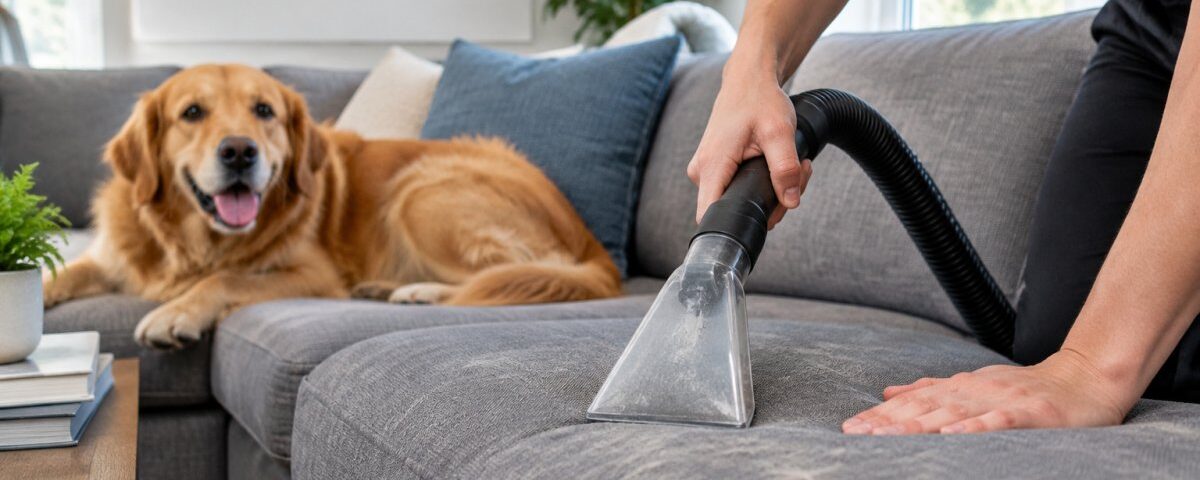
Last Updated: November 18, 2026
Quick Summary
To remove pet dander from fabric upholstery, strip and wash removable covers in the hottest water the care label allows, lift loose hair with a lint roller, then vacuum slowly with a HEPA machine before applying a code-matched cleaner. Pet dander removal works best when you vacuum before adding any moisture and dry the fabric completely and quickly.
- Wash removable covers with detergent in the hottest water the care label allows.
- Lift loose hair with a lint roller or damp rubber glove before vacuuming.
- Vacuum at roughly half the speed you would use on carpet.
- Skip steam on S or X coded fabrics and on leather.
- Remaining cat allergen may take up to 6 months to clear after the cat leaves.
Table of Contents
- Why Pet Dander Clings to Fabric Upholstery
- Read the Fabric Care Label Before You Touch the Sofa
- Best Tools for Removing Pet Dander From Upholstery
- How to Remove Pet Dander From a Couch in 7 Ordered Steps
- How Long Pet Dander Stays on Fabric
- How to Remove Pet Dander From Car Upholstery
- How to Tell Whether the Dander Is Actually Gone
- Book a Deep Clean That Handles the Upholstery for You
- Frequently Asked Questions
Why Pet Dander Clings to Fabric Upholstery
Pet dander is the dead skin cells pets shed constantly, and it is far smaller than pet hair.
Fabric acts like a net. A 2022 study in PubMed’s research on washing and pet allergens found that mechanical washing with detergent is important for removing pet allergens from contaminated fabrics.
If you live with dogs, a full cleaning routine helps beyond the couch. Our guide on how often to clean a house with dogs covers the wider schedule.
Pet Hair vs. Pet Dander: What You Are Actually Removing
Pet hair is the visible strand you can pick up with your fingers. Pet dander is the invisible flake of skin, and it carries the allergen proteins that trigger symptoms.
That difference matters. Vacuuming up hair does not mean you removed the dander. The flakes sit lower in the fabric and lift into the air when disturbed, so they land on nearby surfaces too.
- Hair: visible, easy to see, sits on the surface
- Dander: microscopic, sinks into the weave, sticks to fibers
- Allergen proteins: ride on dander and saliva, cause the reaction
Read the Fabric Care Label Before You Touch the Sofa
The care label decides your method, not the other way around. Check the tag under the seat cushion before you spray, steam, or scrub anything.
Look for the cleaning code, usually a letter:
- W: water-based cleaner is fine
- S: solvent-based cleaner only, no water
- WS: either water or solvent works
- X: vacuum only, no liquid cleaner at all
Watch out: using water on an S-coded fabric can leave a ring or shrink the weave. Test any product on a hidden spot first, then wait for it to dry before you commit.
Best Tools for Removing Pet Dander From Upholstery
A HEPA-filter vacuum does most of the heavy lifting. HEPA traps the tiny particles a standard filter blows back into the room, and that is the whole point of pet dander removal.
Here is the short list we would put together:
- HEPA-filter vacuum with an upholstery attachment
- Lint roller or rubber gloves for loose hair
- Microfiber cloths for wiping
- Upholstery-safe cleaner matched to the care code
- Steam cleaner, only if the fabric allows it
- Washable covers, if your sofa has them
For technique, our vacuuming guide shows how to work an attachment along seams without grinding debris deeper. If you are weighing a robot vacuum for daily upkeep, this breakdown of robot vacuum cleaning explains where it helps and where it does not.
How to Remove Pet Dander From a Couch in 7 Ordered Steps
Order matters more than effort. Strip and wash what you can, lift the hair, then vacuum before you add any moisture. Moisture added too early turns loose dander into a paste that pushes deeper into the weave, and it makes the later vacuum pass less effective.
Step 1: Strip and Launder Everything Removable
Pull off cushion covers, throws, and slipcovers. Wash them in the hottest water the care label allows, with detergent, then dry fully.
This is the single biggest win. The PubMed study found mechanical washing with detergent is key to removing pet allergens from fabric, and removable covers give you exactly that.
Watch out: a cover labeled dry-clean only can shrink or bleed in a home washer, so follow the cover’s own tag even when the sofa frame is W-coded.
Step 2: Lift Loose Hair Before You Vacuum
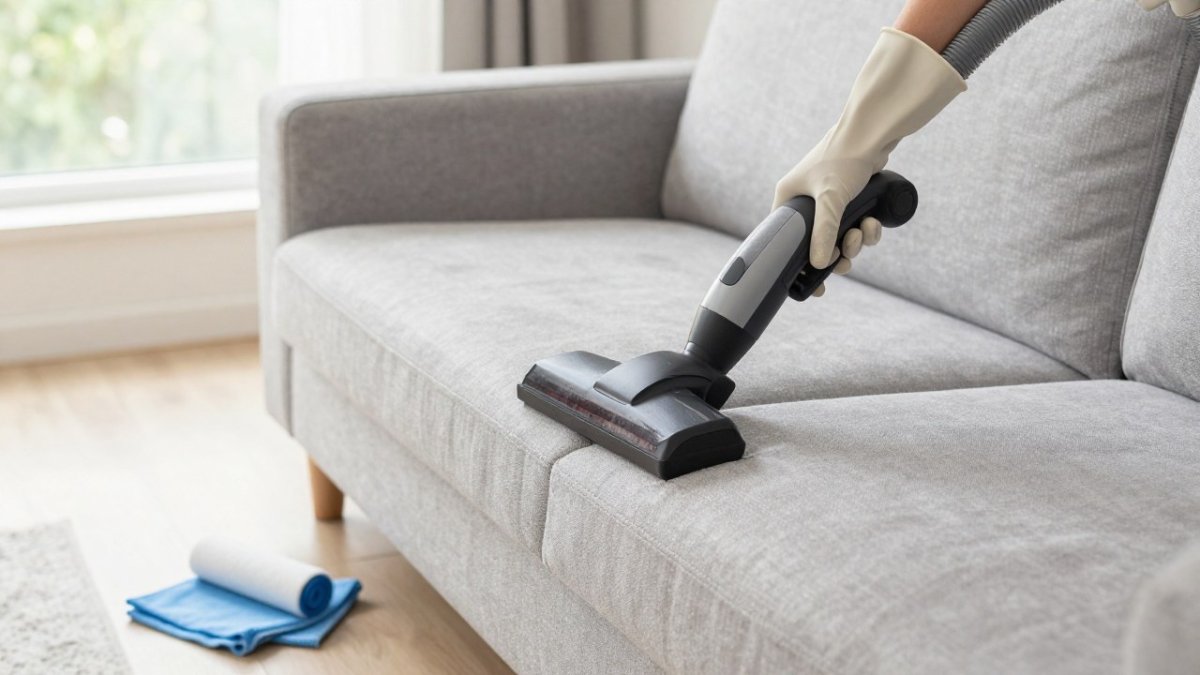
Run a lint roller or a damp rubber glove over the fabric first. Hair clogs vacuum attachments and pushes dander deeper if you skip this.
Work in one direction, then lift. Peel the roller sheet or rinse the glove as it fills up. Pay attention to the cushion tops and the front edge of the seat, where pets tend to lie.
Step 3: Vacuum Slowly With a HEPA Machine
Use the upholstery tool on seams, crevices, and under cushions. Overlap each pass.
Empty or bag-change the vacuum only after you finish the sofa, not mid-pass, so you do not blow collected dander back into the room.
Watch out: a standard (non-HEPA) vacuum can exhaust fine dander back into the air, so the pass can look clean while the room gets worse.
Step 4: Treat the Fabric With a Code-Matched Cleaner
Apply an upholstery-safe cleaner or allergen spray matched to the care code.
Apply to a microfiber cloth first, then work it into the fabric, rather than spraying the sofa directly. That keeps moisture out of the cushion fill and avoids overspray on adjacent fabric.
Watch out: mixing a water-based cleaner with a solvent-based one, or layering an allergen spray over a wet cleaner, can leave sticky residue that attracts new dust.
Step 5: Steam Only If the Fabric Allows It
Steam cleaning lifts residue from the weave. Skip it on S or X coded fabrics, and skip it on leather, which can dry and crack.
Keep the steam head moving and do not hold it in one spot. Let the fabric cool and dry between passes so you can see whether a water ring is forming.
Watch out: steam on a W-coded fabric is usually fine, but on a bonded or glued backing it can loosen the adhesive, so test a hidden corner first.
Step 6: Dry Completely and Quickly
Open windows or run a fan. Damp fabric grows dust mites, which are their own allergen. Once the upholstery is dry, removing lingering pet hair can help keep loose allergens from settling back into the fabric, and Magic Fabric™ offers another way to think about cleaning upholstery.
If the room is humid, a dehumidifier speeds drying more than a fan alone. Do not put the cushions back until the deck and the cushion underside are both dry.
Step 7: Wipe Down Nearby Surfaces
Dander lands on hard surfaces too. Wipe tables, arms, and the floor around the sofa with a damp microfiber cloth, then rinse the cloth rather than reusing it dry. Our guide to cleaning high touch surfaces covers the wipe-down in detail.
Finish by running the HEPA vacuum once more over the seat and seams after everything is dry. This second pass catches dander that settled while you worked.
Here is the order the article recommends, with the key action for each step.
| Step | What to do | Key detail |
|---|---|---|
| 1 | Strip and launder removable covers | Hottest water the care label allows, with detergent |
| 2 | Lift loose hair first | Lint roller or damp rubber glove |
| 3 | Vacuum slowly with a HEPA machine | Upholstery tool on seams, crevices, under cushions |
| 4 | Treat with a code-matched cleaner | Apply to a microfiber cloth, not the sofa |
| 5 | Steam only if the fabric allows | Skip on S or X coded fabrics and leather |
| 6 | Dry completely and quickly | Open windows or run a fan; lift cushions |
| 7 | Wipe down nearby surfaces | Damp microfiber cloth, then rinse it |
How Long Pet Dander Stays on Fabric
Dander can linger far longer than most people expect. The American Academy of Allergy, Asthma & Immunology community response notes that remaining cat allergen may take up to 6 months to clear after the cat leaves the home. A single cleaning pass will not wipe the slate clean.
That is why frequency beats intensity. Apply a regular rhythm to your couch: quick vacuum weekly, deep clean monthly.
How to Remove Pet Dander From Car Upholstery
Car seats collect the same dander, and the method barely changes. Vacuum the seats and floor mats with a HEPA handheld, then wipe hard surfaces like the dash and door panels.
- Use a lint roller on cloth seats first
- Vacuum seams and the seat gap with a crevice tool
- Wipe vinyl and leather with a microfiber cloth
- Replace the cabin air filter on schedule
Skip steam on leather. It can dry and crack the finish.
How to Tell Whether the Dander Is Actually Gone
You cannot see dander, so check the signs instead. Fewer sniffles after sitting down, less visible hair on a lint roller, and a fresher smell are the practical markers.
Treat these as indicators, not proof. A clean-looking sofa can still hold dander deep in the cushion fill. The goal is to reduce the load and keep it low.
Try this simple check:
- Roll a clean lint roller over the seat, then inspect the sheet for gray film as well as hair
- Wipe a dark microfiber cloth along a seam and look for a gray or tan residue
- Run a HEPA vacuum over the same spot and check whether the filter or canister shows a fresh layer of fine dust
- Note symptoms over the next few days, ideally with a window open and the sofa in normal use
- Vacuum again if hair reappears quickly, which usually means the source is still shedding onto the fabric
Set realistic expectations.
Book a Deep Clean That Handles the Upholstery for You
Some sofas need more than a home pass. Read whether professional house cleaning is worth it before you decide.
Dander hides in the weave, so the fix is a proper ordered clean, not a quick brush. Ultim8 Cleaning Services brings insured, background-checked cleaners, environmentally safe products, and checklist-driven detail to every visit, with instant online booking that fits your week.
Frequently Asked Questions
Can a vacuum remove pet dander from a sofa?
A vacuum pulls surface hair and loose dander out of fabric fibers, but it works best as one stage of a larger routine. Use a HEPA-filtered machine with an upholstery attachment, and go slowly over seams, cushion gaps, and the deck under the cushions. Regular HEPA-filtered vacuuming is commonly recommended as part of home allergen control. Vacuuming alone will not lift dander that has worked deep into the filling, so pair it with laundering removable covers and a steam pass where the fabric allows.
How long does cat dander stay on fabric after the cat leaves?
Longer than most people expect. Remaining cat allergen can persist in a home for a considerable time after the cat is removed. That is why a single cleaning session rarely settles the question of how long pet dander stays on fabric. Repeated vacuuming with a HEPA filter, hot-water laundering of washable covers, and wiping hard surfaces nearby all shorten the timeline. If allergies persist, have the upholstery professionally extracted rather than spot-treated.
Should you steam-clean upholstery to remove pet dander?
Steam helps on fabrics that can take heat and moisture, because the combination lifts trapped allergen proteins and kills dust mites. Check the care code first: W means water-based cleaning is fine, S means solvent only, and X means vacuum only with no liquid. On a second-hand sofa or a piece with unknown filling, test a hidden patch and let it dry fully before committing. Over-wetting cushions can grow mildew, which creates a new problem. A low-moisture extraction pass is safer than soaking.
What neutralizes pet dander on furniture?
Nothing chemically neutralizes dander, because the allergen is a protein that has to be physically removed. Mechanical washing with detergent is what a 2022 PubMed study identified as important for pulling pet allergens off contaminated fabrics. In practice that means detergent and water on washable covers, HEPA vacuuming on fixed upholstery, and damp-cloth wiping on nearby hard surfaces. Enzyme sprays and allergen sprays can help break down residue, but they supplement removal rather than replace it. Ventilate the room and follow the product label.