
How Do You Check a Cleaning Company’s Background Policies?
November 15, 2026
Hiring Cleaners for Vacation Rental Turnovers
November 16, 2026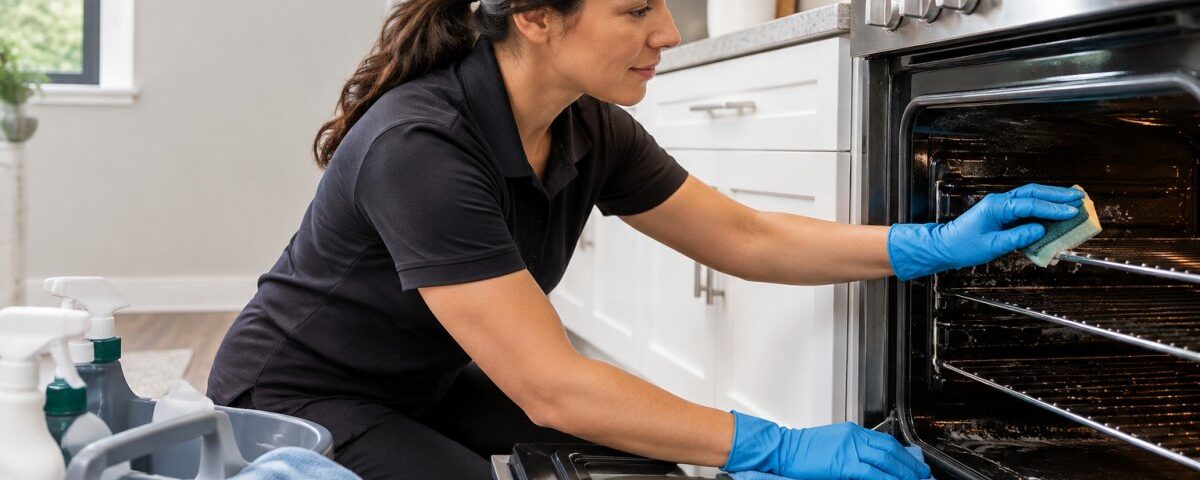
Last Updated: November 14, 2026
Quick Summary
Deep cleaning rental kitchen appliances means using soft tools first and harsh chemicals last, with baking soda and vinegar instead of abrasive cleaners. Unplug each appliance or cut power at the breaker before cleaning inside, and check the manufacturer’s guide whenever you’re unsure.
- A 2022 American Cleaning Institute survey found 36% of Americans were unfamiliar with manufacturers’ appliance cleaning recommendations.
- Make a paste of roughly three parts baking soda to one part water and let it sit for several hours or overnight.
- Soak range hood grease filters in hot water and dish soap for 15-30 minutes, then scrub with a soft brush.
- Steam the microwave by running a bowl of water with a splash of vinegar for two to three minutes.
- Photograph everything before and after you clean to protect your deposit.
Table of Contents
- Rental Kitchen Cleaning Checklist: Supplies, Safety, and Order of Operations
- How to Clean a Rental Oven Without Damaging It
- How to Clean a Rental Refrigerator and Remove Odors
- Cleaning Behind the Fridge and Stove Safely
- Dishwashers, Range Hoods, and Small Appliances: The Overlooked Spots
- Documenting Conditions and Talking to Your Landlord
- Book a Move-In or Move-Out Deep Clean With Ultim8
- Frequently Asked Questions
Rental Kitchen Cleaning Checklist: Supplies, Safety, and Order of Operations
Deep cleaning a rental kitchen comes down to one rule: clean it hard, but clean it carefully. Damage to appliances can cost you a deposit. Rental kitchen jobs that go smoothly tend to follow the same pattern. Soft tools first, harsh chemicals last, and never a scratch on a surface you don’t own.
A 2022 survey from the American Cleaning Institute found that 36% of Americans were unfamiliar with manufacturers’ recommendations for cleaning and maintaining home appliances. That gap matters more in a rental, where the oven and fridge belong to someone else.
Below, we’ll walk through deep cleaning tips for rental kitchen appliances one appliance at a time. You’ll get the supply list, a safe order of operations, and the spots most renters miss.
Renter-Safe Supplies and Products to Use
Skip the abrasive cleanser. A scratched cooktop or a dulled stainless door is the fastest way to lose part of your deposit. Stock these instead:
- Baking soda and white vinegar for most surfaces
- Dish soap and warm water for everyday grease
- A non-abrasive cleaner labeled safe for glass and stainless
- Microfiber cloths and a soft sponge
- An old toothbrush for rubber seals and corners
- A plastic scraper for baked-on food, never metal
Mix vinegar and water in a spray bottle for shelves and door rims. Keep one dry cloth on hand for the final wipe down.
Safety Precautions Before You Start
Unplug the appliance or cut power at the breaker before you clean inside it. This applies to the oven, fridge, dishwasher, washer, and microwave. Let a warm oven cool completely before cleaning. A hot cooking surface plus a wet cloth can crack glass.
Other basics:
- Open a window and wear gloves
- Pull the fridge and stove out only if you can do it without straining your back or scraping the floor
- Never spray liquid directly into control panels or vents
- Check the manufacturer’s guide for anything you’re unsure about
Here are the renter-safe supplies and safety steps the article recommends before you start cleaning any appliance.
| Item | Use or rule |
|---|---|
| Baking soda and white vinegar | For most surfaces |
| Dish soap and warm water | For everyday grease |
| Non-abrasive cleaner | Labeled safe for glass and stainless |
| Microfiber cloths and soft sponge | General wiping and scrubbing |
| Old toothbrush | For rubber seals and corners |
| Plastic scraper | For baked-on food, never metal |
| Power | Unplug or cut power at the breaker first |
| Oven temperature | Let a warm oven cool completely before cleaning |
How to Clean a Rental Oven Without Damaging It
The safest way to clean a rental oven is to avoid harsh oven cleaners and let baking soda do the work. Strong chemical sprays can pit the enamel and stain the racks.
Before you touch anything, check the oven manual or the label inside the door. Many rental ovens have a self-cleaning cycle, and using one without checking the manual can damage a unit the renter does not own.
Here’s the process:
- Remove the racks and soak them in warm water and dish soap. For heavy grease, add a scoop of baking soda to the soak water.
- Make a paste of baking soda and water, roughly three parts baking soda to one part water, and spread it over the interior, avoiding the heating element and the temperature sensor.
- Let it sit for several hours or overnight. The paste lifts grease without scratching enamel.
- Wipe it out with a damp cloth and rinse well. A spray bottle of plain water helps loosen dried paste.
- Scrub stubborn spots with a soft sponge and a plastic scraper, never metal.
- Clean the door glass and the rubber seal around the opening. The seal traps crumbs and grease, and a torn seal is a common move-out charge.
Watch out: never spray oven cleaner or any liquid directly onto the heating element, the temperature sensor, or the control panel. Liquid in those parts can cause a short or a false reading, and repairs on a rental oven are rarely cheap.
For the door glass, a paste of baking soda and water works between the panes only if the glass is removable per the manual. For a full walkthrough that goes beyond the oven, see our guide on how to deep clean your kitchen appliances.
How to Clean a Rental Refrigerator and Remove Odors
The fastest way to kill fridge odors is to remove the source, not mask it. Old spills under the drawers and spoiled food in the back are usually the cause. Empty the fridge completely before you start.
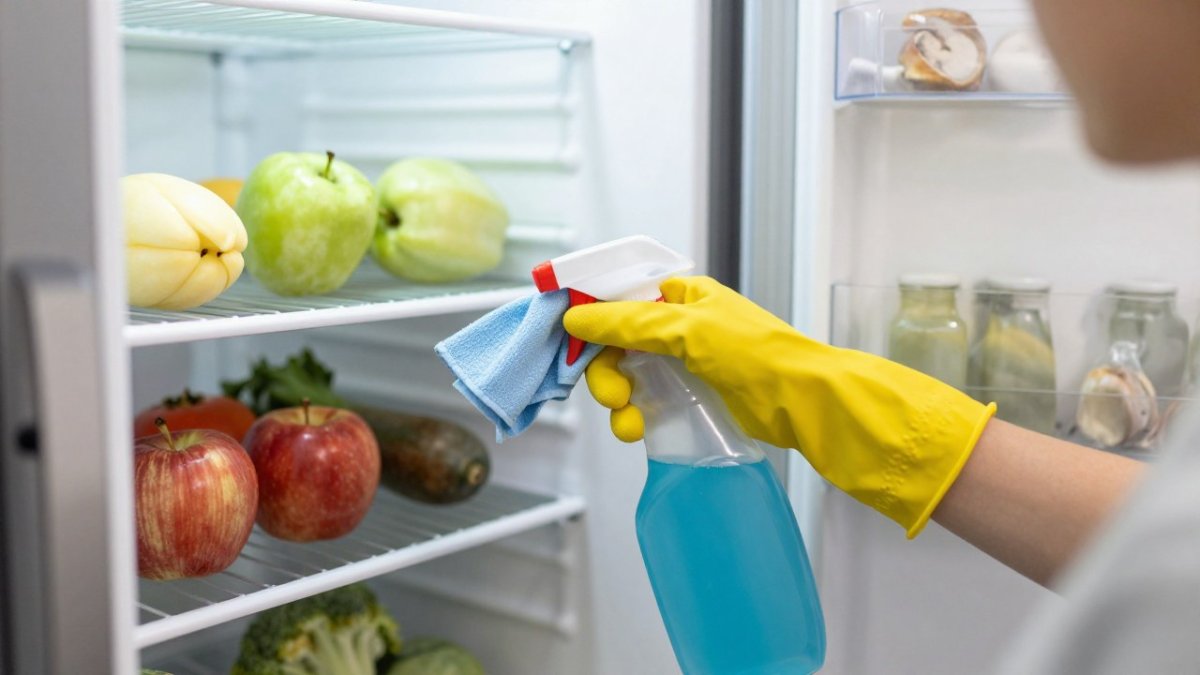
Take out every shelf and drawer. Wash them in warm water with dish soap, then wipe down the appliance interior with vinegar and water. Pay attention to the door rim and the rubber seal, where crumbs and mold collect. Dry everything with a clean cloth before you put it back.
For odors, leave an open box of baking soda on a shelf. Check the drip pan and the vents too. If a smell lingers after a full clean, note it for your landlord.
Cleaning Behind the Fridge and Stove Safely
Cleaning behind the fridge and stove is where most renters stop, and where the worst buildup hides. Grease and dust collect back there for years. But these are heavy appliances, and pulling them wrong can scratch the floor or damage a gas line.
Do this instead:
- Unplug the fridge before moving it
- Pull it out slowly with a second person if possible
- Place a thin cloth or cardboard under the feet to protect the floor
- Vacuum the coils and wipe the wall behind
- Never disconnect a gas stove yourself
If the stove is gas or the appliance won’t budge, clean what you can reach and leave the rest. This is a job for a pro.
Dishwashers, Range Hoods, and Small Appliances: The Overlooked Spots
The spots renters forget are usually the ones that cause complaints at move-out. The dishwasher filter, the range hood filter, and the microwave interior all trap grease and food residue. Each one has a rental-safe way to clean it and a way that risks damage.
Dishwasher
- Pull the bottom rack out and remove the filter. Most filters twist out by hand; check the manual if it doesn’t budge.
- Rinse the filter under warm running water and scrub it with a soft brush and dish soap. Food film on the filter is the usual cause of odors and cloudy glasses.
- Wipe the door gasket, the rubber rim around the opening, with a vinegar-and-water cloth. Crumbs and mold collect there, and a torn gasket can leak.
- Run an empty cycle with a cup of white vinegar placed upright in the top rack. Don’t pour vinegar into the detergent dispenser.
Watch out: never put vinegar and bleach in the dishwasher in the same cycle, and don’t use vinegar on a stainless steel tub if the manual warns against it, some finishes can discolor.
Range Hood
- Turn off the hood and let it cool.
- Remove the metal grease filter. Most slide out or release with a latch.
- Soak the filter in hot water and dish soap for 15-30 minutes, then scrub with a soft brush. For heavy grease, add a scoop of baking soda to the soak.
- Wipe the hood exterior with a non-abrasive cleaner safe for its finish. Match the cleaner to the finish, stainless, painted, or glass, and test a hidden spot first.
- Wipe the underside and the light cover with a damp cloth.
Watch out: don’t put a metal grease filter in the dishwasher unless the manual says it’s dishwasher-safe. Some finishes pit or discolor in a dishwasher cycle.
Microwave
- Unplug it or cut power at the breaker.
- Put a bowl of water with a splash of vinegar inside and run it for two to three minutes. The steam loosens food residue.
- Wipe the interior with a damp cloth, then dry it.
- Clean the door seal and the turntable with warm soapy water.
Watch out: never spray liquid directly into the vents or the control panel, and don’t use abrasive pads on the interior coating.
Small Appliances
For a coffee maker, run a vinegar-and-water cycle per the manual, then two plain-water cycles to rinse. For a toaster, unplug it, empty the crumb tray, and wipe the exterior with a dry or barely damp cloth, never submerge it. For a kettle, boil a vinegar-and-water mix, then rinse thoroughly.
Want a full room-by-room list? Use our ultimate kitchen cleaning checklist to work through every appliance in order.
Documenting Conditions and Talking to Your Landlord
Photograph everything before and after you clean. Date-stamped photos of pre-existing damage protect your deposit. If you find a broken seal, a cracked shelf, or mold behind the fridge, report it in writing right away. Don’t try to fix damage you didn’t cause.
Renters moving out should review a move-out cleaning checklist for renters to make sure the kitchen meets the lease terms.
Book a Move-In or Move-Out Deep Clean With Ultim8
A rental kitchen deep clean takes hours, and one missed spot can cost you at move-out. That’s where we come in. Ultim8 Cleaning Services sends insured, background-checked cleaners who work through a detailed checklist, using environmentally safe products.
Booking is available online. Not sure how a move-out clean differs from a standard one? Read move out cleaning vs standard cleaning first, then schedule a move-in maid service and start fresh in a spotless new home.
Your lease is a contract, and the kitchen is where deposits quietly disappear. Don’t gamble on a rushed DIY job. Ultim8 Cleaning Services brings insured, background-checked cleaners, environmentally safe products, and a detailed checklist to every move-in and move-out clean. Get started with Ultim8 Cleaning Services and hand back the keys with confidence.
Frequently Asked Questions
How do you deep clean kitchen appliances in a rental without causing damage?
Stick to non-abrasive cleaners, baking soda paste, and white vinegar diluted with water. Avoid steel wool, bleach on stainless steel, and harsh oven cleaners that can strip finishes. Always let appliances cool before cleaning, test any new product on a hidden spot, and never submerge removable parts in water unless the manufacturer allows it. Document any pre-existing damage with photos before you start so you are not blamed for wear that was already there.
What should you clean in a rental kitchen before moving in?
Run through a rental kitchen cleaning checklist that covers the fridge interior and door seals, oven and stovetop, dishwasher filter and dispenser drawer, range hood filter, and the spaces behind and under appliances. Wipe down cabinet fronts, handles, and drawer pulls. Take dated photos of anything worn or broken, then email them to your landlord so the condition is on record before you unpack.
How do you clean behind a refrigerator or stove safely?
Unplug the fridge or switch off the stove breaker first. Pull appliances out slowly with a helper or furniture sliders, and never drag them across flooring that can scratch. Vacuum coils and sweep up crumbs, then wipe the wall and floor with a mild cleaning solution. Check the fridge water line and stove gas connection for damage before pushing anything back. If an appliance will not move easily, clean what you can reach and note it for your landlord rather than forcing it.
Should renters deep clean appliances before moving out?
Yes, and it protects your security deposit. Most leases require appliances returned to the condition you received them, minus normal wear. Focus on the oven interior, fridge shelves and seals, dishwasher filter, and stovetop drip pans. Keep receipts or photos of your move-out cleaning.