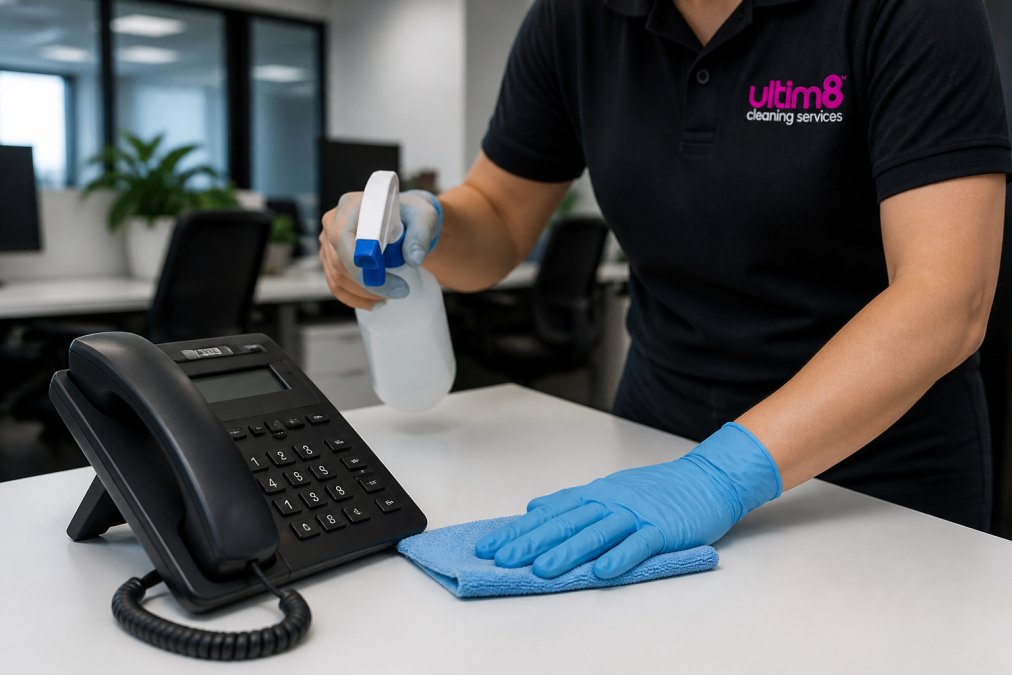
Deep Cleaning for Office High-Touch Surfaces: A Step-by-Step Guide
October 5, 2026
Table of Contents
- Why Homeowners Look for a Molly Maid Alternative for Residential Cleaning
- How to Compare Residential Cleaning Providers: A Criteria-Based Framework
- What Does House Cleaning Service Cost Actually Include?
- Recurring House Cleaning Schedule Options: Weekly, Biweekly, or Monthly
- Questions to Ask a Cleaning Service Before You Book
- The Cleaning Service Checklist: What a Thorough Visit Should Cover
- What Sets Ultim8 Cleaning Services Apart as a Molly Maid alternative
- Frequently Asked Questions
Last Updated: October 6, 2026
Why Homeowners Look for a Molly Maid Alternative for Residential Cleaning
Search interest in a Molly Maid alternative for residential cleaning has climbed steadily as homeowners compare franchise consistency against something more flexible. The reasons are rarely dramatic. A crew changes, a schedule shifts, or a quote arrives higher than expected, and suddenly the service that felt dependable stops feeling personal.
Franchise Consistency vs. Local Flexibility
Franchises sell standardization. You get a recognized name, a defined process, and a national brand behind the work. That structure appeals to homeowners who want predictability above all else.
The trade-off shows up in flexibility. Franchise locations often follow corporate scheduling rules, which can make it harder to request a specific cleaner, adjust your cleaning frequency, or add a niche task like interior window tracks.
That flexibility matters most for households with irregular weeks, pets, or a home office that needs quiet hours. For a broader look at how the industry frames service standards, the U.S. Small Business Administration guidance on choosing service providers offers useful context on vetting local businesses.
Franchise consistency is real, but so is the rigidity. If your schedule or household needs shift month to month, a locally operated provider is usually the better fit.
How to Compare Residential Cleaning Providers: A Criteria-Based Framework
The most reliable way to evaluate a house cleaning service is to score every provider against the same five criteria: pricing transparency, service scope, staffing and screening, scheduling flexibility, and reputation. Comparing on identical criteria stops you from choosing based on a slick website instead of substance.
What to Compare When Choosing a House Cleaning Service
Run each candidate through this framework before you book:
| Criteria | What to Look For | Why It Matters |
|---|---|---|
| Pricing transparency | Written quote before the first visit | Prevents surprise add-ons |
| Service scope | Itemized checklist of included tasks | Reveals hidden gaps |
| Staffing | Insured, background-checked cleaners | Protects your home and liability |
| Scheduling | Weekly, biweekly, or monthly options | Matches your routine |
| Reputation | Recent reviews and referrals | Confirms reliability |
A common mistake is comparing only on price. Two quotes that look similar on paper can cover very different amounts of work.

What Does House Cleaning Service Cost Actually Include?
House cleaning service cost depends on your home size, the number of rooms, cleaning frequency, and the depth of the work, so no honest provider quotes a flat number before seeing your space. What you can compare is what the price includes.
The Four Variables That Move the Price
Every residential cleaning quote is built from the same four inputs. Understanding them lets you predict where a bid will land before you ever pick up the phone.
- Square footage and room count. A 1,200-square-foot two-bedroom and a 3,000-square-foot four-bedroom are not the same job even if both are “standard cleans.” More rooms means more surfaces, more floors, and more time.
- Visit frequency. Recurring service is priced lower per visit than a one-time clean because the home stays closer to baseline between visits. A weekly plan usually carries the lowest per-visit rate, biweekly sits in the middle, and monthly or one-time work costs the most per visit.
- Cleaning depth. A standard clean maintains a home that is already reasonably tidy. A deep clean resets one that has not been professionally cleaned in months. Move-in and move-out cleans sit at the top of the range because they often include inside cabinets, appliances, and closets.
Why Quotes Vary So Much Between Providers
Most of the variation comes from scope, not markup. One quote may cover surface cleaning only. Another bundles deep cleaning tasks like baseboards, inside-oven work, or appliance exteriors. A third may look cheaper until you realize it excludes supplies or charges a trip fee.
Ask each provider to break the quote into three parts: the base service, any add-on services, and travel or supply fees. That breakdown is what makes two quotes genuinely comparable.
How to Normalize Two Quotes Side by Side
Use the same home profile when you request estimates so the numbers mean something. Give every provider the same inputs: square footage, bedroom and bathroom count, number of pets, whether the home has been professionally cleaned in the last 90 days, and the frequency you want.
Then compare on three lines:
- Per-visit price for the frequency you actually want, not the introductory rate.
- Included task list, itemized in writing.
- Fees outside the base price, including supplies, travel, and any surcharge for the first deep clean.
A provider that quotes a higher per-visit rate but includes supplies and interior windows may cost less than a lower bid that charges for both as add-ons. The only way to know is to put the two itemized lists next to each other.
What a Fair Price Looks Like in Practice
Pricing in residential cleaning tracks local labor costs, so rates shift by market. A common pattern is that recurring biweekly service costs less per visit than a one-time clean of the same home, and the first visit on any new recurring plan is usually priced as a deep clean because the home needs a reset. Ask each provider to confirm whether the first visit is priced differently and what the second visit will cost.
A quote that seems low often excludes add-ons you assumed were included. Ask for the itemized list in writing before you commit, or you may pay more than the competing bid you rejected.
Request all estimates within the same week and describe your home identically each time. Quotes gathered under different assumptions are not comparable, no matter how close the final numbers look.
Recurring House Cleaning Schedule Options: Weekly, Biweekly, or Monthly
The right recurring house cleaning schedule comes down to how fast your home accumulates mess, not how much you want to spend. Busy families with pets and kids often land on biweekly cleaning. Lighter households can stretch to monthly.
Here is how the options compare:
- Weekly cleaning: Best for large households, pets, or allergy concerns. Maintains a consistently clean baseline. Highest monthly spend, lowest per-visit rate.
- Biweekly cleaning: The most common middle ground. Keeps the home presentable without a weekly commitment. Most households with one or two pets and kids land here.
- Monthly cleaning: Suits smaller homes, solo residents, or anyone who tidies between visits. Lowest monthly spend, highest per-visit rate.
Match the Schedule to Your Household
Schedule choice is really a household question. Use these patterns as a starting point:
- Pets that shed year-round. Biweekly is usually the floor. Weekly makes sense if you have more than one heavy-shedding animal or a household member with allergies.
- Young children. Biweekly keeps kitchens and bathrooms at a sanitary baseline without requiring the family to pick up every day.
- Allergy or asthma concerns. Weekly or biweekly, with a focus on dusting, vacuuming with HEPA filtration, and bathroom moisture control.
The One-Time to Recurring Path
Many homeowners start with a one-time deep cleaning, then convert to a recurring plan once they see the results. That sequence works because the first visit resets the home to a maintainable baseline, and every visit after that is cheaper per visit because the cleaner is maintaining rather than catching up.
If you are switching from another provider, you can usually keep your current service running until your first visit with the new one proves the difference. There is no need to cancel before you have seen the work.
Scheduling Mechanics to Confirm Before You Book
Ask each provider how these work before you commit:
- Same cleaner each visit. Consistency matters more than most homeowners expect. A rotating crew means re-explaining preferences every time.
- Rescheduling window. How much notice is required to move a visit without a fee?
- Holiday and vacation handling. Does the provider skip, shift, or credit a visit when you travel?
Pick the schedule you can sustain for six months, not the one that looks best on a single invoice. Consistency is what keeps per-visit pricing low and results predictable.
Questions to Ask a Cleaning Service Before You Book
The questions to ask a cleaning service should cover insurance, screening, and what happens when something goes wrong. These three areas separate professional operations from informal ones.
Insurance, Screening, and Damage Policies
Ask directly: Are your cleaners insured? Are they background-checked, and can you show proof? What is your policy if something is damaged?
A trustworthy provider answers these without hesitation. General liability insurance protects you if a cleaner damages property, and background checks confirm who is entering your home. If a company dodges these questions, treat it as a red flag.
Ask for a certificate of insurance and the name of the screening service before your first visit. Legitimate providers keep both on hand and share them without friction.
The Cleaning Service Checklist: What a Thorough Visit Should Cover
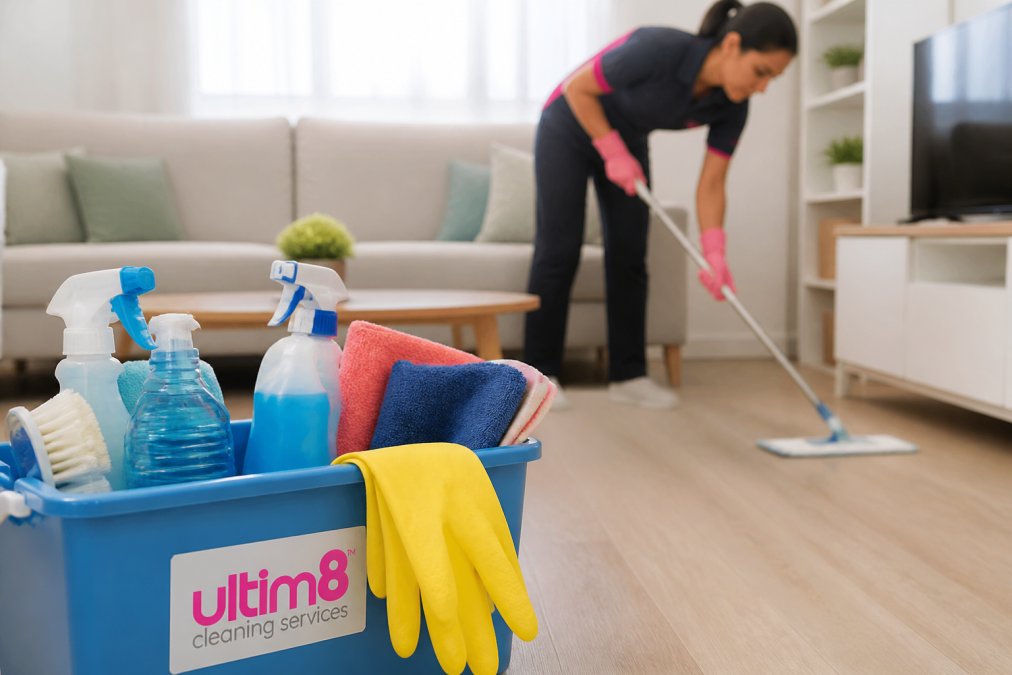
A cleaning service checklist turns a vague promise into something you can verify after each visit. A thorough standard cleaning typically covers:
- Dusting of all reachable surfaces, including shelves and blinds
- Vacuuming and mopping of all floors
- Kitchen counters, sink, and appliance exteriors
Deep cleaning adds baseboards, inside-oven work, interior windows, and grout scrubbing. For office spaces, high-touch surfaces like desks, conference tables, and door handles deserve dedicated attention. Ultim8 Cleaning Services trains every cleaner to work through detailed checklists so nothing gets skipped.
What Sets Ultim8 Cleaning Services Apart as a Molly Maid alternative
Ultim8 Cleaning Services stands out as a Molly Maid alternative because we combine franchise-level reliability with the flexibility of a locally operated team.
Booking takes minutes through our instant online booking system, and our flexible scheduling covers weekly, biweekly, monthly, and one-time visits. We also handle office cleaning for teams across the region.
What most guides miss is that switching providers is easier than people expect. You keep your current service until your first visit with us proves the difference.
For detail-oriented work, the U.S. Environmental Protection Agency’s Safer Choice program explains what to look for in environmentally safe cleaning products, which guides what we bring into your home.
Frequently Asked Questions
What should I compare when choosing a house cleaning service?
Compare insurance and bonding status, how staff are screened, whether pricing is a flat quote or an hourly rate, the exact scope of each visit, and whether you can see the checklist they work from. Ask about their damage policy and cancellation terms. A provider that answers all of these clearly before you book is more likely to deliver consistent results. Ultim8 Cleaning Services, for example, publishes its insured and background-checked status and uses detailed checklists on every visit.
Are independent house cleaners cheaper than cleaning companies?
Independent cleaners often quote lower hourly rates because they carry less overhead, but the trade-off is that you may need to verify insurance, screening, and backup coverage yourself. A cleaning company typically bundles those protections into its pricing. When comparing, ask each provider what happens if the assigned cleaner is sick, whether they carry liability insurance, and whether a written scope of work is included. The lowest rate is not always the lowest total cost once risk is factored in.
How much should a residential cleaning service charge per hour?
Hourly rates vary widely by region, home size, and the depth of cleaning requested, so there is no single number that applies everywhere. Instead of anchoring on a rate, ask each provider for a written quote based on your home’s square footage, number of rooms, and whether you want standard, deep, or move-in/move-out cleaning. That quote should list what is included and any add-on services.
How can I check whether a cleaning service is insured and background-checks its cleaners?
Ask for a certificate of insurance and the name of the bonding company, then verify the policy is current. For background checks, ask what type of check is run (county, state, or federal), how often it is repeated, and whether new hires are screened before their first job. A trustworthy provider will answer without hesitation. Ultim8 Cleaning Services states that all cleaners are insured and background-checked, and you can request documentation before your first visit.
Switching cleaning providers feels risky when you have been burned before by inconsistent crews or vague pricing. Ultim8 Cleaning Services removes that risk with insured, background-checked cleaners, environmentally safe products, instant online booking, and checklist-driven visits that leave nothing to chance. Get started with Ultim8 Cleaning Services and reclaim your weekends with dependable, detail-oriented residential cleaning.