Recurring Office Cleaning Benefits for Your Business
September 9, 2026
Table of Contents
- What Counts as a High Touch Surface?
- The Difference Between Cleaning and Disinfecting
- What You’ll Need to Clean High Touch Surfaces
- Step-by-Step: How to Clean High Touch Surfaces
- Best Disinfectants for Home Use
- How Often to Clean High Touch Areas
- Common Mistakes to Avoid When Cleaning High Touch Surfaces
- Frequently Asked Questions
Last Updated: September 10, 2026
What Counts as a High Touch Surface?
A high touch surface is any object people contact frequently throughout the day, making it a prime transfer point for pathogens. These surfaces need more frequent cleaning than floors or walls because every hand can deposit or pick up germs.
Knowing how to clean high touch surfaces starts with knowing which ones matter most. The CDC guidance on cleaning and disinfecting groups them into two categories: non-porous surfaces like stainless steel and glass, which are easier to disinfect, and porous surfaces like fabric and wood, which need gentler handling.
Common High Touch Surfaces at Home
- Doorknobs, handles, and deadbolts
- Light switches and thermostat dials
- Refrigerator and microwave handles
- Remote controls and game controllers
- Faucets, toilet flushers, and sink edges
- Stair railings and cabinet pulls
Common High Touch Surfaces in the Workplace
- Shared keyboards, mice, and touchscreens
- Conference tables and chair armrests
- Elevator buttons and door push plates
- Break room appliances and coffee stations
- Copier touch panels and shared phones
- Reception counters and badge scanners
The Difference Between Cleaning and Disinfecting
Cleaning removes dirt, debris, and many germs using soap and water or a detergent. Disinfecting kills pathogens after cleaning, using an EPA-registered product applied for the full contact time on the label.
The order matters. A disinfectant sprayed onto a visibly dirty surface cannot reach the germs underneath the grime. Cleaning first, then disinfecting, is the sequence that reduces infection control risk, yet many people skip straight to the spray bottle.
What You’ll Need to Clean High Touch Surfaces
Gather these supplies before you start:
- Microfiber cloths (one set for cleaning, one for disinfecting)
- A mild detergent or soap and water
- An EPA-registered disinfectant or a bleach solution mixed fresh that day
- Alcohol-based wipes for electronics
- Disposable gloves
- A spray bottle and a small bucket
For electronics, keep alcohol-based wipes at 70% concentration (the CDC). Higher concentrations evaporate too fast to reach the required dwell time, and they can damage some screen coatings.
Step-by-Step: How to Clean High Touch Surfaces

Follow this sequence to clean high touch surfaces without spreading germs.
Step 1: Prep the Space and Protect Yourself
Open windows for ventilation and put on disposable gloves. Clear clutter off counters and desks so you can reach every contact point. This takes about five minutes and prevents cross-contamination later.
Step 2: Clean First, Then Disinfect
Work top to bottom, left to right. Wipe each surface with soap and water or detergent, then apply disinfectant and let it sit for the full contact time on the label, usually one to ten minutes. Do not wipe it dry early. Rinse food-contact surfaces afterward.
Step 3: Handle Electronics and Delicate Surfaces
Never spray liquid directly onto a screen or keyboard. Apply an alcohol-based wipe or dampened microfiber cloth to the cloth first, then wipe. For wood and porous finishes, use a manufacturer-approved cleaner and avoid soaking.
Best Disinfectants for Home Use
The best disinfectant is EPA-registered for your target pathogens, safe for your surface material, and realistic to use at the labeled contact time. Those three filters matter more than brand. A product that kills everything but needs a ten-minute wet dwell on a faucet you need in two minutes will not get used correctly.
Match the Chemistry to the Surface
Most household disinfectants fall into a few active-ingredient families, each behaving differently on the materials you touch.
| Active ingredient | Typical contact time | Works well on | Avoid on |
|---|---|---|---|
| Quaternary ammonium | 1-10 minutes | Stainless steel, plastic, sealed stone, painted wood | Some natural stone; check the label |
| Sodium hypochlorite (bleach) | 1-10 minutes | Non-porous hard surfaces, tile, glass, white grout | Fabric, wood, most metals over time, screens |
| Isopropyl alcohol 70% | 30 seconds to 1 minute | Electronics, glass, stainless steel | Painted or varnished wood, some screen coatings |
| Hydrogen peroxide | 1-5 minutes | Counters, sinks, plastic, most hard surfaces | Marble and other acid-sensitive stone |
| Citric acid | 1-10 minutes | Sinks, faucets, tile | Natural stone, aluminum, anything acid-sensitive |
A few rules that prevent damage:
- Never use bleach or hydrogen peroxide on natural stone. Both can etch or dull marble, travertine, and limestone permanently.
- Keep alcohol off varnished or painted wood. It strips finishes faster than most people expect.
- Do not use vinegar on stone or aluminum. It is acidic and will pit or etch the surface over repeated use.
- Check the label for the word “disinfectant,” not just “cleaner.” A product can say it kills germs and still not carry an EPA registration number, which means it has not been reviewed for the kill claims on the label.
Read the Label Like a Technician
Every EPA-registered disinfectant has a registration number on the label, usually “EPA Reg. No.” followed by a number, proof the product has been reviewed for its claims. The label also lists the contact time (minutes the surface must stay visibly wet) and approved surfaces. If a surface is not on the label, the product is not approved for it.
People often spray, wipe immediately, and assume the job is done. If the surface dries before the contact time is up, the product did not finish working, on a warm day or porous surface, that can happen in under a minute.
Eco-Friendly Options That Still Disinfect
You do not have to choose between a product that works and one you feel comfortable using around kids and pets. Several EPA-registered disinfectants carry the Safer Choice label, flagging formulas reviewed for lower concern to human and environmental health. Hydrogen peroxide- and citric acid-based products are the most common in this category, and both are effective against many common pathogens at the labeled contact time.
What to look for:
- An EPA registration number, this is non-negotiable for a disinfectant claim.
- The Safer Choice label, indicates the formula has been reviewed for lower health and environmental concern.
- A contact time you will actually honor, a one-minute product beats a ten-minute product you wipe off early.
- A surface list that includes your material, eco-friendly does not mean universally safe; citric acid still etches stone.
For everyday touch points like light switches, handles, and remotes, a hydrogen peroxide or citric acid wipe at the full contact time handles most household needs. Reserve bleach for situations that call for it, a stomach bug, for example, and only on surfaces the label approves. identifying cleaning products.
If you are unsure whether a product is safe for a surface, test it on a hidden spot first and wait a few minutes. Finish damage often shows up immediately, but etching on stone can take a few applications to become visible.
Never mix bleach with ammonia, vinegar, or any acid-based cleaner (the CDC). The reaction releases toxic chlorine gas, and it happens fast even in small amounts. The same applies to mixing bleach with hydrogen peroxide.
What About “Natural” Products Without an EPA Number?
Many products marketed as natural cleaners do not carry an EPA registration because they are sold as cleaners, not disinfectants, meaning they make no kill claims. They can still serve as the cleaning step before you disinfect, and some, like plain soap and water, remove grime and many germs mechanically. Do not assume a natural cleaner disinfects unless the label says so and carries the registration number.
How Often to Clean High Touch Areas
There is no single correct frequency. The right schedule depends on how many people touch a surface, how often, and whether anyone in the space is sick. A doorknob in a two-person home and one in a lobby are the same object with very different risk profiles.
The Two Variables That Set Frequency
Think of frequency as a function of two things: traffic (how many people contact the surface per day) and vulnerability (how likely users are to get seriously ill). High-traffic, high-vulnerability surfaces need the most attention; low-traffic, low-vulnerability surfaces the least.
That gives you a simple ladder:
- Low traffic, healthy occupants: once daily is usually enough.
- Moderate traffic or one sick person: two to three times daily.
- High traffic or multiple vulnerable people: every few hours, or after each peak use window.
Home Cleaning Frequency
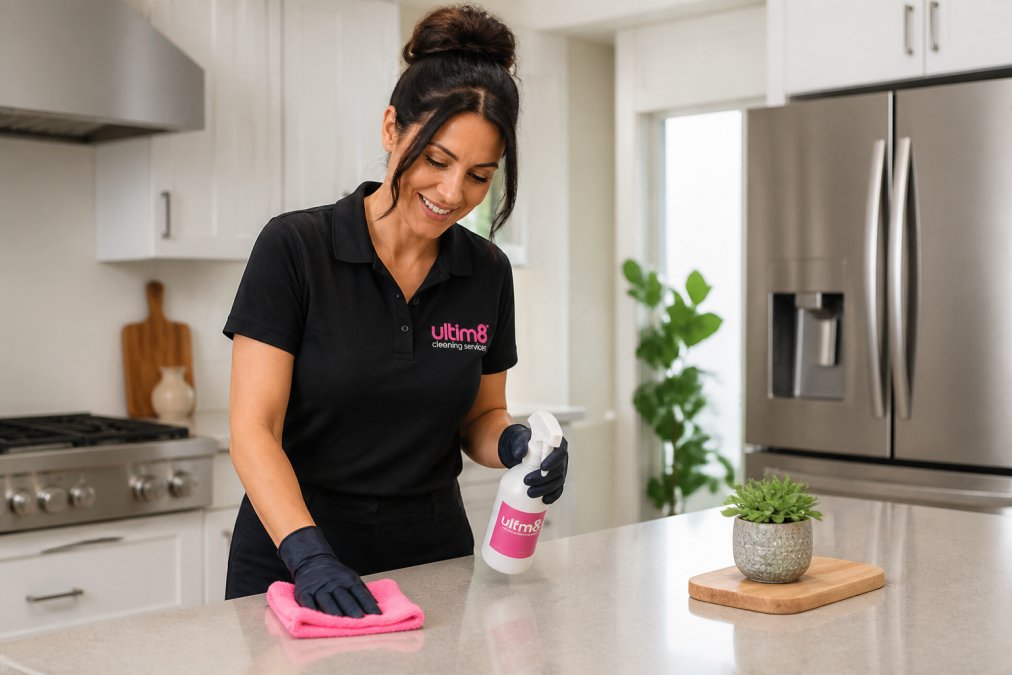
In a typical household, wipe down high touch surfaces once a day. If someone is sick, or you have a newborn or immunocompromised family member, increase to two or three times daily. Kitchen and bathroom contact points deserve the most attention because they combine frequent hand contact with moisture and food residue.
During cold and flu season, many households find it practical to add a second daily pass on the highest-contact items, refrigerator handle, microwave handle, faucet, and bathroom light switch, without doing a full-house wipe-down twice.
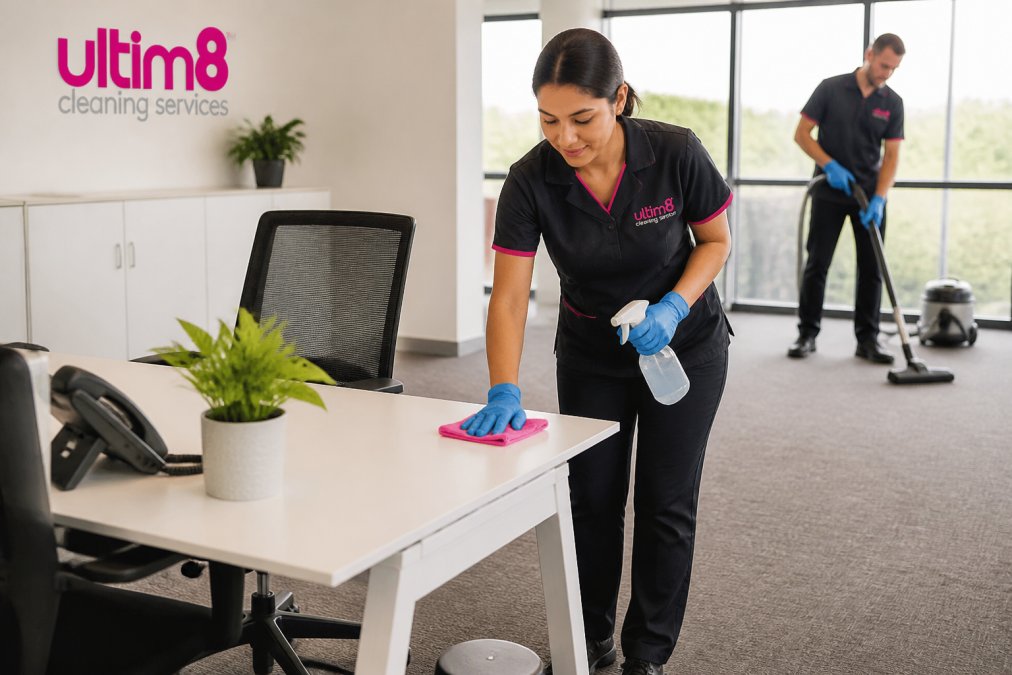
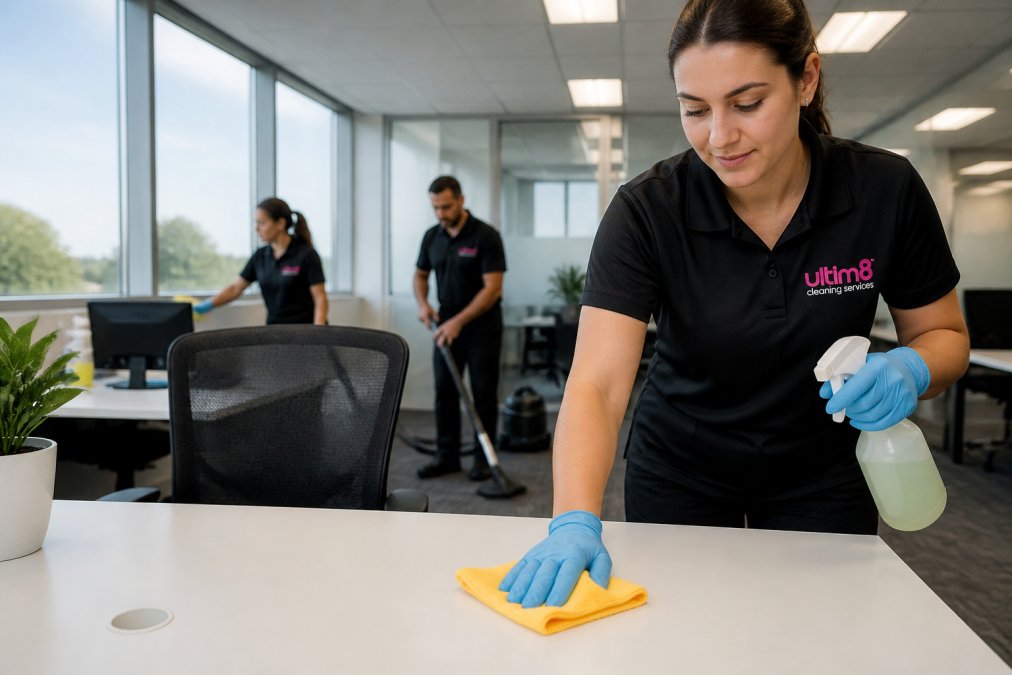
Offices and shared spaces should clean high touch surfaces at least once per shift, with a deeper pass each evening. High-traffic areas like reception desks, break rooms, and conference rooms benefit from a mid-day wipe-down. This is where a professional service with a checklist earns its keep, because consistency matters more than intensity.
Identify the top five contact points in each zone and prioritize those. In most offices: shared keyboard and mouse, conference table edge and chair armrests, break room appliance handles, copier touch panel, and restroom door hardware. Everything else can follow a lighter schedule.
A Frequency Table You Can Actually Use
| Space | Minimum Frequency | High-Risk Adjustment |
|---|---|---|
| Home kitchen and bath | Once daily | 2-3x daily when someone is sick |
| Home living areas | Once daily | Twice daily during flu season |
| Office desks and shared tech | Once per shift | After each hot-desk changeover |
| Break rooms and reception | Twice daily | After every peak traffic window |
| Restrooms | Twice daily | Every 2-3 hours in high traffic |
| Schools and childcare | Twice daily | After each group rotation |
| Healthcare waiting areas | Per facility policy | Follow the facility’s infection-control plan |
When to Escalate Immediately
Some situations call for cleaning right away:
- After a known illness in the space. Clean and disinfect the surfaces the person likely touched before anyone else uses them.
- After visible contamination. Blood, vomit, or other body fluids require cleaning first, then a disinfectant approved for the situation, following the label’s instructions for that use.
- During a local outbreak. Public health authorities sometimes issue guidance to increase frequency; follow that guidance over your normal schedule.
- After a large gathering. A party, meeting, or event concentrates contact on a small set of surfaces in a short window.
Keeping Surfaces Cleaner Between Passes
Frequency is only half the equation. Behavior between cleanings affects how quickly surfaces get contaminated again. A few habits reduce the load:
- Hand hygiene at the door. A pump bottle or sanitizer station near the entrance cuts what gets deposited on handles and switches.
- Touchless where practical. Motion-sensor faucets, automatic doors, and foot-pull cabinet handles remove contact points entirely.
- Designate a “clean hands” zone. In kitchens, keep a towel or hook near the sink so people are not grabbing the same handle with dirty hands.
- Wipe as you go. A quick wipe of a shared keyboard or break room counter after use takes seconds and extends the interval between full cleanings.
The single most useful change most households and offices can make is not cleaning more often, it is identifying the five surfaces that get touched most and committing to a consistent schedule for those, rather than a sporadic deep clean of everything.
Common Mistakes to Avoid When Cleaning High Touch Surfaces
The biggest mistake is disinfecting before cleaning, which leaves pathogens untouched under grime. A second is wiping disinfectant away before the labeled contact time passes, which stops the product from working.
Other mistakes we see often:
- Reusing the same cloth across every surface without rinsing, which spreads germs from the bathroom to the kitchen
- Skipping electronics because they feel risky, leaving the most-touched items untouched
- Mixing bleach with other cleaners, which can release toxic fumes
- Forgetting post-cleaning care, like letting surfaces air dry and washing your hands after you remove gloves
Never mix bleach with ammonia, vinegar, or any acid-based cleaner. The reaction releases toxic chlorine gas, and it happens fast even in small amounts.
For busy households and offices that want this done right without the time cost, Ultim8 Cleaning Services sends insured, background-checked cleaners trained on detailed checklists, using environmentally safe products. Booking takes a few minutes online, and our 63 Google reviews reflect the consistency clients keep coming back for.
Frequently Asked Questions
How often should high touch surfaces be cleaned?
High touch surfaces should be cleaned daily in busy homes and shared spaces. In workplaces, door handles, elevator buttons, and shared equipment benefit from cleaning at least once per shift. During cold and flu season, increase frequency to two or three times daily. The CDC recommends cleaning surfaces that are touched frequently more often than surfaces with low contact.
What is the difference between cleaning, sanitizing, and disinfecting?
Cleaning removes dirt and grime from surfaces using soap and water. Sanitizing reduces bacteria to levels considered safe by public health standards. Disinfecting kills pathogens on surfaces using EPA-registered products. Cleaning must happen before sanitizing or disinfecting because dirt and residue prevent these products from working properly.
What kills bacteria on surfaces naturally?
White vinegar, hydrogen peroxide, and rubbing alcohol can reduce bacteria on hard surfaces. Vinegar works well on many non-porous surfaces but does not kill all types of pathogens. For reliable results, use EPA-registered products or a bleach solution mixed according to label directions. Always clean with soap and water first before applying any disinfectant.
How can I safely clean electronics and delicate high touch surfaces?
Turn off and unplug electronics before cleaning. Use a dry microfiber cloth for screens and keyboards, or lightly dampen the cloth with 70% isopropyl alcohol. Never spray liquid directly onto electronics. For touchscreens, wring the cloth so it is barely damp. Allow surfaces to air dry completely before turning devices back on.
Maintaining clean high touch surfaces is a daily commitment, and missing a day or two lets pathogens rebuild quickly. If the routine keeps slipping to the bottom of your list, Ultim8 Cleaning Services can handle it with dependable scheduling, trained cleaners who work from detailed checklists, and environmentally safe products that are gentle around your family and pets. Get started with Ultim8 Cleaning Services and reclaim the time you would otherwise spend scrubbing doorknobs.