
Deep Cleaning vs Move-Out Cleaning: What to Expect
November 16, 2026
Quick Summary
A home with dogs needs a cleaning schedule built around the dogs’ habits, coat type, and daily routine, rather than a standard routine. Short daily tasks under 15 minutes keep hair and mess from building up, with a fuller weekly pass covering floors, bedding, and toys.
- Vacuum or sweep dog zones and high-traffic floors every day.
- Wipe paws at the door after every walk, especially in wet or muddy weather.
- Vacuum all rooms, mop hard floors, and wash bedding and toys weekly.
- Steam or shampoo upholstery and rugs, and clean vents and baseboards monthly.
- Use mild, fragrance-free cleaners and ventilate the room during cleaning.
Table of Contents
- Why Homes With Dogs Need a Different Cleaning Schedule
- Daily Cleaning Schedule for Homes With Dogs
- Weekly Cleaning Schedule for Homes With Dogs
- Monthly and Seasonal Deep Cleaning Tasks
- How to Deep Clean a House With Pets
- Printable Cleaning Schedule for Homes With Dogs
- Booking Recurring Cleaning for a Dog-Friendly Home
- Frequently Asked Questions
How Often Should You Clean a House With Dogs?
Last Updated: November 16, 2026
Why Homes With Dogs Need a Different Cleaning Schedule
A home with dogs collects hair, dirt, and odors faster than a home without them. That is why a standard cleaning routine often falls short.
Pet hair builds up quickly on floors, couches, and rugs. The fix is not cleaning harder once a month.
A cleaning schedule is a plan that sets which tasks happen each day, each week, and each season.
- Shedding dogs need more frequent vacuuming.
- Muddy paws need a fast cleanup at the door.
- Dog beds, toys, and bowls need regular washing.
Daily Cleaning Schedule for Homes With Dogs
A daily cleaning schedule keeps the worst messes from building up. Short daily tasks prevent hair, dirt, and odors from spreading through the house. Most people can handle these tasks in under 20 minutes.
Quick Daily Tasks Under 15 Minutes
Start with the spots your dog uses most. These are usually the couch, the bed, and the area near the food bowls.
- Vacuum or sweep high-traffic floors and dog zones.
- Wipe down food and water bowls.
- Shake out or spot-clean dog blankets.
A quick daily routine is easier to keep than a long weekly one. If you only have time for one task, vacuum the rooms your dog spends the most time in.
Paw Wiping and Mud Control at the Entry
The entry is where dirt enters your home. A simple setup makes cleanup much faster.
- Keep a towel, wipes, or a small bucket of water near the door.
- Wipe paws after every walk, especially in wet or muddy weather.
- Use a washable entry mat and shake it out daily.
Watch out: wet paws track mud across the whole house within minutes. Wiping at the door saves far more cleaning later.
Weekly Cleaning Schedule for Homes With Dogs
A weekly routine covers the jobs that daily cleaning misses. These tasks reduce hair buildup, wash dog items, and refresh the floors.
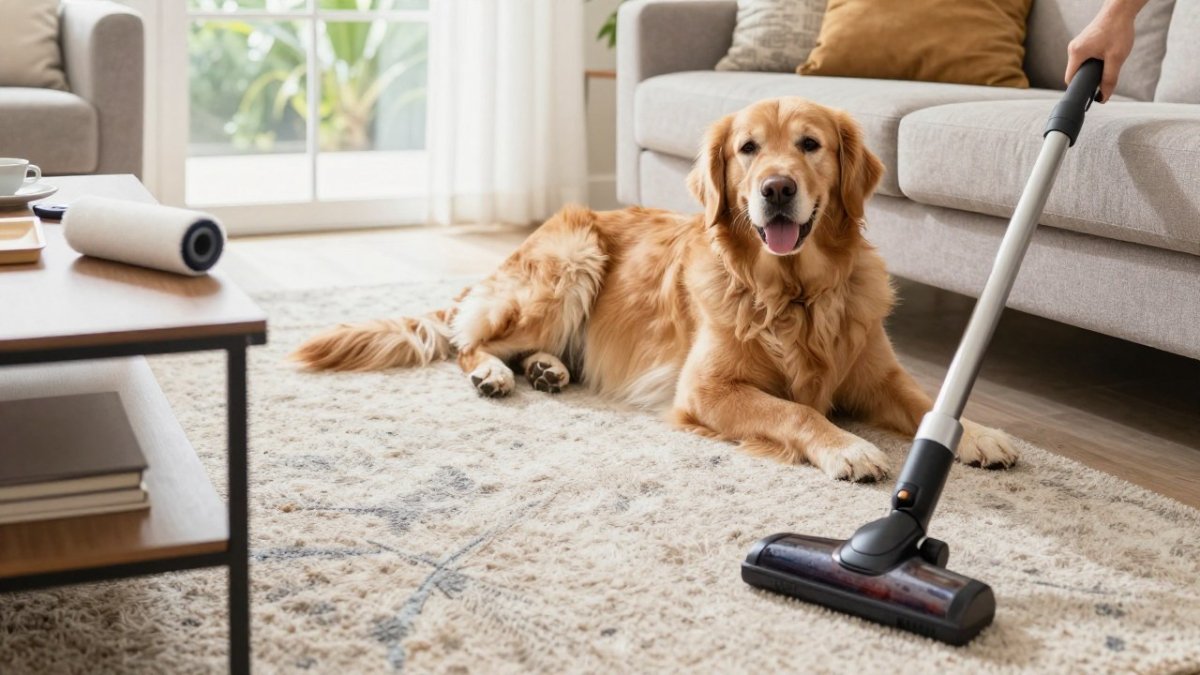
- Vacuum all rooms, including under furniture and along baseboards.
- Mop hard floors with a pet-safe cleaner.
- Wash dog blankets, bedding, and washable toys.
Many households choose one day for the full weekly routine. Saturday or Sunday works well for most schedules. Spread the tasks out if one day feels too heavy.
The weekly routine covers the jobs that daily cleaning misses, so these tasks are worth scheduling in advance. Read how to maintain a clean home between professional visits for more ideas.
| Task | Purpose | Note |
|---|---|---|
| Vacuum all rooms | Remove hair buildup | Include under furniture and baseboards |
| Mop hard floors | Refresh floors | Use a pet-safe cleaner |
| Wash bedding and toys | Clear dog items | Includes blankets and washable toys |
| Wipe doors and switches | Clear high-touch surfaces | Doors, railings, light switches |
| Clean the crate or bed | Clear dog zones | Dog’s crate or bed area |
Monthly and Seasonal Deep Cleaning Tasks
Some jobs need more time than a weekly routine allows. Monthly and seasonal tasks handle buildup that regular cleaning cannot remove, and they are where most dog households fall behind. The goal is not a marathon cleaning day. It is a rotating list that reaches the places hair, dander, and odor settle.
Monthly Tasks (About 1 to 2 Hours)
Work through this list once a month, or split it across two weekends:
- Steam or shampoo upholstery and pet-friendly rugs. Test any product on a hidden area first, and keep the dog off the surface until it is fully dry.
- Vacuum baseboards, corners, and the edges where carpet meets the wall. A crevice tool reaches the hair a standard floor head leaves behind.
- Clean air vents and return grilles with a vacuum brush attachment. Hair and dust collect on the slats and then blow back into the room.
Seasonal Tasks (About 3 to 5 Hours)
Spring and fall are the natural times for a deeper pass, but the right timing depends on your dog. Heavy seasonal shedders often justify a deep clean right after their coat blows out.
- Pull furniture away from walls and vacuum behind and beneath it.
- Clean behind and under appliances, including the refrigerator coils and the washer drum area.
- Wash or replace pet-bed covers and any foam inserts that can be laundered.
Room-by-Room Priorities
Not every room carries the same load. Rank rooms by how much time the dog spends there:
- Dog zones first, the crate, bed, feeding area, and favorite couch. These collect the most hair and odor.
- High-traffic paths, hallways, entryways, and the route from the door to the water bowl.
- Shared living spaces, living room and family room rugs and upholstery.
- Low-use rooms, bedrooms the dog rarely enters and guest rooms.
Allergen and Indoor-Air Management
Visible hair is only part of the load. Learn how to reduce pet allergens indoors with practical steps for dander and airborne hair. Dander, dust, and airborne hair affect comfort, especially in households with allergy sufferers. The U.S. Environmental Protection Agency notes that indoor air can carry dust and allergens, so regular cleaning and ventilation help keep the air fresher (EPA guidance on indoor air quality). Practical steps include:
- Run a HEPA-filter vacuum on rugs and upholstery rather than a broom, which pushes fine dust back into the air.
- Open windows for cross-ventilation when weather allows, and run exhaust fans in bathrooms and kitchens.
- Change HVAC filters on a monthly check schedule rather than a fixed seasonal one.
Watch out: a deep clean that stirs up dust without ventilation can leave the air worse for a few hours. Ventilate the room and keep the dog out until surfaces are dry.
How to Deep Clean a House With Pets
A deep clean reaches the places that weekly cleaning skips. For a closer look at cleaning doorknobs, railings and switches, see how to clean high-touch surfaces.
Follow these steps:
- Dust ceiling fans, high shelves, and window ledges.
- Vacuum furniture, cushions, and the space behind couches.
- Wash pet beds, throws, and toys.
- Clean floors, starting in the farthest room and working toward the exit.
- Wipe high-touch surfaces like doorknobs, railings, and switches.
Pet-safe products matter (the EPA). Read labels and avoid strong fragrances or harsh chemicals around animals. Many households choose mild, fragrance-free cleaners for floors and surfaces.
Accidents need fast action. Blot the spot, use an enzyme cleaner for pet odors, and test any product on a hidden area first.
Printable Cleaning Schedule for Homes With Dogs
A printed checklist helps everyone in the house know their jobs, and it makes the schedule reusable week after week. Post it near the laundry room or kitchen, and adjust the times to your dog’s coat and shedding level.
Base Schedule With Time Estimates
Daily (10 to 15 minutes)
- Vacuum or sweep dog zones and high-traffic floors (5 to 8 minutes)
- Wipe food and water bowls (1 minute)
- Wipe paws at the door after walks (1 to 2 minutes per walk)
Weekly (60 to 90 minutes)
- Vacuum all rooms, including under furniture and along baseboards (20 to 30 minutes)
- Mop hard floors with a pet-safe cleaner (10 to 15 minutes)
- Wash dog bedding, blankets, and washable toys (10 minutes hands-on, plus machine time)
Monthly (1 to 2 hours)
- Steam or shampoo upholstery and rugs (30 to 45 minutes)
- Clean baseboards, vents, and corners (15 to 20 minutes)
- Wash curtains and covers (10 minutes hands-on)
Seasonal (3 to 5 hours)
- Full deep clean, room by room (2 to 3 hours)
- Clean behind and under appliances (30 to 45 minutes)
- Wash or replace pet-bed covers and inserts (20 to 30 minutes)
- Shampoo carpets or book professional carpet cleaning (1 to 2 hours)
Adjusting the Schedule to Your Dog
The base times above fit one short-haired dog in an average home. Use these adjustments to tailor the plan:
- Heavy shedders (Huskies, German Shepherds, Labs): vacuum dog zones daily instead of every other day, and add a midweek pass on rugs and upholstery. Expect weekly vacuum time to rise by 10 to 15 minutes.
- Double coats: add a 10-minute brushing session three to four times a week to reduce what lands on floors, and schedule a seasonal deep clean right after the coat blows out.
- Long or curly coats (Poodles, Doodles, Spaniels): brush every other day and check for matting near the ears and tail. Mats trap dirt and hold odor.
- Short, smooth coats (Beagles, Boxers): hair is short but sheds steadily. A rubber squeegee or lint roller on upholstery works faster than a vacuum on some fabrics.
Pet-Safe Product Notes for the Checklist
Add a product column to your printed sheet so whoever cleans knows what to use:
- Choose mild, fragrance-free cleaners for floors and surfaces, and follow label dilution instructions.
- Keep dogs off wet floors until dry, and ventilate the room during and after cleaning.
- Store all cleaners in a closed cabinet, not under the sink where a dog can nose it open.
- Use an enzyme cleaner for urine, vomit, and other accidents; blot first, then apply, and test on a hidden area.
Watch out: mixing cleaning products, especially anything containing bleach with ammonia-based cleaners, can create dangerous fumes (the CDC).
Accident Cleanup Quick Reference
Keep this block on the printed sheet for fast response:
- Blot the spot with a clean cloth; do not rub.
- Apply an enzyme cleaner and let it sit for the time on the label.
- Blot again and let the area air-dry.
- Wash removable covers in hot water if the fabric allows.
- Ventilate the room and keep the dog away until dry.
Booking Recurring Cleaning for a Dog-Friendly Home
Some households prefer to hand off part of the routine. Recurring cleaning can cover the deeper weekly or monthly tasks while you focus on daily upkeep.
When you choose a service, ask how they handle pet hair, washable items, and pet-safe products.
Many busy households find that recurring service makes the routine easier to maintain. Keep your daily tasks, and let a professional team handle the deeper work.
Frequently Asked Questions
What is the 7-7-7 rule for dogs?
The 7-7-7 rule is a commonly cited guideline for rescue dogs: expect about seven days for a dog to decompress in a new home, seven weeks to settle into its routine, and seven months to feel fully at ease. For household cleaning, the practical takeaway is that a newly adopted dog sheds, tracks mud and has accidents more during this period, so plan to increase vacuuming and spot cleaning until your dog settles in. Treat the timeline as a rough guide rather than a fixed rule, since every dog adjusts at its own pace.
How often should you clean your house with pets?
Most homes with dogs benefit from daily quick tidies, weekly vacuuming and floor cleaning, and monthly deep cleaning of bedding, upholstery and high-touch areas. High-shedding breeds or multiple dogs may need vacuuming several times a week. Pair a consistent daily routine with a weekly schedule, and adjust frequency based on how quickly hair, mud and odors build up in your specific home.
What should be included in a daily cleaning routine for a home with a dog?
A daily routine for a home with dogs usually includes wiping paws or muddy feet at the entry, picking up toys, wiping food and water bowl areas, and spot-cleaning any messes. Spend about 10 to 15 minutes on these tasks. Keep a towel or wipes by the door, and use a damp cloth on high-traffic floors to prevent hair and dirt from spreading through the house.
How do you keep a house clean with a dog that sheds?
Brush your dog regularly outdoors to reduce loose hair before it reaches your floors and furniture. Vacuum high-traffic areas and favorite resting spots several times a week, and use a lint roller or rubber glove on upholstery. Wash dog beds and blankets weekly if your dog sheds heavily, and choose pet-safe cleaning products for floors and surfaces your dog touches.