How Long Does Green House Cleaning Take? A 2026 Guide
September 18, 2026
Table of Contents
- What Drives the Cost of Non-Toxic Residential Cleaning in 2026
- Residential Cleaning Service Price Factors That Matter Most
- What Is Included in a Deep House Cleaning vs. Standard Cleaning
- Benefits of Green Cleaning Services for Your Home
- DIY vs. Professional Non-Toxic Cleaning: A Cost-Benefit Analysis
- Hidden Fees and What to Verify in a Non-Toxic Service Agreement
- Frequently Asked Questions
Last Updated: September 18, 2026
What Drives the Cost of Non-Toxic Residential Cleaning in 2026
The non-toxic cleaning cost in 2026 depends on four main variables: home size, cleaning depth, service frequency, and whether the provider uses certified green products. Most homeowners find that non-toxic cleaning costs modestly more than conventional service because the supplies themselves cost more, not because the labor changes.
The honest answer is that labor drives most of the bill, and supplies drive the rest. A 1,200-square-foot condo and a 3,000-square-foot house can differ by hundreds of dollars per visit even when the cleaning checklist is identical.
Here is what most pricing guides get wrong. They quote a single “average” figure as if every home costs the same to clean. It doesn’t work that way. Two houses of identical square footage can price differently based on pet hair, clutter density, bathroom count, and how long it’s been since the last professional clean.

National Average Cost Breakdown
A flat-rate quote is a fixed price for a defined scope of work, agreed before the crew arrives. An hourly rate bills for time actually spent, which means the final invoice can move.
For residential cleaning, the national average cost of non-toxic service sits above conventional cleaning, though the gap narrows as frequency increases. Most of the difference traces to product costs: certified green cleaning supplies, microfiber systems, and HEPA filtration cost more per job than standard commercial chemicals.
Rather than quote a number that won’t match your home, we recommend requesting a service estimate. Reputable providers price on square footage, condition, and frequency, not on a national figure pulled from a blog.
Hourly Rates vs. Flat-Rate Pricing
Flat-rate pricing wins for recurring service. You know the number before the crew arrives, and you can budget for it monthly.
Hourly billing makes more sense for one-time jobs with unpredictable scope, like a move-in move-out clean on a home that hasn’t been professionally cleaned in years. The trade-off is obvious: if the job runs long, you pay more.
Ask which model a provider uses before booking. A flat-rate quote protects you from scope creep; an hourly rate protects the provider from underpricing a disaster.
Residential Cleaning Service Price Factors That Matter Most
Square footage is the biggest single factor, but it isn’t the only one. Frequency, condition, and add-ons like inside-oven or inside-fridge cleaning shift the estimate more than most homeowners expect.
Home Size and Square Footage
Price per square foot drops as homes get larger. A small apartment carries a higher per-foot rate because fixed costs, travel, setup, and product, get spread across fewer rooms.
Bathroom count matters as much as total area. Bathrooms take longer per square foot than bedrooms or hallways because of fixtures, grout, and disinfecting requirements.
Service Frequency and Recurring Discounts
Recurring service costs less per visit than one-time cleaning. A home cleaned weekly stays cleaner between visits, so each session takes less time and fewer products.
- Weekly: lowest per-visit rate, best for busy households and pet owners
- Biweekly: the most common choice for families
- Monthly: higher per-visit rate, suited to low-traffic homes
- One-time: highest per-visit rate, typical for move-in move-out
The math favors frequency. A home that’s maintained never needs the deep reset that drives one-time pricing up.
| Factor | Impact on Price | Best For |
|---|---|---|
| Home size | Higher square footage raises total cost | Any home |
| Frequency | Recurring visits lower per-visit rate | Busy families |
| Condition | Heavy buildup raises labor time | First-time cleans |
| Add-ons | Each extra task adds cost | Seasonal deep cleans |
What Is Included in a Deep House Cleaning vs. Standard Cleaning
A standard cleaning covers maintenance: dusting, vacuuming, mopping, kitchen surfaces, and bathroom sanitizing. A deep cleaning adds the areas that accumulate buildup over time, including baseboards, vents, inside appliances, and grout.
For a full breakdown of what is included in a deep house cleaning, the short version is this: anything you’d notice only when you look closely. Deep cleans take roughly twice as long as standard visits and cost accordingly.
If your home hasn’t had professional cleaning in over three months, book a deep clean first. Recurring service after that will cost less per visit because the baseline is already reset.
Most providers work from a detailed checklist so you can see exactly what each tier covers before you book.
Benefits of Green Cleaning Services for Your Home
The benefits of green cleaning services extend past the environment. Non-toxic products reduce indoor air quality concerns, which matters most in homes with infants, pets, or family members with asthma or chemical sensitivities.
Green cleaning also protects the surfaces themselves. Harsh disinfectants can dull stone countertops and strip finishes over time; pH-balanced, chemical-free products clean without that wear.
If you’re health-conscious, ask what “eco-friendly” actually means in practice. Look for third-party certification rather than a marketing label. The EPA Safer Choice program maintains a searchable list of products that meet its ingredient safety standard, and Green Seal certifies cleaning services and products against published environmental criteria.
Ask your provider to name the certification behind their products, not just the brand. “Green” on a bottle means nothing; a Safer Choice or Green Seal mark means a third party verified the formulation.
DIY vs. Professional Non-Toxic Cleaning: A Cost-Benefit Analysis
Most pricing guides compare the cost of hiring a service against the cost of your time. That comparison misses the bigger variable: the cost of building a genuinely non-toxic cleaning kit that performs like a professional one. This section walks through that supply math, because it’s the part of the DIY decision most homeowners underestimate.
What a Real Non-Toxic Kit Costs to Assemble
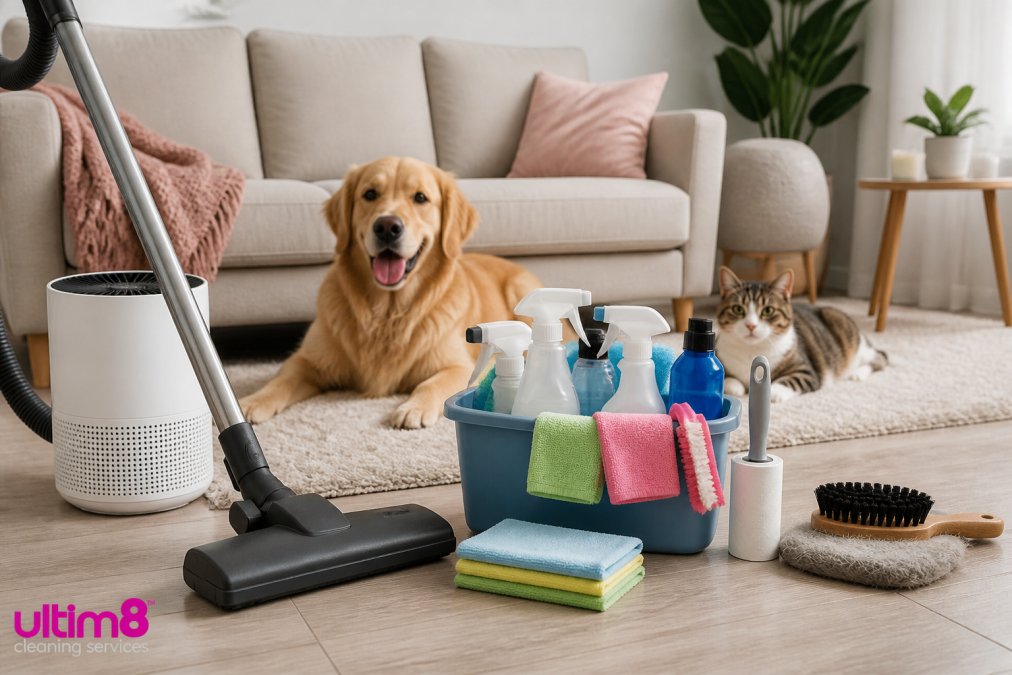
A professional-grade non-toxic kit is not a spray bottle of vinegar and a rag. To match what a certified service brings into your home, you’d typically need:
- Multi-surface and glass cleaners carrying a third-party certification such as EPA Safer Choice or Green Seal
- A disinfectant that meets an EPA-registered antimicrobial standard without harsh quaternary ammonium compounds, these are the hardest category to source non-toxically, and often the most expensive
- Color-coded microfiber (separate cloths for kitchen, bath, glass, and floors) to avoid cross-contamination
- A HEPA-filter vacuum, the single largest one-time purchase, and the item most DIY kits skip
- Mop system, bucket, and grout brush for floors and tile
- Nitrile gloves and a caddy to organize it all
Individually, each item is affordable.
The Break-Even Question
The honest way to frame DIY vs. professional is break-even, not “which is cheaper.” DIY wins on the receipt for the first few cleans if you already own a HEPA vacuum. It loses once you account for:
- Consumable replacement, microfiber degrades, cleaners run out, filters need changing
- Opportunity cost, four hours of your weekend has a value, and it’s usually higher than the labor portion of a service quote
- Result quality, a professional crew with a checklist and commercial equipment resets a home faster and more thoroughly than a homeowner working from a mental list
Where DIY Genuinely Wins
DIY is the right call for small apartments, light maintenance between professional visits, and spot cleaning. It’s also reasonable for households that already own a HEPA vacuum and clean frequently enough that consumables amortize across many sessions.
Where DIY Loses
DIY loses on deep cleans, move-in and move-out transitions, and any home with pets, allergies, or chemical sensitivities that needs consistent, thorough results. In those cases, the professional’s equipment and product access do work a homeowner can’t easily replicate, and the cost of getting it wrong (missed buildup, cross-contamination, a reaction to a mislabeled product) is higher than the service fee.
Run the break-even honestly: add up your kit cost, your consumable replacement cadence, and the value of your time. If the total lands within a modest margin of a professional quote, the professional service is usually the better value, and you get the certification verification that comes with it.
Hidden Fees and What to Verify in a Non-Toxic Service Agreement
A verbal “we’re insured and background-checked” is not proof. Ask for the certificate of insurance and the screening policy in writing. If a provider hesitates, that hesitation is your answer.
For allergy and sensitivity considerations, tell your provider up front. Fragrance-free and hypoallergenic options exist, and a good provider will flag which products they use before the first visit rather than after.
Frequently Asked Questions
How much does non-toxic house cleaning cost compared to standard services?
Non-toxic cleaning can be a premium service because eco-friendly products and trained labor are involved. The exact difference depends on your home size, service frequency, and whether you need a standard or deep clean. For a personalized quote, request a service estimate from a provider that specializes in green cleaning. Many companies offer recurring service discounts that can offset the premium.
What factors influence the price of eco-friendly residential cleaning?
Key residential cleaning service price factors include square footage, number of bathrooms, service frequency, and whether you need move-in move-out cleaning. Homes with pets or allergy-sensitive occupants may require hypoallergenic products that cost more. Labor costs also vary by region. A detailed cleaning checklist helps providers give accurate quotes. Always ask for a written service agreement that itemizes what is included.
Does non-toxic cleaning take longer than traditional cleaning methods?
Non-toxic cleaning can take slightly longer because chemical-free products sometimes need more dwell time to break down grime. However, professional cleaners trained in green cleaning techniques work efficiently with microfiber cloths and proper agitation. For recurring service, the time gap shrinks as cleaners learn your home. Ask your provider if they adjust hourly rates for eco-friendly methods.
How do I request a quote for non-toxic cleaning services?
Most providers offer online booking or a phone consultation. Be ready to share your home size, number of bedrooms and bathrooms, frequency desired, and any allergy or pet concerns. Ask specifically about the products they use and whether they are pet-safe and baby-safe. Request a written estimate that breaks down labor costs, supplies, and any hidden fees. A reputable company will provide a service estimate within 24-48 hours.