
Does Professional Cleaning Really Improve Rental Reviews?
October 30, 2026
Last Updated: October 29, 2026
Quick Summary
Safely letting cleaners into your home means vetting the company first, confirming it is insured and background-checks its staff, then controlling access with unique codes or keys that expire. Protect valuables and private areas, and agree on privacy and recording rules in writing before the first visit.
- Ask whether cleaners are insured and request proof of coverage before booking.
- Issue a unique code or key to each cleaner, never one shared code for everyone.
- Keep a written log of who received each key or code and when it was revoked.
- Use a separate alarm code for the cleaning company so its access can be deleted alone.
- Move jewelry, cash, passports and documents somewhere secure before every visit.
Table of Contents
- Why Letting Cleaners Into Your Home Needs a Plan
- How to Vet a House Cleaning Service Before You Book
- First-Time House Cleaner Checklist
- Giving a House Cleaner a Key or Door Code Safely
- Letting a Cleaner Into Your Home When You Are Not There
- Protecting Valuables, Documents, Pets, and Privacy
- What to Do If Something Goes Wrong After a Cleaning
- Booking Your First Visit With Confidence
- Frequently Asked Questions
Letting a stranger into your home takes trust, and that trust should be earned with a plan. Thinking carefully about letting cleaners into your home starts with knowing who you are inviting in. Whether you hire a regular house cleaner or book a one-time deep clean, you are handing over keys, alarm codes and access to your most private space.
Why Letting Cleaners Into Your Home Needs a Plan
Hiring a house cleaner is a simple decision, but the access it requires is not. Most cleaners are honest professionals who take pride in their work. Still, a clear plan protects you, protects them and keeps small problems from becoming big ones.
Many homeowners skip this step because it feels like overkill. The truth is that a few minutes of planning up front saves hours of worry later. A good plan covers:
- Who has access to your home and when
- How keys, codes and lockboxes are handled
- What valuables and private areas are off-limits
How to Vet a House Cleaning Service Before You Book
Before any cleaner walks through your door, check the company behind them. Trustworthy house cleaning services are happy to answer these questions clearly.
Ask these questions before you book:
- Are your cleaners insured, and can you share proof of coverage? Learn why insurance coverage matters and what to ask for.
- Are your cleaners background-checked, and what does that check include?
- Do you train staff on your own detailed checklists?
Read recent online reviews, too. Look for patterns, not just star ratings. A company with many consistent reviews tells you more than one with a handful of perfect scores.
Ultim8 Cleaning Services uses insured, background-checked cleaners and trains each team to work through detailed checklists.
First-Time House Cleaner Checklist
The first visit sets the tone for everything that follows. Use this checklist to make it go smoothly.
- Confirm the cleaner’s name and the company before they arrive
- Walk through the home together and point out priority areas
- Show where cleaning supplies are stored, if you want them used
Watch out: Do not leave high-value items out on counters for a first visit. Move them somewhere secure until you know how the team works.
Giving a House Cleaner a Key or Door Code Safely
Keys and door codes are the biggest access risk in any cleaning arrangement. Handle them with the same care you would use for a spare house key given to a family member, but with a written record, because a cleaning relationship involves recurring visits and sometimes rotating staff.
Choose the access method deliberately
There are four common ways to let a cleaner in, and each carries a different risk profile:
- Homeowner present: No key changes hands. Best for first visits and one-time deep cleans.
- Physical key or spare: Simple, but hard to track. If you use one, keep it on a distinct keyring and log who holds it.
- Lockbox: Better than a hidden key, but the combination must be changed after every job or staff change. A lockbox left on the door for weeks is effectively an unlocked door.
A practical key and access-code checklist
Use this as a written log you review every few months:
- Issue a unique code or key to each cleaner or team, never one shared code for everyone
- Set the code to expire at the end of the service period, or change it after each visit if your lock does not support scheduling
- Record the date the key or code was issued, who received it, and the date it was returned or revoked
A common pattern among security-minded homeowners is a “service code” that only works during the scheduled window. If your smart lock supports it, this limits exposure if the code is ever shared or guessed.
What to do when service ends
The end of a cleaning relationship is the moment access controls most often slip. Before the final visit, decide whether the cleaner returns the key in person or whether you revoke the code remotely. After the final visit, change any code the cleaner knew, retrieve physical keys, and update your written log. If you are unsure whether a key was returned, rekey the lock, the cost of a rekey is almost always less than the cost of a lost key.
Alarm codes deserve separate handling
Do not reuse your door code as your alarm code, and never write either on paper left in plain sight. If your alarm system supports it, create a separate user code for the cleaning company so you can see when it was used and delete it without affecting your family’s codes. Ask the company whether its staff are trained on alarm activation and deactivation, and leave written instructions for what to do if the alarm triggers accidentally.
Letting a Cleaner Into Your Home When You Are Not There
Many clients prefer to be away during cleanings. That works well when the arrangement is clear. Set expectations in writing before you leave.
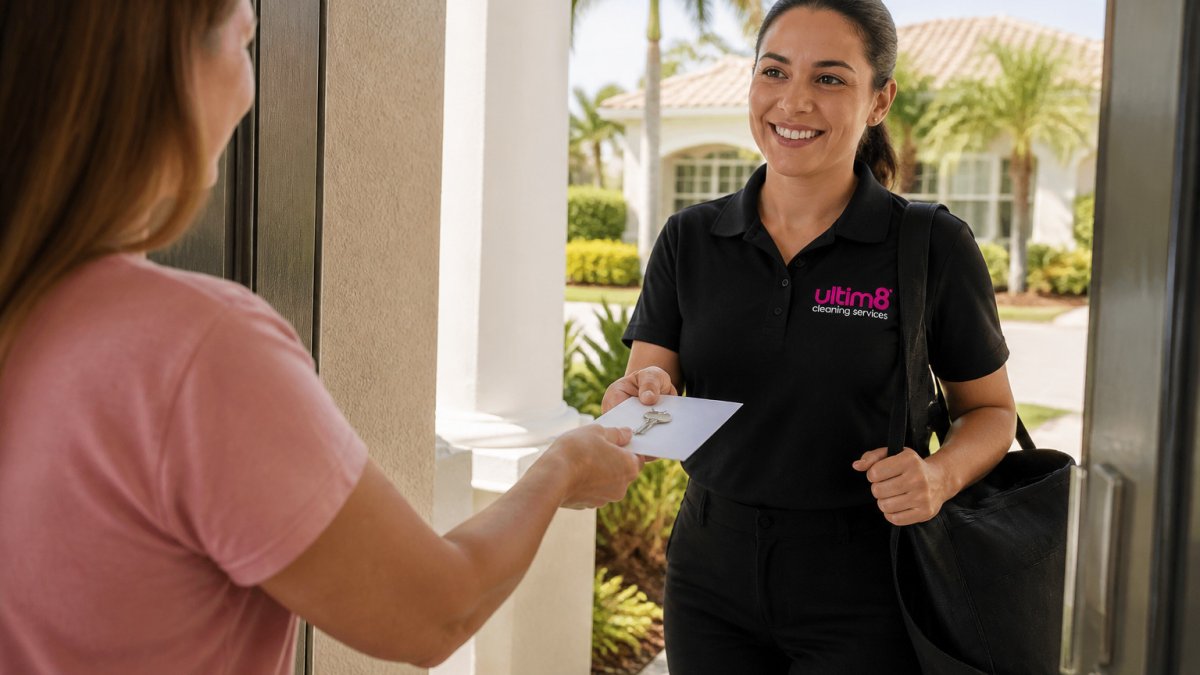
Share the following with your cleaning company:
- Your home address and the exact entry point
- The time window for the visit
- Which rooms to clean and which to skip
Also consider sharing the cleaner’s name, the company and the expected arrival time with a trusted friend or family member. Maintaining this level of transparency provides an extra layer of vigilance that helps you secure your home against unauthorized access while you are away.
Homeowners who work from home often ask whether they need to stay put. You do not have to. Give clear instructions, leave a note on the key points and let the team work through its checklist.
Protecting Valuables, Documents, Pets, and Privacy
Some parts of your home deserve extra protection, even with a trusted cleaner. The goal is not to treat the cleaner as a suspect, it is to remove temptation, prevent accidents, and set clear privacy expectations on both sides.
Prepare the home before each visit
- Lock up jewelry, cash, passports, and other small valuables in a safe or a locked drawer
- Store important documents out of sight, and keep home-office papers and mail in a closed cabinet
- Put prescription medications away, accidental mixing or disposal is a common and underdiscussed risk
Do not leave high-value items out on counters for a first visit. Move them somewhere secure until you know how the team works, and repeat the routine before every visit rather than only the first one.
Smart-home devices, cameras, and recording disclosure
Cameras and voice assistants can record sensitive moments, and the rules differ by state. Before the first visit, decide which devices stay on and which get switched off or covered in private areas like bedrooms and bathrooms. Then tell the cleaning company in writing what is recording and where.
A balanced approach protects both parties:
- Disclose indoor cameras and their locations to the company before the visit
- Turn off or cover cameras in bathrooms and bedrooms, where recording may violate state privacy laws
- Ask whether the company has a policy on staff recording or photographing the home, and get it in writing
Most practitioners find that a short written privacy note, shared once and updated when devices change, prevents nearly all misunderstandings.
A two-sided privacy agreement
Privacy is not only the homeowner’s concern. Cleaners also deserve to know what is being recorded and who can see it. A simple agreement can cover:
- What the company may photograph or record, and for what purpose
- How client information, addresses, codes, schedules, is stored and who can access it
- What happens to photos and notes when service ends
Ask your cleaning company how it protects client information and keeps personal details confidential. A reputable company should explain this without hesitation.
Product safety and sensitivities
Reading cleaning-product labels matters too. Ask which products the team uses, and check that they suit kids, pets, and anyone with sensitivities. Confirm the team knows not to mix products, especially bleach and ammonia, and that they work in well-ventilated areas.
The article lists specific steps to take before each visit to protect valuables and private areas, summarised below.
| Item | Action | Note |
|---|---|---|
| Jewelry, cash, passports | Lock in a safe or locked drawer | Before every visit |
| Important documents | Store out of sight | Keep home-office papers in a closed cabinet |
| Prescription medications | Put away | Accidental mixing or disposal is a risk |
| Pets | Crate or separate | Leave a note on rooms they should not enter |
| Walkways and work areas | Clear | Lets the team move safely with equipment |
| Delicate surfaces | Note special care | Wood, stone or delicate finishes |
| Indoor cameras | Disclose in writing | Turn off or cover in bathrooms and bedrooms |
What to Do If Something Goes Wrong After a Cleaning
Even careful planning cannot prevent every problem. Having a response plan helps you stay calm and get results.
If something seems wrong, try these steps:
- Take photos of any damage, missed areas or missing items
- Contact the cleaning company right away and describe the issue
- Check your access logs, keys and codes to confirm who was in the home
Ask your cleaning company about its complaint and make-good process before you book.
Watch out: Do not wait days to report a concern. Early reports make it easier to resolve issues and gather accurate details.
Booking Your First Visit With Confidence
You now have a clear plan: vet the company, set up secure access, protect what matters and know what to do if something goes wrong. Ultim8 Cleaning Services offers instant online booking and cleaners who work through detailed checklists. We are happy to walk you through the process.
Ready to get started? BOOK NOW to schedule your visit, or check our website for current prices and a quote.
Frequently Asked Questions
Is it safe to give a house cleaner a key or door code?
It can be, if you take a few precautions. Confirm the company is insured and background-checked, ask who will have access, and find out whether the company uses individual keys or shared codes. Avoid leaving keys in obvious hiding spots like under mats. Ask how the company stores client keys and what happens to them if a cleaner leaves. If a company cannot answer these questions clearly, that is a reason to keep looking. Change codes after the first few visits or when staff turnover occurs, and remove access as soon as service ends.
Should I be home the first time a cleaner comes?
Many homeowners prefer to be present for the first visit so they can walk the cleaner through the home, point out priority areas, show which products or surfaces need special handling, and explain any off-limits rooms or valuables. You do not need to stay for the entire visit. If you cannot be there, leave clear written instructions, photograph any areas that are delicate, and ask the company to confirm who will arrive and when. A brief phone call before the cleaner starts can also help.
How can I verify that a cleaning company’s employees are insured and background-checked?
Ask for a certificate of insurance that lists general liability and workers’ compensation coverage, and confirm the policy is current by contacting the insurer directly if needed. For background checks, ask what screening is performed (such as criminal history and identity verification), how recently it was completed, and whether it applies to every employee or only some. Reputable companies will answer these questions without hesitation. Be cautious of any business that refuses to provide documentation.
What should I check before letting a cleaner into my home?
Before the first visit, confirm the appointment details, the name of the cleaner or crew, and the company contact information. Verify that the company is insured and screens its staff. Decide which rooms are off-limits, and remove or secure valuables, prescription medications, financial documents, and personal records. Let a trusted friend or family member know when the visit is scheduled. Keep a list of the company’s phone number so you can reach someone quickly if a question comes up during the appointment.
Letting someone into your home should feel safe and simple. With the right company and a clear plan, it can be. Contact Ultim8 Cleaning Services today to book your first visit and enjoy a spotless, healthy home with dependable, detail-oriented care.