Is Hiring Professional Office Cleaning Worth It?
October 23, 2026
Last Updated: October 23, 2026
Quick Summary
Regular home maintenance is the difference between a home that holds its value and one that deteriorates into costly repairs. Homeowners should budget between 1% and 3% of their home’s purchase price annually for maintenance, meaning a $300,000 home requires $3,000 to $9,000 per year in preventive care.
- A $50 caulk application stops water intrusion before it damages framing, while a $200 furnace tune-up prevents a $5,000 replacement.
- Check HVAC filters monthly and replace them if visibly dirty to prevent early system failure.
- Homes with documented maintenance records qualify for better insurance rates and are less likely to have claims denied.
- A home neglected for five years may need $15,000-$30,000 in catch-up repairs that consistent maintenance would have prevented.
Table of Contents
- Why Regular Home Maintenance Matters
- Preventing Small Problems From Becoming Costly Repairs
- Building Your Home Maintenance Checklist
- Creating a Home Cleaning Schedule That Sticks
- Seasonal Home Maintenance Checklist for Year-Round Protection
- When to Hire Professional House Cleaning Services
- Protecting Your Investment and Property Value
- Frequently Asked Questions
Why Regular Home Maintenance Matters
Regular home maintenance is the difference between a home that holds its value and one that deteriorates into costly repairs.
Homeowners should budget between 1% and 3% of their home’s purchase price annually for maintenance, according to HSH.com’s maintenance cost guidance. This isn’t just a recommendation, it’s a financial strategy.
A survey of over 1,000 homeowners found that standard home maintenance has fallen by the wayside for many, creating a backlog of deferred repairs.
Regular home maintenance protects your property value, prevents emergency repairs, and keeps your home safe and comfortable. It’s not optional, it’s the most cost-effective investment a homeowner can make.
Preventing Small Problems From Becoming Costly Repairs
The real damage happens in the gaps between attention. A small roof leak becomes structural rot. A clogged drain becomes a flooded basement.
Proactive maintenance as a cost-control strategy works because it catches problems before they cascade. Consistent maintenance protects property value, strengthens insurability, and prevents expensive emergency repairs, according to Arthur J.
The pattern is predictable: minor issues are cheap to fix, major repairs are catastrophic. A $50 caulk application stops water intrusion before it damages framing.
Ignoring seasonal maintenance creates a compounding effect. Each missed task makes the next one harder and more expensive. A home neglected for five years may need $15,000-$30,000 in catch-up repairs that a consistent maintenance schedule would have prevented entirely.
Building Your Home Maintenance Checklist
A maintenance checklist is your roadmap to protecting your home. Match tasks to their actual frequency and severity level.
Monthly and Quarterly Tasks
Monthly inspections take 30 minutes and catch problems early. Check your HVAC system filters monthly and replace them if they’re visibly dirty. Scrubbing bathroom tile and grout at least once per month is recommended to avoid mold or mildew buildup, according to Travelers Insurance’s cleaning guidance.
Quarterly, inspect your attic for leaks, rodents, or moisture, check basement walls for water intrusion, run water through rarely-used drains, and test your sump pump by pouring water into the pit, it should activate immediately.
Annual Deep Inspections
Once yearly, inspect all major systems. Have your HVAC professionally serviced before heating and cooling seasons. Inspect your roof from the ground with binoculars for missing shingles, flashing issues, or moss. Recaulk windows and doors where cracked or missing.
Document everything. Take photos of your home’s condition, note repair dates, and keep receipts for all maintenance work. This record becomes invaluable when selling your home or filing insurance claims.
Creating a Home Cleaning Schedule That Sticks
Cleaning and maintenance are complementary: maintenance prevents structural failure, while cleaning prevents health hazards and preserves surfaces. The useful version is a room-by-room cadence you can actually follow.

Room-by-Room Cleaning Frequencies
A realistic schedule assigns each task a frequency based on how fast soil, moisture, and allergens accumulate.
Kitchen. Wipe counters and stovetop daily, and sweep floors daily in active households.
Bathrooms. Squeegee shower walls after each use to slow soap scum and mildew. Clean sinks, toilets, and counters weekly.
Bedrooms and living areas. Change bed linens weekly. Dust horizontal surfaces every one to two weeks.
Entryways and high-touch surfaces. Wipe doorknobs, light switches, and handrails weekly. Sweep or vacuum entry mats weekly and wash them monthly.
Appliance and System Cleaning Cadence
Appliances are where cleaning and maintenance overlap. A dirty appliance often becomes a failing appliance.
- HVAC filters: check monthly, replace every one to three months depending on pets, occupants, and filter rating.
- Refrigerator coils: vacuum every six to twelve months.
- Dishwasher: clean the filter monthly and run a cleaning cycle every one to three months.
- Washing machine: run a cleaning cycle monthly; leave the door open between loads to prevent mold.
- Dryer lint trap: clean after every load; clean the vent duct annually.
- Range hood filter: degrease monthly.
- Garbage disposal: grind ice and citrus peels monthly to control odor.
- Water heater: flush the tank annually in hard-water areas.
Building the Schedule Around Your Life
List every cleaning task, then categorize by frequency: daily (dishes, counters, high-touch surfaces), weekly (bathrooms, floors, linens), monthly (appliance interiors, grout, vents), and seasonal (windows, carpets, HVAC filters, gutters).
Assign tasks to specific days. Daily tasks take 15 to 30 minutes; weekly deep cleaning works best on one dedicated day; monthly tasks can rotate (first Saturday appliances, second windows, third carpets). The goal isn’t perfection but consistency: a predictable schedule keeps a home cleaner and helps you finish faster.
How to Prepare Your Home for Professional Deep Cleaning can help you optimize your routine. If your schedule doesn’t allow for consistent cleaning, Benefits of Professional Residential Cleaning Services explains why many homeowners delegate this task to professionals. How to Maintain a Clean Home Between Professional Visits bridges the gap between professional services and your daily routine.
Seasonal Home Maintenance Checklist for Year-Round Protection
Seasonal maintenance prevents weather-related damage and keeps your home functioning through temperature extremes. Each season presents specific vulnerabilities.
Spring Tasks
Spring is inspection season. Walk your property after winter and look for broken branches, roof damage from ice, foundation cracks, or basement water damage. Pressure wash your deck, patio, and siding to remove winter grime. The Ultimate Guide to Spring Cleaning Your Tampa Bay Home: A Room-by-Room Checklist provides detailed regional guidance.
Test your air conditioning system before summer arrives. Change your HVAC filter. Inspect your foundation and basement for water intrusion, spring rains expose drainage problems.
Summer and Fall Priorities
Summer focuses on exterior maintenance. Trim tree branches away from your roof and siding, since they harbor moisture and pests. Power wash your driveway and walkways, repair damage to siding or trim, and check that gutters drain properly.
Fall is critical for winter prep. Clean gutters one final time before leaves accumulate. Inspect your roof for damage before heavy snow. Caulk gaps in exterior walls. Have your heating system serviced. Drain and store garden hoses, and shut off exterior water valves to prevent frozen pipes.
Winter Preparation
Winter maintenance prevents freeze damage and ice hazards. Insulate exposed pipes in unheated areas. Ensure your gutters drain away from your foundation, ice dams can cause water backup into your home. Keep your roof clear of heavy snow to prevent structural stress. Monitor your basement for water intrusion during thaw cycles. The Winter Cleaning Checklist for Your Home details seasonal tasks to protect your property.
When to Hire Professional House Cleaning Services
The useful question isn’t “DIY or pro?” but “which tasks carry risk, require specialized equipment, or consume more time than they’re worth?”
Tasks Most Homeowners Can Handle Safely
Routine cleaning and light maintenance are within reach for most people: dusting, vacuuming, mopping, cleaning bathrooms and kitchens, changing HVAC filters, testing smoke and carbon monoxide detectors, replacing light bulbs, cleaning gutters on a single-story home with stable footing, and caulking accessible gaps. These tasks build familiarity and help you spot problems early.
Tasks That Warrant a Qualified Professional
Some tasks carry real safety, liability, or equipment limits. Hire a qualified professional for:
- Electrical work beyond replacing a fixture or outlet cover. Anything involving the panel, new circuits, or repeated tripping requires a licensed electrician.
- Gas appliances and lines. Water heaters, furnaces, and gas ranges should be serviced by licensed technicians.
- Roof work. Walking a roof is a fall hazard; most homeowners should inspect from the ground with binoculars and call a roofer for anything beyond minor debris removal.
- HVAC refrigerant and major repairs. Filter changes are DIY; refrigerant handling and component replacement are not.
- Structural repairs, foundation work, and mold remediation beyond small surface areas.
- Tree work near the home. Limbs near rooflines and power lines are a professional job.
- Chimney sweeping and inspection.
- Pest control for infestations.
Cleaning Tasks Where Professionals Deliver Better Results
Some cleaning jobs are safe but inefficient to DIY: deep carpet and upholstery cleaning, window washing on multi-story homes, air duct cleaning when visible dust accumulates, pressure washing, post-renovation deep cleaning, and move-in or move-out transitions. Professionals deliver better results faster.
A Simple Decision Framework
Ask three questions before starting any task:
- Does it involve a known hazard? Electricity, gas, heights, structural elements, or mold beyond a small area means call a professional.
- Does it require equipment I don’t own and won’t use again? Specialty tools often cost more than the service.
- Would a mistake cause damage exceeding the cost of hiring out? If yes, hire out.
Document what you do yourself and what you delegate. A maintenance log showing professional service dates is valuable at resale and when filing insurance claims.
Remodeling activity is forecasted to increase by 3% in 2026 and 2% in 2027, according to the National Association of Home Builders, reflecting increased homeowner investment in property maintenance and improvement.
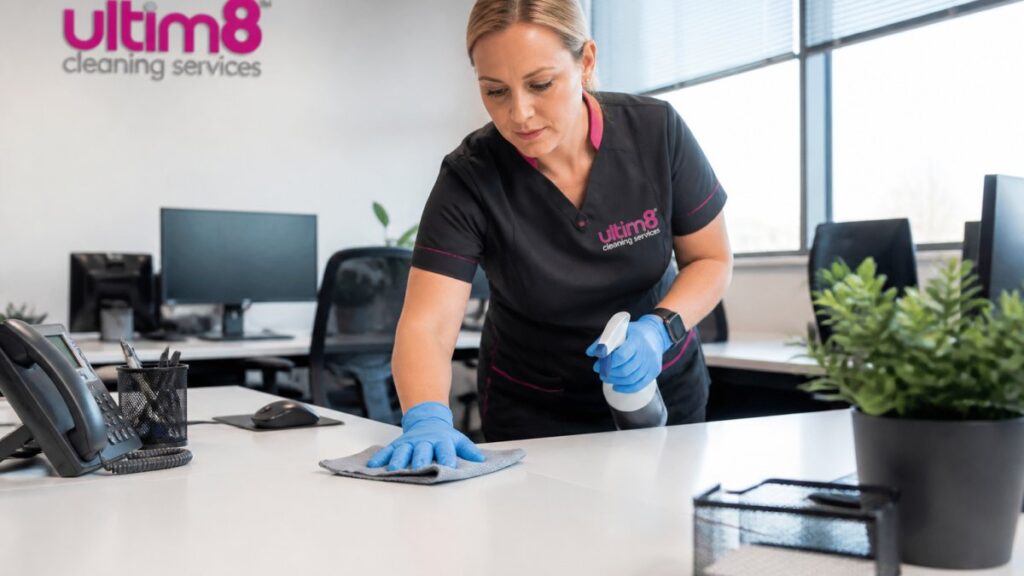
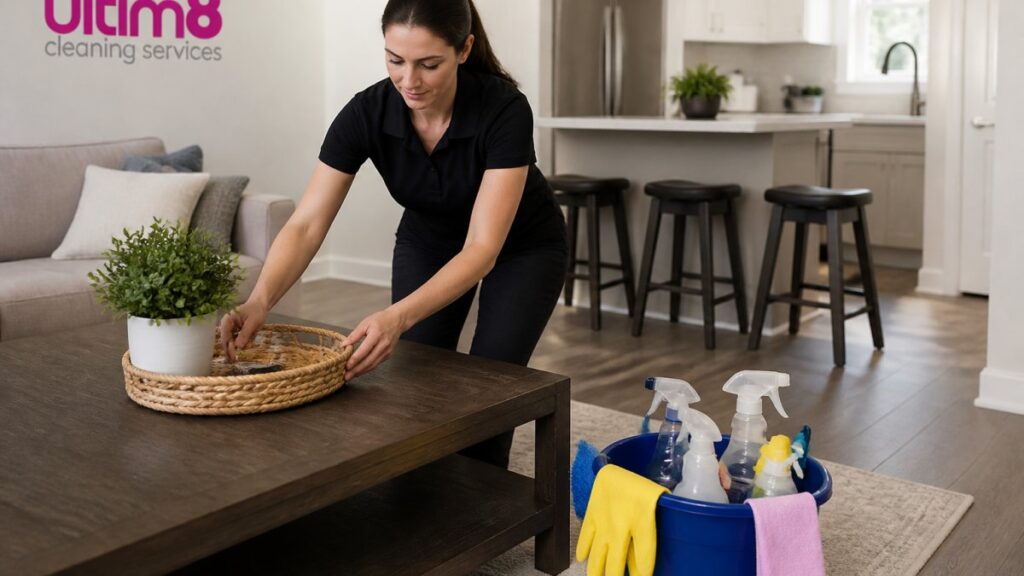
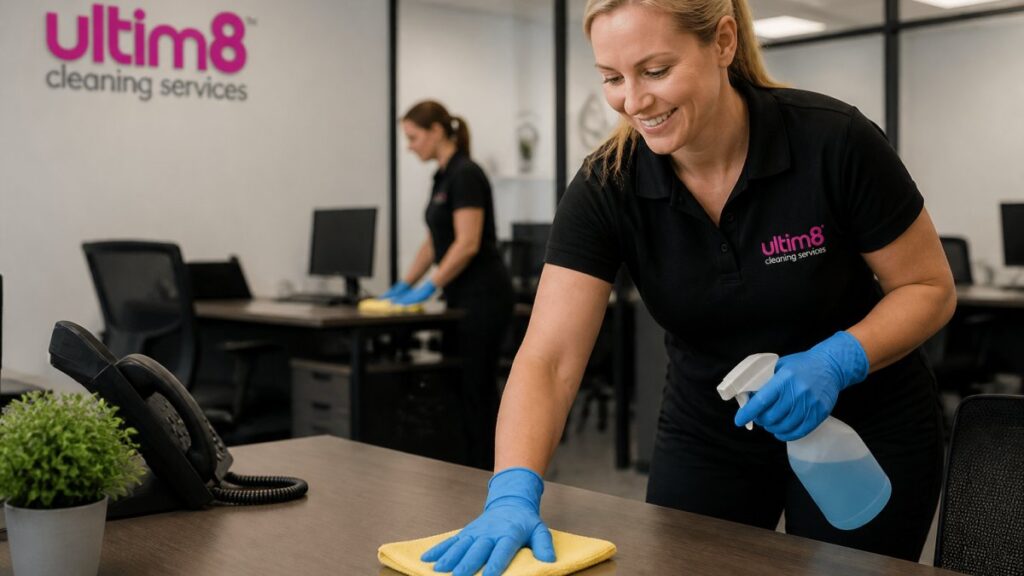
Ultim8 Cleaning Services provides professional residential and office cleaning solutions tailored to meet the needs of busy families and professionals.
Protecting Your Investment and Property Value
Your home is likely your largest financial asset. Regular maintenance and cleaning directly protect that investment.
A well-maintained home holds its value. Buyers pay premiums for documented maintenance histories, updated systems, and clean interiors.
Research identified specific challenges older adults face in performing home maintenance and the need for support systems to enable aging in place, according to the National Center for Biotechnology Information.
Regular cleaning of surfaces with soap and water is recommended by health authorities to prevent the spread of germs, according to CDC guidance on home cleaning and disinfection.
| Maintenance Task | Frequency | Impact on Property Value |
|---|---|---|
| HVAC system service | Annually | Prevents costly system failure |
| Roof inspection | Annually | Catches damage before it spreads |
| Gutter cleaning | 2x yearly | Prevents water damage to foundation |
| Caulk inspection | Annually | Stops water intrusion and mold |
| Bathroom tile cleaning | Monthly | Prevents mold and preserves grout |
| Carpet cleaning | 1-2x yearly | Extends carpet life and maintains appearance |
| Foundation inspection | Annually | Catches structural issues early |
Your home’s condition reflects your priorities. A home that receives consistent attention, cleaning, inspections, and maintenance stays valuable, safe, and comfortable.
We’re here to help you maintain that standard.
Frequently Asked Questions
How often should you clean and maintain your home?
Most surfaces and high-touch areas need weekly cleaning. Bathroom tile and grout should be scrubbed at least monthly to prevent mold and mildew. Regular home maintenance tasks, like inspecting HVAC filters, checking for leaks, and testing smoke detectors, should happen monthly or quarterly. Seasonal maintenance occurs in spring, summer, fall, and winter. Annual deep inspections of your roof, foundation, and home systems round out a complete maintenance schedule.
How can regular home maintenance help prevent costly repairs?
Small issues caught early cost far less to fix than major problems. A minor roof leak found during an inspection might cost $200 to repair; ignored, it can cause thousands in water damage and structural rot. Regular inspection of plumbing, electrical systems, and appliances catches worn parts before failure. Preventive maintenance protects your home’s systems and extends their lifespan, saving you emergency repair bills and keeping your property safe.
What should be included in a home maintenance checklist?
A comprehensive home maintenance checklist includes monthly tasks (checking filters, inspecting for leaks), seasonal inspections (gutters, siding, weatherstripping), and annual deep checks of your roof, foundation, HVAC system, and appliances. Don’t forget interior maintenance: cleaning bathroom grout, checking caulking around tubs and showers, and inspecting windows and doors. Exterior maintenance covers siding, walkways, landscaping, and drainage. Digital reminders or a written checklist helps you stay consistent.
Why is professional house cleaning services valuable alongside DIY maintenance?
Professional house cleaning services handle deep cleaning and sanitization that’s difficult to maintain alone, especially for busy families and professionals. Regular professional cleaning removes allergens, prevents mold in high-moisture areas, and maintains a healthy indoor environment. Professional cleaners are trained to spot maintenance issues, loose tiles, water stains, worn caulking, that homeowners might miss. Combining professional cleaning with your own maintenance routine keeps your home in top condition without overwhelming your schedule.