Are Green Cleaning Products Worth It for Offices?
November 7, 2026
Quick Summary
Green cleaning can reduce exposure to harsh chemicals, but a product labeled green is not automatically safe for allergy sufferers. Choose fragrance-free products, read full ingredient lists, use non-aerosol formats, and ventilate while cleaning.
- A 2026 longitudinal study linked persistent use of irritants, sprays and green products with worsening asthma over time.
- Look for “fragrance-free” on the label, since “unscented” products may contain masking fragrance.
- Sprays create fine airborne droplets, so wipes or pump bottles produce fewer aerosols.
- Wash bedding weekly in hot water and vacuum mattresses and upholstery every two weeks to reduce dust mites.
- Keep indoor humidity in the 30-50% range with a hygrometer to limit mold.
Table of Contents
- Why Green Cleaning Is Not Automatically Safe for Allergies
- Allergy-Friendly Cleaning Products: How to Read the Label
- Fragrance-Free Cleaning Products and Why Scent Matters
- How to Reduce Dust Mites at Home Room by Room
- Natural Cleaning Solutions for Allergies: What Works and What to Avoid
- Building a Weekly Green Cleaning Schedule for Allergy Relief
- Booking Help for a Healthier Home in Tampa Bay
- Frequently Asked Questions
Green cleaning promises a gentler home, but for allergy sufferers the label alone is not a guarantee of safety. Many people assume that a product marketed as green, natural or plant-based is automatically harmless. Research suggests that assumption deserves a closer look. A 2024 study indexed by PubMed associated weekly use of household cleaning and disinfecting products, including green products and wipes, with uncontrolled asthma 2024 study on weekly household cleaning product use and uncontrolled asthma. No product choice replaces a sound cleaning routine.
Why Green Cleaning Is Not Automatically Safe for Allergies
Green cleaning reduces exposure to some harsh chemicals, and that is a real benefit. Still, a product described as green is not the same as a product that is harmless for people with asthma. A 2026 longitudinal study reported that persistent or increased use of irritants and sprays, as well as green products, was associated with deleterious effects on asthma over time 2026 longitudinal study on cleaning product use and asthma.
What this means for you:
- Read the full ingredient list, not just the front label
- Watch how your symptoms change after cleaning
- Ventilate the room while you work and after you finish
Allergy-Friendly Cleaning Products: How to Read the Label
Start with the U.S. Environmental Protection Agency’s guidance on identifying greener cleaning products EPA guidance on identifying greener cleaning products. Use it as a starting point, then evaluate each bottle against the checklist below. If you would rather hand the cleaning off, see what to check before you book a cleaning company so you can vet the team that will be working in your home.
1. Fragrance disclosure. Look for the words “fragrance-free” rather than “unscented.” Unscented products may contain a masking fragrance added to cover the smell of raw ingredients. Fragrance-free means no fragrance has been added at all. If the label lists “fragrance” or “parfum” among the ingredients, treat it as a scented product even if the front of the bottle says “natural.”
2. Ingredient transparency. A credible label lists ingredients by name, not just by category. Watch for vague entries such as “biodegradable surfactants” or “plant-based cleaning agents” with no further detail. A short ingredient list is not automatically safer. Because vague labels can obscure ingredients that may irritate sensitive airways, evaluating asthma-safe cleaning products by their named components can help keep ingredient transparency central to household cleaning choices.
3. Third-party certifications. The Safer Choice label is the most relevant federal-adjacent certification for household cleaners. Certification is not a guarantee of personal tolerance, but it is a useful filter before you buy.
4. Directions for ventilation and use. A responsible label tells you how much to use, whether to dilute, and whether the product should be used in a ventilated area. If the directions say “use in a well-ventilated area” and you plan to clean a small bathroom, run the exhaust fan or open a window before you start.
5. Format and application method. Sprays generate fine airborne droplets that are easy to inhale. Wipes, pump bottles, and pre-diluted liquids produce fewer aerosols. If you are sensitive, choose a non-aerosol format and apply the product to a cloth rather than spraying it into the air.
6. Signal words. “Danger,” “Warning,” and “Caution” are required by federal labeling rules and reflect acute toxicity, not allergenicity. A product can carry a “Caution” signal word and still trigger symptoms in a sensitive person, so do not treat a mild signal word as proof of safety.
Watch out: “Natural” and “plant-based” are marketing terms, not regulated safety claims. A citrus- or vinegar-based cleaner can still irritate airways, and essential oils added for scent are a common trigger for fragrance-sensitive people.
If a label is vague about what is inside, choose a different product. Our team can also help you sort through options when you book a visit, so you do not have to decode every bottle yourself.
Fragrance-Free Cleaning Products and Why Scent Matters
Scent is often the first thing people notice in a cleaning product, and it is often the thing that causes trouble. Strong fragrances can irritate sensitive airways, especially in closed rooms. Choosing fragrance-free options lowers that risk. If you still want a fresh smell, open a window or run a fan rather than adding more scent to the air.
How to Reduce Dust Mites at Home Room by Room
Most guides list individual tasks, vacuum, dust, wash bedding, without telling you which allergen each task targets or how often to repeat it. This section organizes the work by trigger and by room so you can prioritize. The four common indoor triggers behave differently: dust mites live in soft, humid fabric; pet dander is a protein that settles on surfaces and stays airborne longer than dust; pollen rides in on shoes, pets, and clothing; and mold grows wherever moisture lingers.
A Frequency Plan by Allergen
- Dust mites: wash bedding weekly in hot water; vacuum mattresses and upholstery every two weeks; encase mattresses and pillows in allergen-impermeable covers.
- Pet dander: vacuum floors and upholstery two to three times per week if a pet is in the home; wipe hard surfaces weekly; bathe the pet on a schedule your veterinarian recommends.
- Pollen: remove shoes at the door, change clothes after time outdoors, and wipe down pets’ paws and coats when they come inside. Run a damp mop on hard floors during high-pollen weeks.
- Mold: fix leaks promptly, run exhaust fans during and after showers, and keep indoor humidity in the 30-50% range with a hygrometer. Wipe visible mold on hard surfaces with an appropriate cleaner and address the moisture source.
Bedrooms and Bedding Washing Schedule
Your bed is where you spend the most time, so it deserves the most attention. Wash sheets and pillowcases in hot water at least once a week. Wash blankets and pillows on a regular schedule and dry them fully. Vacuum the mattress and the area around the bed with a HEPA-filter vacuum. If you cannot wash a pillow, use a dryer on a hot setting for 20 minutes to reduce mites, or replace it on a schedule.
Living Areas and Upholstery
Dust from the top of the room down, ceiling fans, shelves, then furniture, and damp-wipe with a microfiber cloth rather than dry-dusting, which only pushes particles into the air. Vacuum upholstery with the brush attachment and use a crevice tool along cushions. If you have heavy curtains or fabric blinds, wash or vacuum them monthly during allergy season.
Bathrooms and Kitchens
These are the moisture rooms. Run the exhaust fan during showers and for 20 minutes afterward, squeegee shower walls, and wipe visible moisture from grout lines. In the kitchen, fix under-sink leaks quickly and clean range hood filters on a schedule. A small hygrometer is inexpensive and tells you whether your humidity is in the target range.
Entryways and Floors
Pollen and outdoor dust enter at the door. Use a doormat and ask household members to remove shoes. Damp-mop hard floors weekly during pollen season and vacuum carpets with a HEPA-filter vacuum, going slowly so the head lifts particles rather than scattering them. Close the door and wait a short time before re-entering the room, so settled dust has time to fall.
Vacuuming and Dusting Without Stirring Allergens
Dust from the top of the room down, then vacuum the floor last. Empty or change the vacuum bag or canister outdoors or into a sealed bag, and wear a mask if you are the one doing it. To see how a professional team approaches vacuuming as part of a cleaning service, review the details on that page.
Watch out: dry-dusting and dry-sweeping are the two most common ways people re-aerosolize the allergens they just tried to remove. If you see a visible cloud of dust, switch to a damp method.
The article lists a frequency for each indoor allergen, which a reader can scan at a glance.
| Allergen | Key task | Frequency |
|---|---|---|
| Dust mites | Wash bedding in hot water | Weekly |
| Dust mites | Vacuum mattresses and upholstery | Every two weeks |
| Pet dander | Vacuum floors and upholstery | Two to three times per week |
| Pet dander | Wipe hard surfaces | Weekly |
| Pollen | Damp-mop hard floors during high-pollen weeks | Weekly during pollen season |
| Mold | Keep indoor humidity in 30-50% range | Ongoing, checked with a hygrometer |
Natural Cleaning Solutions for Allergies: What Works and What to Avoid
Many people reach for vinegar, baking soda or citrus-based cleaners. These can work for light soil on hard surfaces. However, mixing cleaners can create irritating fumes, and “natural” does not mean free of irritants. Avoid combining products, avoid spraying cleaners into the air, and test any new solution on a small hidden area first.
Building a Weekly Green Cleaning Schedule for Allergy Relief
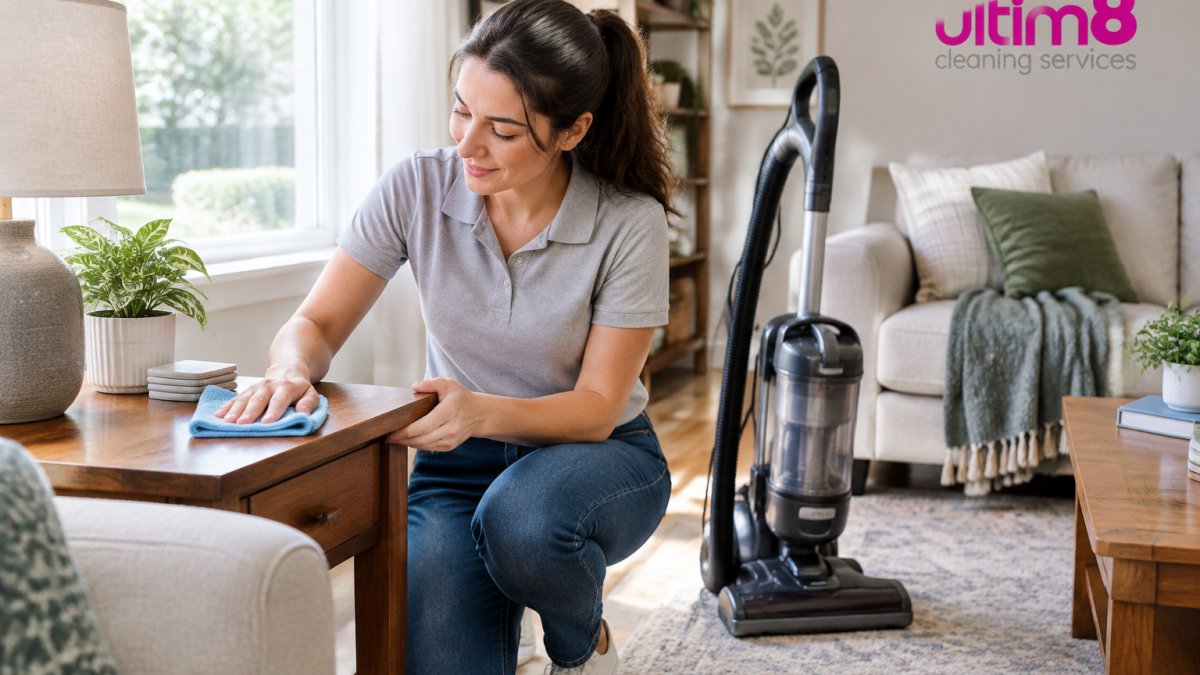
A consistent routine works better than occasional deep cleaning. Here is a simple weekly plan you can adjust to your home:
- Monday: Wash bedding and dust bedroom surfaces
- Wednesday: Vacuum floors and damp-wipe bathrooms
- Friday: Clean kitchen surfaces and high-touch areas like door handles
- Weekend: Ventilate, check air filters and tidy shoes near the door
Track how you feel over several weeks. If symptoms stay high, talk with a doctor about your allergy plan. If you are weighing this routine against outside help, learn what a recurring cleaning service involves.
Booking Help for a Healthier Home in Tampa Bay
If you want a routine you do not have to manage yourself, a recurring cleaning service can take these tasks off your plate. Ultim8 Cleaning Services offers residential cleaning with insured, background-checked cleaners, and you can book online with flexible scheduling. Pricing depends on the size of your home and the services you choose, so visit our website for a quote. Get started with Ultim8 Cleaning Services and give your home the clean, calm air you deserve.
Last Updated: November 6, 2026
Frequently Asked Questions
What is the best way to clean my house if I have allergies?
Start with the tasks that remove allergens rather than spread them. Vacuum with a HEPA-filter vacuum, damp dust surfaces instead of dry dusting, and wash bedding weekly in hot water. Focus first on the bedroom, where you spend the most hours breathing near bedding and carpets. Use fragrance-free, low-chemical products, and keep the routine consistent so dust and pet dander do not build up between cleanings. Track how your symptoms change over several weeks to see whether the routine is working.
Are fragrance-free cleaning products better for people with allergies?
Often, yes. Fragrances are a common irritant for people with sensitive airways, and a product labeled green or natural can still contain scented compounds. Reading labels for fragrance and checking how many chemicals a product contains helps you pick options that suit your household.
How often should I clean my home to reduce allergens?
Most allergy-focused routines work best on a weekly cycle for bedding, floors and high-touch surfaces, with dusting and vacuuming of bedrooms and living areas each week. Bathrooms and kitchens need attention to moisture and mold more frequently. Consistency matters more than intensity, because allergens resettle quickly. A recurring cleaning service can keep this schedule in place when your own time is limited.
Can green cleaning products help improve indoor air quality?
Green products may reduce some exposures, but they are not automatically harmless. Better indoor air usually comes from using fewer products, ventilating while you clean, and controlling dust and moisture. If symptoms persist, talk with a healthcare provider.