
How to Choose a House Cleaning Schedule That Fits Your Life
November 23, 2026
9 Questions to Vet a Commercial Cleaning Service
November 24, 2026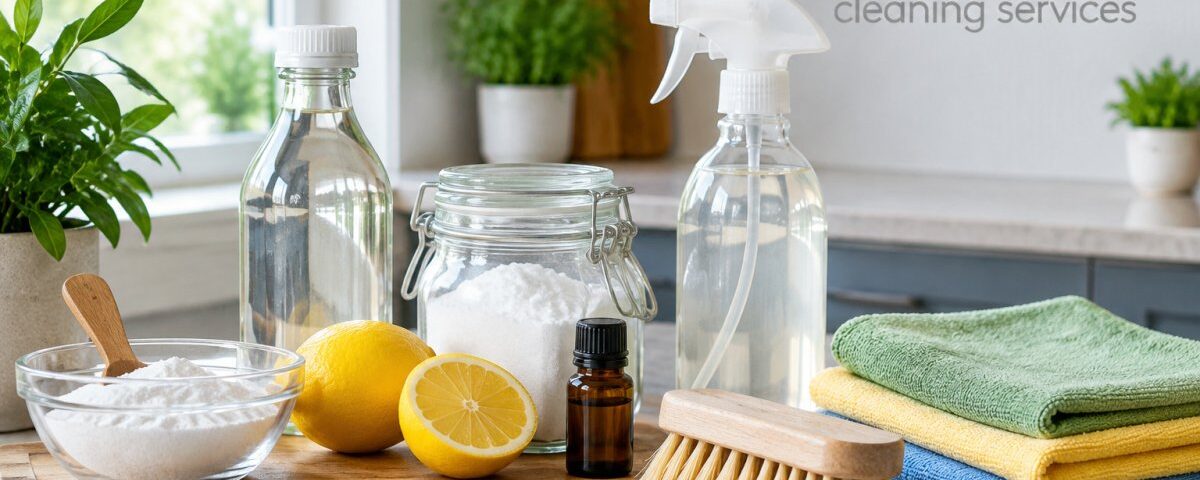
Last Updated: November 22, 2026
Quick Summary
The best non-toxic cleaning recipes use four workhorses: white vinegar, baking soda, castile soap, and water. Mixed in the right ratios, they handle grease, grime, soap scum, and streaks on most household surfaces. Match each mix to the surface, since vinegar can etch stone and too much soap leaves film.
- An all-purpose spray uses 1 cup white vinegar, 1 cup water, and 1 teaspoon castile soap.
- Skip vinegar on natural stone, unsealed grout, aluminum, and waxed wood.
- Make a scouring paste with three parts baking soda to one part water and let it sit ten minutes.
- Mix glass cleaner from 1 cup water, 1 cup white vinegar, and a splash of rubbing alcohol.
- Vinegar and water sprays last about 2 weeks; castile soap and water lasts about 1 week.
Table of Contents
- What are the best DIY non-toxic cleaning recipes for common surfaces?
- A homemade all-purpose cleaner recipe you can mix in two minutes
- The best homemade cleaner for countertops, by material
- What surfaces cannot be cleaned with vinegar
- DIY non-toxic cleaning recipes with baking soda for scrubbing jobs
- Streak-free glass, mirror, and floor recipes
- Storage, shelf life, and labeling your homemade cleaners
- Book a professional clean for the surfaces DIY can’t safely handle
- Frequently Asked Questions
What are the best DIY non-toxic cleaning recipes for common surfaces?
The best DIY non-toxic cleaning recipes rely on four workhorses: white vinegar, baking soda, castile soap, and water. Mixed in the right ratios, they handle grease, grime, soap scum, and streaks on most household surfaces. This guide is built around what works surface by surface.
Non-toxic cleaning simply means avoiding harsh or irritating ingredients, not that a cleaner is safe to eat or safe on every material. That distinction matters. A 2022 study on household use of green and homemade cleaning products examined how families use these mixtures at home, and the takeaway is clear: how you mix and where you use them drives the result.
Below, we walk through recipes you can mix in minutes, the surfaces that need a gentler touch, and the mistakes that leave streaks or damage.
The four ingredients that do most of the work
White vinegar cuts grease and dissolves mineral film. Baking soda scours without scratching most finishes. Castile soap lifts oils and dirt. Water carries it all and controls strength.
| Ingredient | Best For | Avoid On |
|---|---|---|
| White vinegar | Glass, grease, hard water | Stone, grout, aluminum |
| Baking soda | Scrubbing, stains, odors | Polished or waxed wood |
| Castile soap | General wiping, floors | Rinse-sensitive finishes |
| Hydrogen peroxide | Whitening, disinfecting | Colored fabrics |
Keep the ratios steady. A dilution ratio that works for one job can etch a countertop on another.
A homemade all-purpose cleaner recipe you can mix in two minutes
This homemade all-purpose cleaner recipe is the one we recommend starting with. It handles kitchen counters, bathroom fixtures, and most sealed surfaces.
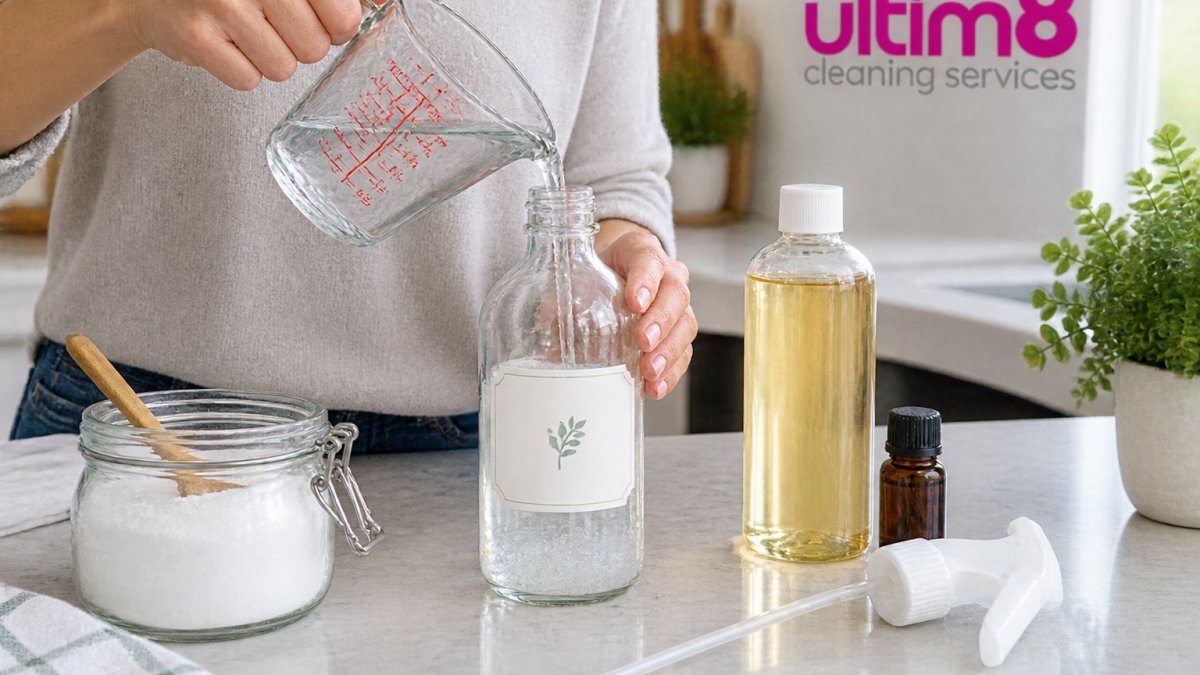
- Pour 1 cup white vinegar and 1 cup water into a spray bottle.
- Add 1 teaspoon castile soap and swirl gently. Do not shake hard.
- Add 10 to 15 drops of essential oil if you want fragrance.
- Label the bottle and test on a hidden spot first.
A common mistake is adding more soap for extra power. Too much liquid soap leaves a film you then have to rinse off. One teaspoon is plenty.
The best homemade cleaner for countertops, by material
No single homemade cleaner for countertops suits every material. Match the mix to the surface and you avoid dulling, etching, or stripping a finish that costs more to repair than the cleaner saves. The table below is the short version; the notes after it explain the mechanism behind each recommendation.
| Countertop material | Recommended mix | Avoid | Why it matters |
|---|---|---|---|
| Granite (sealed) | 1 cup water + 2-3 drops castile soap | Vinegar, citrus, abrasives | Acid dulls polish and can erode sealer over repeated use |
| Quartz (engineered) | Warm water + mild dish soap | Vinegar, bleach, scouring pads | Resin binders can haze under acid or abrasive scrubbing |
| Marble, travertine, limestone | Warm water + a few drops castile soap, buffed dry | Anything acidic, including vinegar and lemon | Calcium carbonate etches on contact; rings appear fast |
| Butcher block (oiled) | Warm water, wrung nearly dry; re-oil monthly | Soaking, vinegar soaks | Water swells grain and opens seams |
| Sealed wood | Damp cloth with castile soap; dry immediately | Standing water, vinegar | Finish breaks down and grain raises |
| Laminate | All-purpose vinegar mix is fine | Abrasive powders | Scratches are permanent on the wear layer |
| Stainless steel | Warm water + castile soap; buff with the grain | Chloride-heavy cleaners, steel wool | Chlorides pit the surface; cross-grain wiping leaves marks |
| Glass and mirror | 1 cup water + 1 cup vinegar + splash of rubbing alcohol | Soap-heavy mixes | Soap film causes streaks |
Granite, quartz, and marble
Stone counters hate acid. Vinegar can dull polished marble and etch natural stone over repeated use. Use warm water with a few drops of castile soap instead, then buff dry with a microfiber cloth. On sealed granite, reapply sealer when water stops beading; that bead test is the simplest indicator that the surface is due.
Laminate, butcher block, and sealed wood
Laminate tolerates the all-purpose mix well, but skip abrasive powders, the wear layer scratches permanently and traps dirt in the scratches. Butcher block and sealed wood need restraint: too much water warps the grain. Wring your cloth nearly dry and wipe with the grain, not across it. Re-oil butcher block monthly with food-grade mineral oil to keep it from drying and cracking.
Stainless steel and glass
Stainless steel is not damaged by vinegar the way stone is, but chloride-heavy cleaners can pit it over time, and steel wool leaves scratches that collect grime. Warm water with castile soap, wiped with the grain and buffed dry, is enough for daily cleaning. Glass and mirrors are the opposite problem: soap residue, not vinegar, is what causes streaks, so keep the mix lean and buff with a dry microfiber cloth after the wet pass. Just as a lean mix prevents residue on glass, keeping harsh chemicals out of the drain can protect household plumbing, making alternatives to chemical drain cleaners a natural next step.
Watch out: “Sealed” is not permanent, so test any new mix on a hidden spot before committing to the whole counter.
What surfaces cannot be cleaned with vinegar
Vinegar is not universal. Skip it on natural stone, unsealed grout, aluminum, and waxed wood.
For hardwood floors, a gentler approach is recommended. See how Tampa house cleaners clean hardwood floors for the gentler approach.
Watch out: mixing vinegar and baking soda in a sealed bottle builds pressure and can pop the lid. Let the fizz settle in an open container first.
DIY non-toxic cleaning recipes with baking soda for scrubbing jobs
DIY non-toxic cleaning recipes with baking soda shine on scrubbing tasks. For a scouring powder, sprinkle baking soda on a damp sponge and scrub tubs, sinks, and tile. For baked-on grease, make a paste with three parts baking soda to one part water, leave to sit ten minutes, then scrub and rinse.
The EPA’s green cleaning recipes note that baking soda needs thorough rinsing, even though it gives off no toxic fumes. Rinse well or you get a chalky haze. For tough kitchen jobs, see our deep cleaning tips for rental kitchen appliances.
Streak-free glass, mirror, and floor recipes
Streaks come from ratio problems, not bad luck. For glass cleaner and mirrors, mix 1 cup water, 1 cup white vinegar, and a splash of rubbing alcohol in a spray bottle. Spray lightly, wipe with a microfiber cloth, then buff with a dry one.
For floor cleaner, use 1/2 cup white vinegar in a gallon of warm water. Add a few drops of castile soap for tile. Change the water often; dirty water is the real cause of dull floors.
Storage, shelf life, and labeling your homemade cleaners
Homemade cleaning products fade fast, and the ones made with water and no preservative are the fastest to turn. Mix small batches, a pint at a time is plenty for most households, rather than a gallon you will pour out.
Shelf life by recipe type
| Recipe type | Typical shelf life | Spoilage cue |
|---|---|---|
| Vinegar + water spray | About 2 weeks | Weak smell, cloudy film |
| Vinegar + water + rubbing alcohol (glass) | About 2 weeks | Alcohol smell fades |
| Castile soap + water | About 1 week | Cloudiness, slime, sour odor |
| Baking soda paste | Mix fresh each use | Dries out, loses scrubbing power |
| Hydrogen peroxide mix | Mix fresh each use | No fizz when applied to a soiled spot |
Keep hydrogen peroxide in an opaque bottle and mix only what you will use that day.
Containers, labeling, and storage
Use glass or plastic spray bottles. Label every bottle with the contents and the date, and add a second line for what it should not touch (for example, “no stone”). Store them out of reach of children and pets.
Never reuse a bottle that held a commercial cleaner unless you wash it thoroughly, and never reuse a bottle that held a pesticide or herbicide, even washed. For tips on keeping surfaces clean between deeper professional visits, see how to maintain a clean home between professional visits. The residue risk is not worth the savings.
Fragrance-free and sensitivity-friendly options
Essential oils are optional, not required. Households with allergies, pets, or young children may prefer to skip fragrance entirely. If you want fragrance, add it at mixing time rather than storing a scented batch.
Watch out: mixing vinegar and baking soda in a sealed bottle builds pressure and can pop the lid. Let the fizz settle in an open container first, and never cap a bottle while the mixture is still reacting.
Typical shelf life of homemade cleaning recipes
Book a professional clean for the surfaces DIY can’t safely handle
Some jobs are better left to professionals, such as natural stone, delicate finishes, and grout that needs specialized cleaning. Ultim8 Cleaning Services sends insured, background-checked cleaners who work from detailed checklists and use environmentally safe products.
Booking is available online. Curious what professional help runs? Our breakdown of the cost of non-toxic residential cleaning covers pricing, and you can read the benefits of professional residential cleaning services before you decide.
If your counters are etched, your grout is stained, or you simply want your weekends back, hand the tough surfaces to a team that knows them. Ultim8 Cleaning Services offers instant online booking, dependable scheduling, and cleaners trained to work through detailed checklists. Get started with Ultim8 Cleaning Services and come home to a spotless, healthier space.
Frequently Asked Questions
What are some homemade non-toxic cleaners I can make?
Start with three basics. An all-purpose spray made from 1/4 cup white vinegar, 12 to 20 drops of essential oil, and water in a spray bottle handles most sealed counters and sinks. A baking soda paste (three parts baking soda to one part water) scours tubs and tile. For glass, mix 1/2 cup white vinegar with 2 cups warm water and wipe with a microfiber cloth. Keep each batch small and label the bottle with the recipe and date.
What surfaces cannot be cleaned with vinegar?
Skip vinegar on natural stone such as marble, granite, and travertine, because its acetic acid etches calcium-based surfaces and dulls the finish. Avoid it on aluminum, unsealed grout, and waxed wood floors for the same reason. Vinegar can also damage the protective coating on some screen and electronic surfaces. On those materials, use a pH-neutral soap and water mix or a cleaner labeled safe for stone.
Can I use baking soda and vinegar together to clean?
You can, but understand what happens. The two react and fizz, which lifts debris from grout lines and drains, but they largely cancel each other out as cleaners once the reaction finishes. For real scrubbing power, apply a baking soda paste first, let it sit, then spray vinegar to loosen it. For everyday wiping, use one or the other, not both, so you keep the cleaning strength you mixed.
How do I make a homemade glass cleaner without streaks?
Mix 1/2 cup white vinegar with 2 cups warm water in a spray bottle. Spray lightly, then wipe with a clean microfiber cloth in a Z pattern, flipping to a dry side for the final pass. Streaks usually come from too much solution or a paper towel that sheds lint. On tinted windows or screens, use plain water with a drop of castile soap instead, since vinegar can harm some films.
How should I store DIY cleaning solutions?
Use glass or HDPE plastic spray bottles, label each one with the recipe and mix date, and keep them out of reach of children and pets. Keep essential oil bottles sealed and away from heat.