Residential Deep Cleaning Checklist for Move Outs
October 2, 2026
Table of Contents
- Why Daily Office Hygiene Standards Matter for Your Team
- Your Daily Office Cleaning Checklist Template
- The Best Office Cleaning Supplies for Daily Use
- How to Improve Office Hygiene for Employees Through Training
- High-Touch Surfaces and Shared Spaces: Where Germs Spread Fastest
- Digital Hygiene and Air Quality: The Office Hygiene Standards Most Teams Ignore
- When to Bring in Professional Janitorial Services
- Conclusion: Building a Daily Office Hygiene Routine That Sticks
- Frequently Asked Questions
Last Updated: October 2, 2026
Why Daily Office Hygiene Standards Matter for Your Team
A clean office is not a nice-to-have, it is core to how your team performs. Maintaining office hygiene standards daily cuts sick days, lifts morale, and protects your people.
Offices with a real daily plan stay healthier and look sharper. Those without one fall behind fast.
The stakes are simple. Shared desks, breakroom counters, and door handles collect germs all day. One person with a cold can spread it across a floor before lunch. Daily hygiene breaks that chain.
Here is what this guide covers:
- A daily cleaning checklist you can copy today
- The supplies that actually work
- How to train your team without nagging them
- The spots most offices forget
Get the routine right and everything else gets easier.
Your Daily Office Cleaning Checklist Template
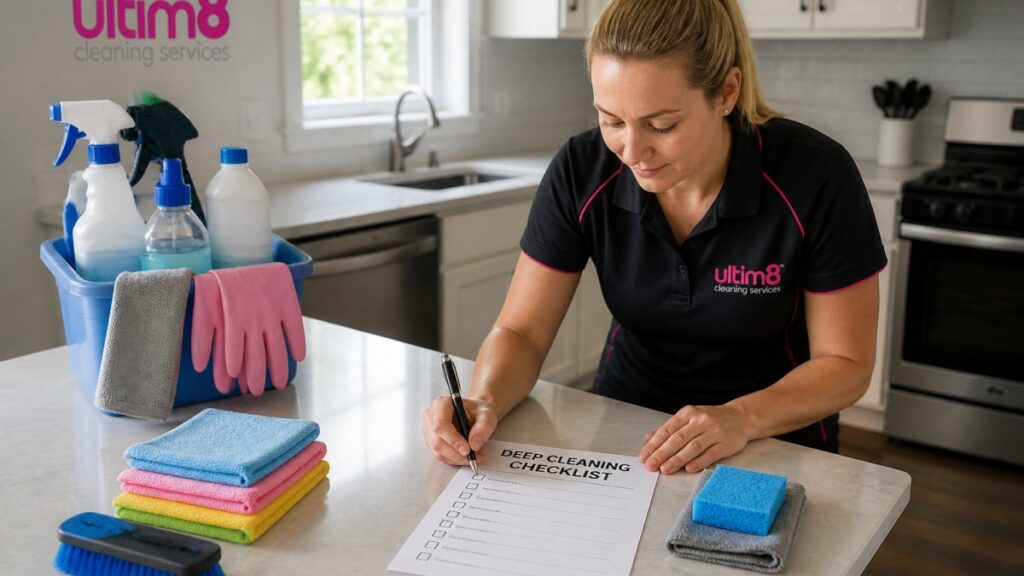
An office cleaning checklist template ties tasks to specific times of day, a named owner, and a verification step. Without all three, it is just a wish list. The template below removes guesswork so anyone can follow it and nothing gets skipped.
The best templates split tasks into morning, midday, and end-of-day blocks. This keeps the workload even, stops the “someone else will do it” problem, and matches how germs accumulate, heaviest after lunch and end of shift.
A checklist only works if it is visible and owned. Print it, post it, or share it digitally, and put a name next to each time block. Tasks nobody can see, or nobody owns, are tasks nobody does.
Morning Opening Tasks
Start the day by resetting shared spaces before people settle in, undoing what happened overnight and pre-staging supplies so the midday block is fast.
- Wipe down breakroom counters and tables
- Check restroom supplies (soap, paper towels, toilet paper)
- Empty trash bins that filled overnight
- Sanitize door handles and light switches
- Restock sanitizing stations near entrances
- Confirm the supply closet has at least a one-week buffer of liners, gloves, and disinfectant
This block takes 15 to 20 minutes for a small office (roughly 10 to 25 people). Do it before most staff arrive, and assign it to one named person per week on a rotating schedule, rotation prevents burnout and builds cross-coverage.
Midday and End-of-Day Tasks
Midday is about touch-ups. End-of-day is about resetting for tomorrow.
Midday (10 minutes, right after the lunch rush):
- Wipe high-touch surfaces like shared keyboards, mice, and phones
- Clear breakroom tables and wipe them after lunch
- Spot-clean spills right away, a spill left for an hour becomes a stain and a germ reservoir
- Empty the breakroom trash if it is more than half full
End of day (20 to 30 minutes):
- Disinfect desks, conference tables, and shared equipment
- Empty all trash and recycling
- Sweep or vacuum high-traffic floors
- Wipe restroom sinks, faucets, and counters
- Reset the supply closet and note anything running low for the next morning
| Time Block | Main Focus | Time Needed | Owner |
|---|---|---|---|
| Morning | Reset shared spaces, restock | 15-20 min | Rotating weekly owner |
| Midday | Touch-ups, spill control | 10 min | Front-desk or office manager |
| End of day | Disinfect, empty, reset | 20-30 min | Rotating weekly owner |
How to Make the Checklist Actually Stick
Most offices abandon a new checklist within two weeks. The fix is a short verification loop, not more rules.
- Initial each block. A set of initials on the printed sheet tells you at a glance whether the block ran. No initials, no credit.
- Do a five-minute Friday walk-through. Pick one person to spot-check three items from the week, usually the restroom, the breakroom, and one shared desk. Note what slipped.
- Fix the checklist, not the person. If a task gets skipped repeatedly, the task is usually unclear, the supplies are not where the task happens, or the time block is unrealistic. Adjust the template.
- Keep it to one page. A two-page checklist gets ignored, split extra tasks across days instead.
Pair the checklist with a simple supply par-level sheet. When someone restocks, they mark the count. When the count hits the reorder point, the office manager orders. This single habit prevents the most common failure mode: running out of soap or liners mid-week and quietly skipping the task.
A Note on Frequency
Daily tasks are the floor, not the ceiling. Some items belong on a weekly or monthly cadence:
- Weekly: Refrigerator purge of old food, microwave deep clean, vacuum under desks
- Monthly: Carpet spot treatment, vent and return-air grille wipe-down, keyboard deep clean with a dedicated electronics wipe
- Quarterly: Review the checklist itself against what actually got done, and update owners and time blocks
Keeping these off the daily list is what makes the daily list survivable.
The Best Office Cleaning Supplies for Daily Use
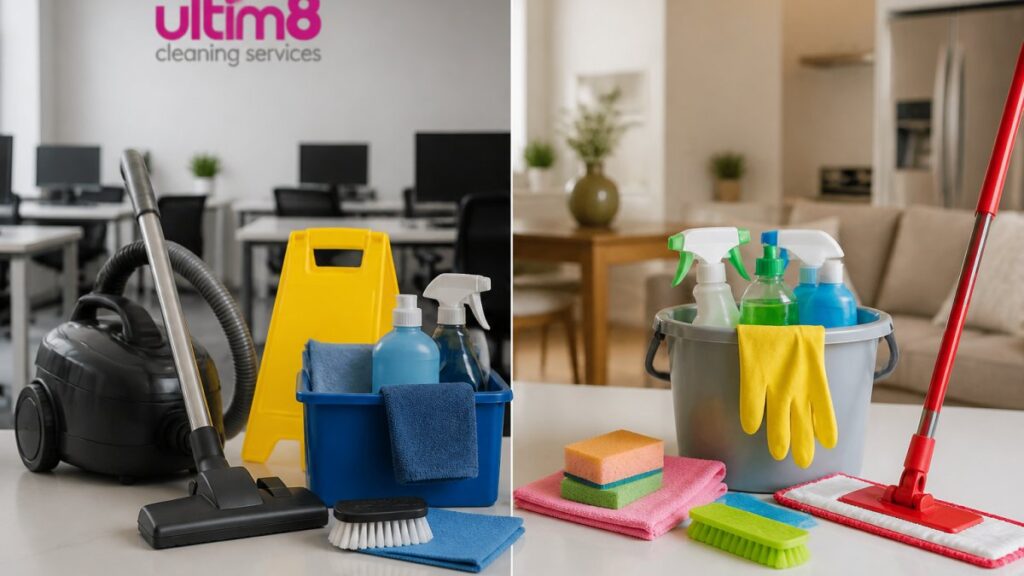
The best office cleaning supplies for daily use are simple: microfiber cloths, a good disinfectant, gloves, and trash liners. You do not need a closet full of products. You need the right few, used the right way.
Here is what earns its place on the cart:
- Microfiber cloths trap dust and germs instead of spreading them
- EPA-registered disinfectant kills pathogens on contact
- Disposable gloves protect the person cleaning
- Trash liners sized to your bins
- Hand soap and sanitizer for every restroom and breakroom
A common mistake is mixing products. Some combinations create harmful fumes. Stick to one disinfectant and follow the label.
Never mix bleach with ammonia-based cleaners. The fumes can cause serious breathing problems. Use one product at a time and let surfaces dry.
How to Improve Office Hygiene for Employees Through Training
Training turns a checklist into a habit. To improve office hygiene for employees, teach the why, not just the what, people follow rules they understand.
Keep training short and repeat it. A 10-minute session each quarter beats a two-hour meeting once a year.
What to cover:
- Hand hygiene and when to wash
- How germs move through shared equipment
- Where to find supplies
- Who owns which tasks
- How to report a problem
Make it easy to do the right thing. Put sanitizing stations where people already walk. Post reminders in restrooms and breakrooms.
High-touch surfaces, handles, switches, keyboards, and shared tools, are where germ transmission happens fastest, since one contaminated hand can seed the next person within seconds. Clean them more often than everything else, with a method rather than a spray-and-wipe guess.

Cleaning vs. Disinfecting: The Two-Step Most Offices Skip
The CDC points out that cleaning and disinfecting are two different steps. Cleaning removes dirt, oils, and organic matter. Disinfecting kills germs. You need both on high-touch spots, and in that order, disinfectant applied to a dirty surface is largely wasted because soil shields the germs underneath. (CDC guidance on cleaning and disinfecting)
A practical two-step for a high-touch item:
- Wipe first with a microfiber cloth to remove visible soil and oils.
- Apply disinfectant and let it sit for the dwell time on the label, the contact time required to actually kill pathogens. Many common disinfectants need 30 seconds to several minutes of visible wet contact. Wiping it dry immediately defeats the purpose.
- Let it air-dry or wipe after the dwell time has passed.
Dwell time is the single most skipped step in office cleaning. If the surface dries before the label’s contact time, you cleaned it but did not disinfect it. Read the label on your specific product and match the wipe to the surface.
Your Priority Ranking (Highest to Lowest)
Not all high-touch surfaces are equal. Rank them by how many people touch them per hour and how often they are cleaned: the top gets cleaned multiple times a day, the bottom once.
- Door handles and push plates, touched by nearly everyone, every entry
- Light switches and elevator buttons, high frequency, low awareness
- Shared keyboards, mice, and phones, touched for hours at a time by one person, then handed off
- Coffee makers, water coolers, and microwave handles, touched by many hands around food
- Printer touchscreens and shared tools, touched in passing, rarely cleaned
- Stair rails and shared chairs, high contact, often forgotten
Breakrooms, Kitchens, and Restrooms
Breakrooms and restrooms see the most traffic and germs. Give them extra attention daily, with separate protocols.
In the kitchen:
- Wipe counters before and after lunch
- Clean the microwave handle and buttons daily, the handle is the most-touched item in most breakrooms
- Empty the fridge of old food weekly, and post a labeled “purge day” so people know
- Wipe the coffee pot handle and water cooler spigot at midday
In restrooms:
- Disinfect sinks, faucets, and flush handles, flush handles are consistently among the highest-touch items in any building
- Restock soap and paper products daily, and check mid-day
- Empty bins before they overflow; a full bin becomes a hand-contact problem
- Wipe the door push plate on the way out, it is the last thing every user touches
Shared equipment deserves its own line item. The coffee pot handle, printer touchscreen, conference-room remote, and communal stapler are germ hotspots that rarely make a cleaning list. Add them to your midday wipe-down and note them on the checklist.
Keep a small caddy of disinfecting wipes and a microfiber cloth in each shared space, breakroom, copy room, and front desk. When supplies live where the task happens, the task actually gets done. A caddy in a closet is a caddy that never moves.
A Note on Electronics
Keyboards, mice, phones, and touchscreens need a different approach than hard surfaces. Never spray liquid directly on a device, use a lightly dampened microfiber cloth or an electronics wipe, avoiding excess moisture around ports and seams. For shared devices, wipe at the start of each shift and again at midday.
Digital Hygiene and Air Quality: The Office Hygiene Standards Most Teams Ignore
Most offices clean what they can see and forget what they cannot. Digital hygiene and indoor air quality are the two gaps we see again and again. Both affect how healthy your team stays.
Digital hygiene means keeping shared tech clean. Keyboards, mice, and phones hold more germs than a toilet seat in many studies. Wipe them daily with a cloth made for electronics.
Air quality matters just as much. The EPA notes that indoor air can carry more pollutants than outdoor air. Good ventilation lowers the germs floating in a room. (EPA information on indoor air quality)
Simple steps:
- Open windows when weather allows
- Check that HVAC filters get changed on schedule
- Add small air purifiers to crowded rooms
- Keep desks clear so air moves freely
Ergonomic hygiene ties into this. A cluttered desk traps dust and makes cleaning harder. Clear the surface, wipe it down, and you improve both health and focus.
When to Bring in Professional Janitorial Services
Daily tasks keep an office tidy. But some jobs need a trained crew and pro equipment.
Bring in a pro team when:
- You need deep cleaning, like carpets and vents
- Your office has biohazard or waste disposal needs
- Staff turnover makes daily tasks slip
- You want a documented, repeatable standard
This is where Ultim8 Cleaning Services fits: insured, background-checked cleaners following detailed checklists, high-quality environmentally safe products, and instant online booking that makes scheduling simple.
For offices with high-touch surfaces and specific needs, a trained team handles the detail that daily staff cleaning misses.
Conclusion: Building a Daily Office Hygiene Routine That Sticks
The hard part is not knowing what to do. It is keeping the routine alive after week two.
A daily routine needs three things: a clear checklist, the right supplies, and someone who owns it.
If managing it all sounds like one more task on your list, that is where we help.
Get started with Ultim8 Cleaning Services and give your team a workspace that stays clean, healthy, and ready for work.
Frequently Asked Questions
What are the most important high-touch areas to sanitize in an office?
Focus on door handles, light switches, elevator buttons, shared keyboards and mice, phones, conference table surfaces, and breakroom appliance handles. These spots get touched dozens of times a day and are the main routes for germ transmission. Wipe them with a disinfectant at least twice daily, and keep sanitizing stations nearby so employees can clean as they go. A written office hygiene checklist helps make sure nothing gets skipped.
What is the 5-5-5 rule for cleaning?
The 5-5-5 rule is a simple framework: clean high-touch surfaces every 5 hours, do a 5-minute tidy of your personal workspace at the end of each day, and spend 5 minutes at the end of the week checking shared areas like breakrooms and conference rooms. It works well for offices because it breaks hygiene into small, repeatable tasks instead of one overwhelming deep clean.
How can I maintain office cleanliness on a daily basis without disrupting employees?
Build hygiene tasks into the workday rhythm instead of scheduling separate cleaning blocks. Morning opening tasks take 10 to 15 minutes, midday touch-ups happen during lunch, and end-of-day checks wrap up after most staff leave. Assign responsibilities by zone so no one person carries the load, and keep supplies stocked in each area. This keeps office hygiene standards consistent without pulling people away from their work.
When should an office hire professional janitorial services instead of relying on staff?
Bring in professional janitorial services when daily tasks like vacuuming, restroom sanitization, and floor care start eating into staff time or getting skipped. Offices with more than 15 employees, shared kitchens, or high visitor traffic usually benefit most. Professional teams also handle deep cleaning, surface decontamination, and biohazard management that go beyond what a daily checklist covers. Scheduling recurring service alongside your in-house routine keeps standards steady.